The Paradox of Sex and the Dead
For the ancient Greeks and Romans, the onion was considered a vegetable of the dead. Perhaps it’s because it grew in the ground as the deceased are planted? Or perhaps the reasoning was something else. Either way, along with parsley and celery, the onion commonly graced the tables of funeral feasts

(“Eating with the Dead”).
But here is where we come to a paradox, because the onion was also well known as an aphrodisiac. And what of grim and unyielding Hades himself? Not only was he connected with the cycle of the year, but was also arguably connected to fertility too.
As it turns out though, this collocation of sex and death is not unusual, and it’s not limited to the classical world either.
Among the Germanic tribes, for example, the god of the mound is also the god who fertilizes the earth. It is he who is depicted with a large phallus – a sign of his virility. Ruler of Alfheim, so too do his subjects share the same associations. Mound-dwelling and sexually deviant, elves would eventually come to be known as incubi.
Moving slightly further afield, the Canaanite Ba’al the god of life and fertility is shown to be constantly locked in battle with Mot, the god of death and sterility.
To move even further afield (at least from the perspective of my resting paradigm), we see the same dichotomy in the Haitian deity Papa Ghédé who presides over both death and eroticism.
Again and again, fertility (or even straight up eroticism) and death walk hand in hand. Life is spun and then unspun in a cycle of generation and dissolution, the fibers falling away only to be respun again. These are in truth, two sides of the same cycle, and without the one there cannot be the other.
Man Imitates Gods (or Elves)
This also seems to be the case for many humans who work with the dead too, and the grave may be just as inseparable from sex and generation within some human practitioners, as it is with the aforementioned gods.
“Thus the Gods did, thus men do”
Taittirīya Brāhmana
(Eliade 98)
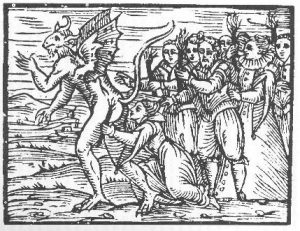
There also seems to be something in the “wiring” here too. For anyone who has studied historical witchcraft accounts, accusations of “sexual deviancy” go hand in hand with accusations of trucking (sexually or magically) with demons or elves. Again and again we see this pattern of chthonic beings with fertility aspects and their human partners engaged in both necromancy and apparent sexual deviancy. (See Lee Morgan’s ‘A Deed without a Name’ for further discussion on these relationships both among historical and modern practitioners)
It would seem that one cannot separate the sex/eroticism from the chthonic, and by extension, death itself. And this can be unsettling to our modern WEIRD minds. (I note here that apparently Papa Ghédé enjoys fucking with white people because of exactly this kind of hang up. Go Papa Ghédé!)
But patterns rarely emerge without reason, and this one is no exception.
A Matter of “Wiring”?
First though, I’d like to talk about the matter of the “wiring” of human practitioners for a moment. Because here too are patterns to be observed. Why is it that the witch was so associated with sexual deviancy in historical accounts? Why did Jordanes write of the Halirunnae (Gothic for Helrune), if you’re interested) going out and having issue with “unclean spirits”? Why was that so believable to him that people associated with Hel practices would be all about fucking the “unclean spirits”? (Getica XXIV, 121-123)
This matter of “wiring” is something that Martin Coleman (aka Draja Mickaharic) comments on in Communing with the Spirits: The Magical Practice of Necromancy. To quote him regarding women with the propensity for necromancy:
“If you are a woman you may have had occasional vivid dreams of a sexual nature which you remember upon awakening. In some cases, the dream may
have been so vivid that you awakened as a result of the orgasm that the dream produced. This is not an uncommon phenomena found in those women who are able to work with the spirits of the dead. Women who are able to work well with the spirits of the dead often have very little sense of physical modesty. In a few cases they are excessively modest. Often women who can work with spirits of the dead are quite uninhibited in comparison with most of the women of their generation. Occasionally they are asexual, but these women are usually found at the extreme ranges of dress and sexual behavior.”
So what is going on here? Why can working with the dead turn into such fuckery? (Ha, see what I did there?) Why does this collocation exist?
Sex as a Safety Mechanism
One thing you quickly learn when interacting with the dead is that to interact with the dead is to interact with death, and pull away from life. But to engage in the primal act of intercourse is to pull away from death and to reassert one’s place within the living world. It is to leave the world of shadows and rejoin the world of the heart pounding, heavy breathing, and corporeality of skin and bodily fluids. To fall once more under the spell of the sensual and reconnect with one of the joys of this world. It is in this sense, a way of exorcising the touch of death from yourself in the same way that you may take salt or wash your feet, or whatever else you do to purify when leaving the places of the  dead.
dead.
This is not some sick and perverted thing as some might think. There is no sexual attraction to the dead present (and I actually hate that I feel like I have to say that). Instead, I find it to be more like the triggering a safety mechanism that occurs in response to a certain degree of proximity to death. It’s a form of medicine. When you think about it, this is really no different from people fucking at or after funerals. It is, I believe, the same underlying mechanism at work.
In short, this is a piece of protective wiring for those of us who experience it, and deities like Papa Ghédé rightfully mock us when repression keeps us from this act of self-healing.
(Ace folx, I’d be curious to hear what you experience post-interacting-with-the-dead!)
Bibliography
Eating With the Dead: Funeral Meal Practices, by Tylluan Perry in MEMENTO MORI A Collection of Magickal and Mythological Perspectives On Death, Dying, Mortality and Beyond
The Sacred and the Profane: The Nature of Religion, by Mircea Eliade
Communing with the Spirits: The Magical Practice of Necromancy, by Martin Coleman
 “whiteness” in this post. When I speak of “whiteness”, I speak of a construct that sits in our society like a gated community that limits its entry to those who fit certain criteria. To reiterate, this is not a post about the the intrinsic and innate, of melanin and ancestry. It is a post about a social construct which actively excludes, harms, and which I believe to be completely incompatible with Witchcraft.
 exist. Laws both in the early colonies and Barbados instead focused on religion, setting aside freedoms for Christians and relegating non-Christians to servitude and slavery. However, as times changed and more people of color (both free and enslaved) became Christians, that legal language was changed. The goalposts were moved in order to retain power among the white landowning elite. 1697 saw the passage of the first law that restricted voting rights to only the white
 Think about the voices you listen to and the voices you give space to and elevate (



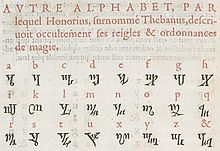 journals are anything to go by, I could back then. But now? Nope! It’s the so-called ‘Witches’ Alphabet’ (taken from Trithemius who apparently got it from a possibly mythical character), and I can’t read it.
 living. But their visits also brought sickness, and that’s just what they brought to the people of a place called Frodis-water.
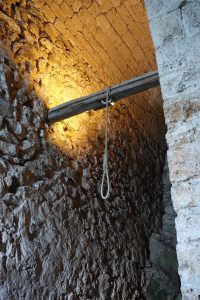 some of those laws might be. I am going to infer one right now: that our rights to this world are lost when we breathe our last.
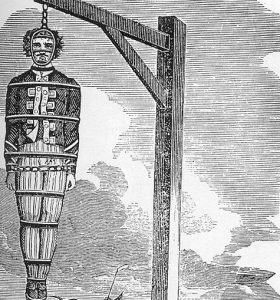 The story of the door-courts suggests that both living and dead are equally bound by the law. We also see this reflected in the burial customs of those deemed to exist outside the protection of the law. These were often the criminals left to rot at the crossroads, those buried in unhallowed grounds, and those who were too young at the time of their passing to be formally accepted in a community (Petreman “Preturnatural Usage”). Is it any coincidence that the materia magica sought from the human body came most often from these sources? Is it also coincidence that those were the sources thought by the Ancient Greeks to carry the least miasma (Retief “Burial”)? To exist as dead inside the protection of the law is to sleep soundly – or at least it should mean that. Of course, there have always been violations as Burke and Hare could well attest.
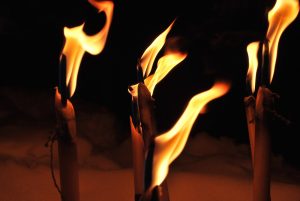 the holy powers, but fire also played an important role in property ownership too. For the Norse, carrying fire sunwise around land you wished to own was one method of claiming that land (LeCouteux 89), and under Vedic law new territory was legally incorporated through the construction of a hearth. This was a temporary form of possession too, with that possession being entirely dependent on the ability or willingness of the residents to maintain the hearthfire. For example, evidence from the Romanian Celts suggests that the voluntary abandonment of a place was also accompanied by the deliberate deconstruction of the hearth. And the Roman state conflated the fidelity of the Vestal Virgins to their fire tending duties with the ability of the Roman state to maintain its sovereignty. The concept of hearth as center of the home and sign of property ownership continued into later Welsh laws too; a squatter only gained property rights in a place when a fire had burned on his hearth and smoke come from the chimney (Serith 2007, 71).
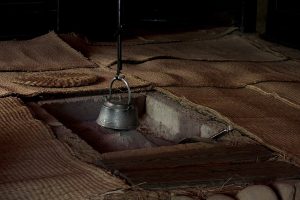 fires burning. To maintain the hearth was to maintain possession of property, and to maintain the hearth, a woman was required. (Or several, if you happen to be the Roman state.)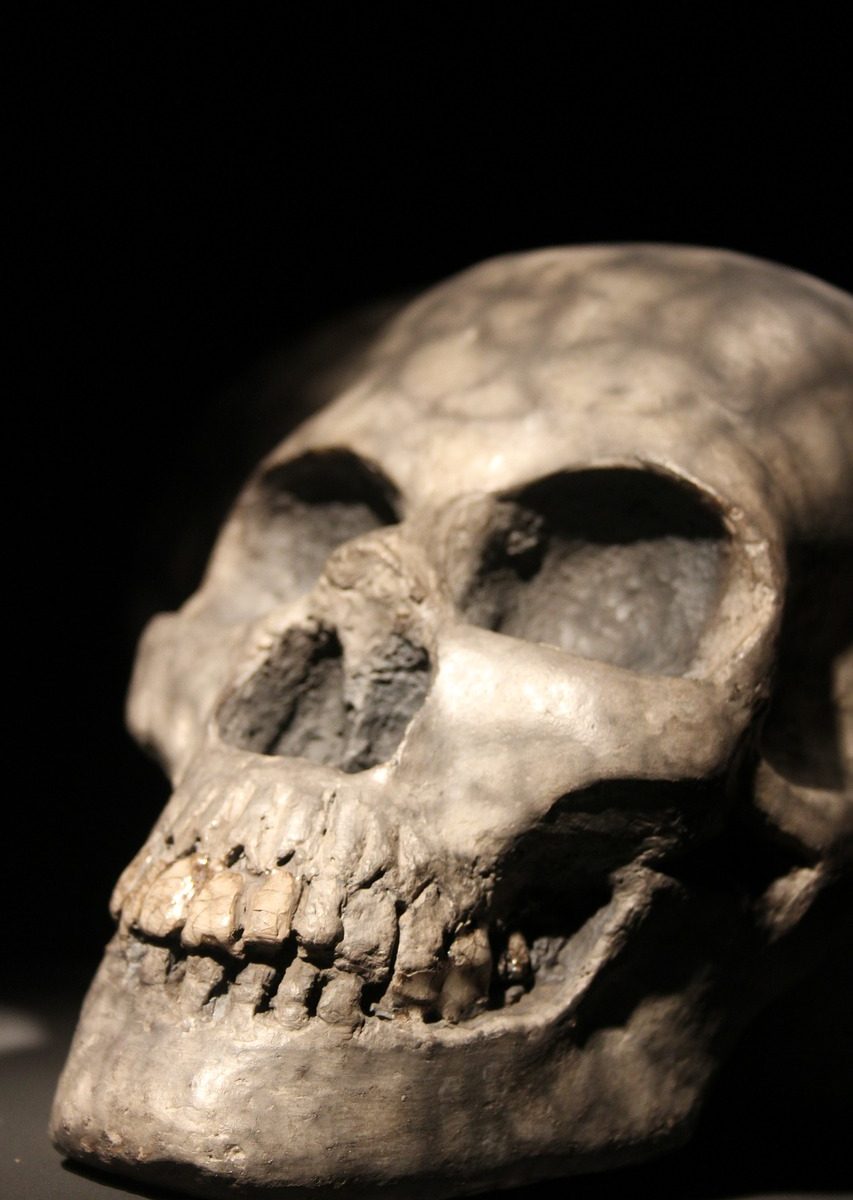

 about that but I don’t.
 like to ask you all how you’re feeling. So how are things?
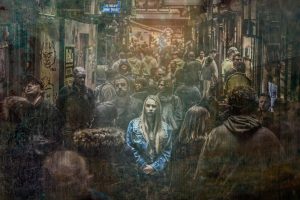 Some of the most common environmental factors that lead to this are things like “psychic impressions” left by horrid historical events; the influence of celestial bodies (as the aforementioned example of the lunar cycle); the time of year (liminal points especially); strong emotions from other humans; and especially strong emotions from other humans en masse. Of course, the degree to which these things will affect you very much depends on your personal level of sensitivity, and the most sensitive and empathic typically themselves more acutely affected than others.

 good to try and burn purifying récels (incense) around your home such as either mugwort, or a rosemary/vervain/juniper mixture. This smoke can also be used for the self too (I like to burn it in a cast iron Dutch oven and just stand over it so that I’m enveloped by the smoke).

 entice you into some kind of oath, your first move is always research. Go find out everything you can about them, and if it’s not available in physical sources, go pester allies for more information. Because there are a whole bunch of things you need to know here. For example, you need to know their MO; if they’re presenting themselves as they actually are; how others have fared dealing with them; and if they have a GSOH and enjoy long walks on the beach at sunset. Because all of that will not only help you figure out *who* you’re dealing with, but also help you better word any oaths you make so that you can do stuff like insert more protective clauses (which is #winning, trust me).
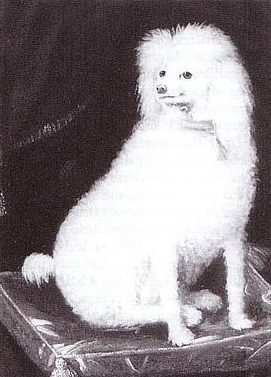
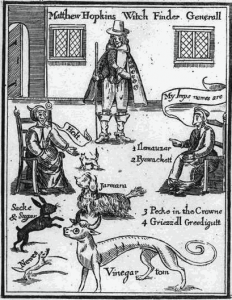
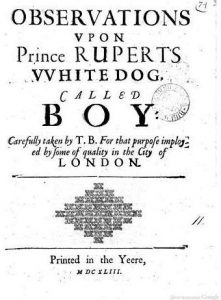 Having said that though,
 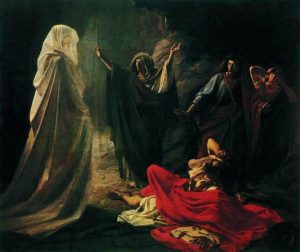 of the matter is that magical practitioners have been finding helping spirits and making pacts with them for a very, very long time. And like wands, familiars traverse a wide range of different cultures (albeit under different names – obviously).
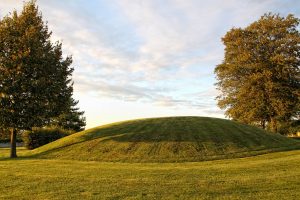 Wilby’s period of study. Hall traces a pattern of witches working with mound-connected elves from the tenth century Old English magico-medical charm Wið Færstice and term ælfs?den (literally “elf-Seiðr”, or “elf-magic”); to Martin Luther’s account of being “shot” by a neighborhood witch; and finally to Isobel Gowdie’s accounts of encountering the Queen of Elfhame in a mound and seeing elves fashioning the shot. I personally take it somewhat further and point to the portrayal of Frey and Freyja in the Ynglingasaga. Freyja as the sacrificial priestess (and as we know, goddess associated with the form of magic known as “Seiðr”) ends up overseeing the cult to her brother, Freyr (who is associated with elves), even as he lies in the burial mound. The people bring offerings to the mound for peace and good seasons, and so even in death, he possesses a power that his sister does not.
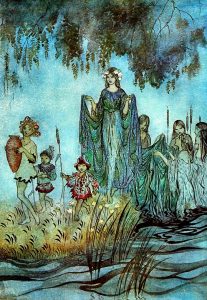 ” The transfer of George was further complicated by the queen of the Lowlanders, who demanded that Goodwin stop attempting to have George as his own personal spirit. At first Goodwin was a little resistant, but the queen insisted that if he would not willingly show her this preference, he should never see any of the Lowlanders. She wanted to be his number-one contact with the spirit world. Goodwin had little choice but to agree to her terms. As a consolation, George agreed to answer any questions directed at him as long as Goodwin turned his back and did not look directly where George stood. However, Goodwin could not understand the spirit very clearly, as he spoke in a low, soft voice close to Mary’s ear. So throughout their relationship, Goodwin relied on Mary to communicate with George.”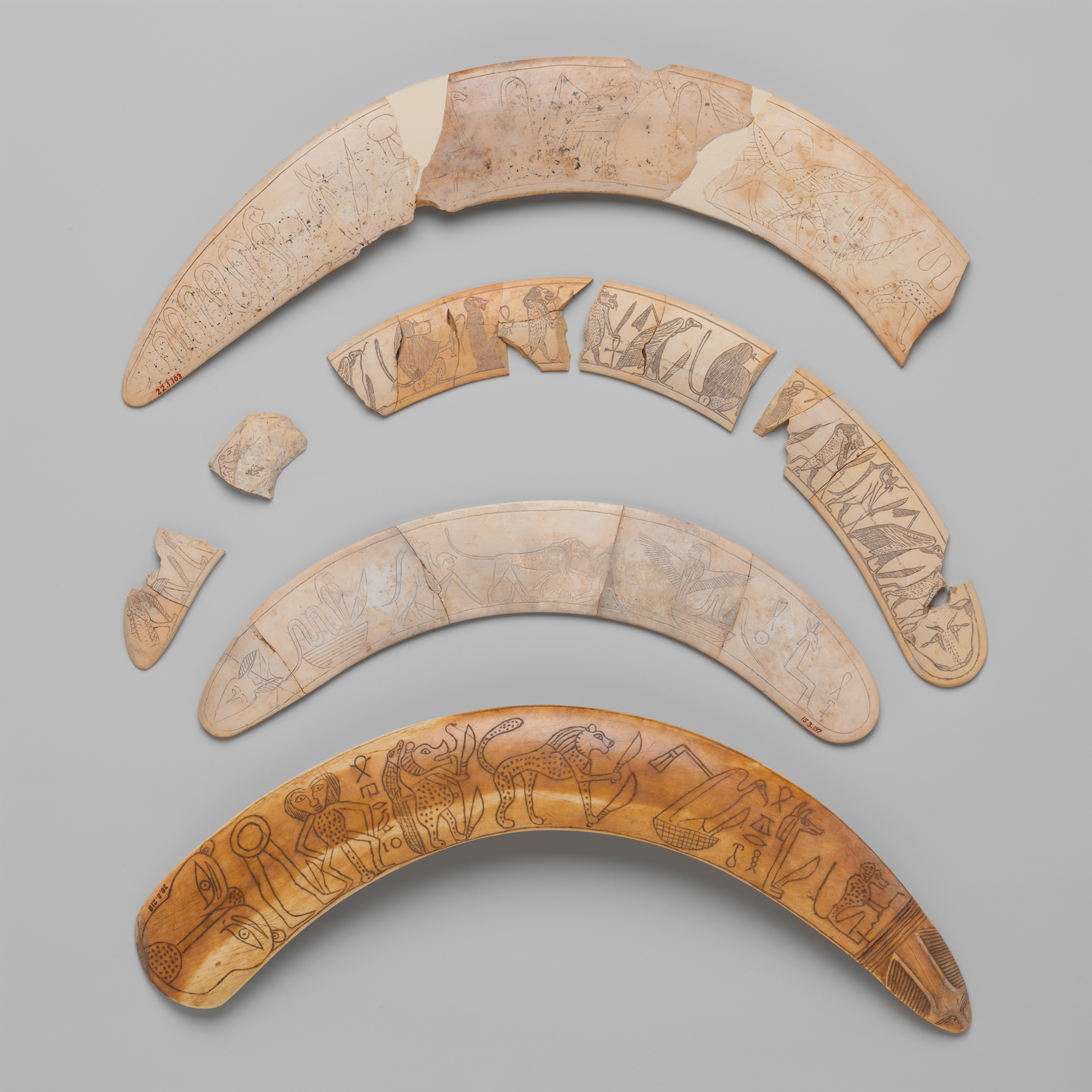
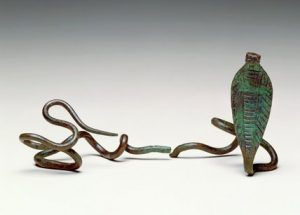
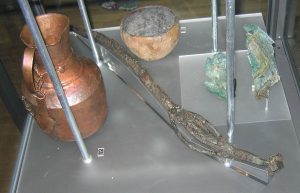 carried by modern practitioners. For example, the Oseberg staff measures 107cm; which is a far cry from the usual image of the seer/ess with a staff that comes up to at least shoulder length.

 accordingly, as I do respect her). I do think she makes an excellent point about the duotheisms held dear by the earlier Pagan revivalists, and their incompatibility with both modern and ancient ideas on deity. But does that mean that we should once more throw out yet another baby with the water it was bathing in? (Which per
  I shall go into a hare,