The Relationship Divide
If you’ve been around the wider Heathen community for any amount of time, then you’ve probably heard this one before. It’s something that comes out whenever people start discussing their relationships and experiences with individual gods. At some point in the conversation, someone will invariably come along and tell everyone that such individual deity relationships are a modern thing. That deity worship was communal – something that was only done as a community. And that the gods are far too important to bother with relationships with lowly individual humans. So stick to your ancestors (at their gravesites) and the local spirits, guys!
But for all the appeals to historical authority in these arguments, I don’t see a lot of actual historical support for them.
A Word on ‘Relationships’
Before getting into the evidence though, I need to clarify what I mean by ‘relationship’ here. Because for most people, the connotation is of a sexual or romantic relationship. And while there are certainly modern practitioners who claim that kind of relationship with certain deities, that is not the only kind of relationship meant here. As we will see, there are a number of types of relationship possible with deities (as there are other humans). My use of the word ‘relationship’ in this post is intended in this more general sense.
Textual Evidence
Generally speaking, modern Heathens tend to be more familiar with the textual sources than archaeological evidence, so this is where we’ll start.
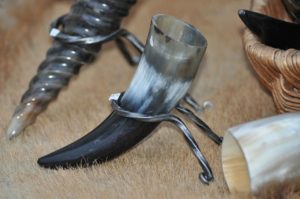
If you are like me, and first encountered Heathenry in the 90s, then you’re probably quite familiar with the term fulltrúi. Everyone seemed to be/have one back then (yay for horrible anglophone understandings of ON terms!). There was definitely a sense that ‘having’ a fulltrúi was part of the ‘Heathen Starter Pack’ (along with a horn, bowl, and hammer pendant).
One of the biggest problems with modern Heathenism is that we all seem to be incapable of being anything but extra AF. We do backlashes like no one else. After over twenty years in Heathenry, I feel like I can almost guarantee that if we go balls to the wall on one thing, a whole other group of us will go balls to the wall in completely the opposite direction. And this is what I suspect lay beneath a lot of the backlash to the use and abuse of fulltrúi back in the late 90s/early 2000s. (For a similar response, see the ‘UPG vs recon’ debate).
Modern fuckery aside though, there is evidence of relationships in which a
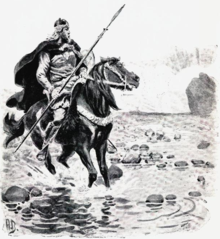
deity was described as being the fulltrúi of a person in the primary sources. For example, in cha. 9 of Víga-Glums Saga, a man called Þorkell refers to the god Freyr as his fulltrúi. And in cha. 8 of Eiríks saga rauða , Þórhall refers to Þórr as his fulltrúann. Now it’s worth bearing in mind here that the word fulltrúi held a variety of meanings in Old Norse (as it does in modern Icelandic), and could be used to refer to deities, humans, and inanimate objects alike. Fulltrúi could be a confidant, patron, protector – someone you can fully trust. In modern Icelandic, it tends to refer to someone who is an agent or service representative. So it’s important to realize that the word ‘fulltrúi’ isn’t some specifically religious term.
But in all cases, where it is used, it is indicative of different kinds of relationship.
Other Relationships with Deities: Hrafnkel Edition
But these two examples of fulltrúi are not the only evidence of different kinds of relationships between deities and humans (or worship on an individual level). Another excellent example of a deity-human relationship is that of Hrafnkel and Freyr in Hrafnkels saga. In the second chapter of Hrafnkels saga, we’re told the following:
”Hrafnkel loved no god more than Freyr, and to Freyr had devoted a half share of all his greatest valuables.” (Translation taken from Jón Hnefill Aðalsteinsson A Piece of Horse Liver)
On the surface, Hrafnkels saga seems to be a story about the uselessness of such relationships with deities. Hrafnkel’s behavior as a result of his religious dedication is quite extreme at times (especially from our modern perspective), and that extremism seems to lead to his downfall. Hrafnkel is famous for having jointly kept a horse with Freyr by the name of Freyfaxi, and for swearing an oath to kill anyone who dared to ride him without permission. But as always, such an oath seems to be like that proverbial ‘big red button’ that shouldn’t be pushed, and the sanctity of Freyfaxi is inevitably violated by a herdsman who decides to take the horse for the 10th century equivalent of a ‘joy ride’.
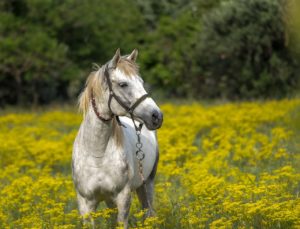
Interestingly, the horse seems to come and inform Hrafnkel of the violation and Hrafnkel sets off to kill the herdsman (Aðalsteinsson 1998, 116-117).
Now if there’s one thing Icelanders seemed to enjoy back in the day (I’m joking here, they didn’t), it was a good, old-fashioned blood feud. And as you might imagine, the herdsman’s father did not take the death of his kid well. To cut a long story short though, this killing started a chain of events that saw Hrafnkel’s temple destroyed, Freyfaxi killed, and Hrafnkel himself in some severe legal shit.
Okay, so that wasn’t that big of a deal compared with other Icelandic feuds (I’m looking at you, Njáls saga!)
In the saga, Hrafnkel’s devotion seems one-sided on his part. Yet as scholars such as Aðalsteinsson have pointed out, it’s no coincidence that the devotee of a god of fertility then went on to experience good luck with his meager livestock, or that great shoals of fish began to appear in the lake near his home. Aðalsteinsson also makes the argument that Hrafnkel’s declaration that he would no more believe in gods is out of keeping with what we know of tenth century Icelandic religion, but that’s another matter and beyond the scope of this post (Aðalsteinsson 124-125).
Other Relationships with Deities: Wife/Priestess of Freyr Edition
It may sound simplistic to say this, but the world of the Viking Age (and before) was not our world, and if we’re being honest with ourselves, would probably be quite alien to us in a lot of respects. This is something that Neil Price acknowledges in the second edition of The Viking Way when he makes the observation that ”we seem reluctant to acknowledge that aspects of these and many other facets of their lives come to us filtered through a world-view that most of us would find incomprehensibly distant, unpalatable, even terrifying.”
Their world was not ours, and this may very well explain the sense of taboo or even mockery towards the concept of sexual and marital relationships with deities.From the perspective of modern humans born and grown in predominantly Christian societies, this is delusion at best, and blasphemous hubris at worst. But if the textual evidence found in Gunnars þáttr helmings is indicative of attitudes towards such relationships in the Heathen period, then party on, deity spouses!
The þáttr is set in around the tenth century (but written in the fourteenth century), and as the name suggests, relates the exploits of a man called Gunnarr.
Now Gunnarr was something of a character. If he were from where I grew up, we’d probably have referred to him as a “ right rum un”, and this “right rum un” was on the run from none other than King Óláfr Tryggvason of Norway. Gunnarr ends up hiding out in a sanctuary in Sweden where he encounters an idol of Freyr and his wife.
Per the þáttr ” it was the peasants’ belief that Freyr was alive, as in some ways it seemed he was, and they thought he would need to have marital relations with his wife.”
Freyr and his wife don’t just stay at the sanctuary though, and Gunnarr obtains
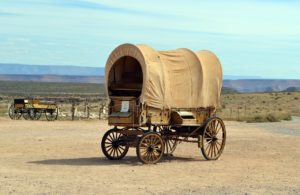
-Gunnarr, maybe.
permission from Freyr’s wife to accompany them in the wagon ‘when he makes the season better for men’. So he goes on the road with Freyr’s wife and the Freyr idol, leading them from place to place until one day they find themselves stuck in a snowstorm on a mountain road. At this point, Freyr’s idol comes to life and fights Gunnarr (+1 points for living idols, yo), and Gunnarr fights back. Unfortunately the story becomes a conversion narrative at this point, because Gunnarr, while getting his ass whooped by idol-Freyr, begs the Christian god to help him in exchange for converting and eventually wins. Then, because Gunnarr was indeed a “right rum un”, he spent a bunch of time telling people he was Freyr, sleeping with Freyr’s wife, and eventually getting her pregnant (North 24-25).
The Swedes for their part didn’t seem to give a shit that the Freyr was now a human man either. They had good weather for their crops and that was the important thing there.
Now, shitty (and rather predictable) conversion narrative aside, assuming this þáttr reflects Heathen period practice with regards to Freyr’s wife, the wider community role of this woman was clear. Her position was not questioned and nor was it taboo. Even when it became somewhat farcical with Gunnarr blatantly pretending to be Freyr, the Swedes were more about the outcome than anything else. As long as the weather did its thing and the crops grew, it was all good.
Archaeological Evidence
In my opinion though, some of the best evidence for individual worship comes from archaeology. There are a number of statues that have been found that are interpreted to represent different gods.
The statues I present here date to the Viking Age. Pay attention to their size!
First we have the Rällinge statuette. As you can see, he’s a very well-endowed 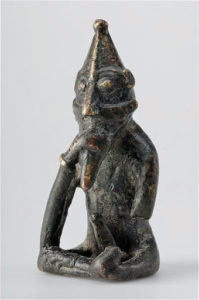 figure. Unsurprisingly, he’s been interpreted as a representation of Freyr. But for all of his blessings beneath the belt, this ‘God of the World’ is all of 7cm/2.75” tall. So, pocket-sized for your convenience. Just ask Ingimund from the Vatnsdæla saga about his missing Freyr amulet..
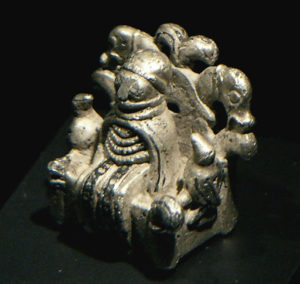
Next up is the one that triggers all the bro types. Yes, it’s this lovely silver and niello figure from Lejre that’s interpreted as Óðinn (but you see he’s wearing lady clothes so that’s bad apparently). Once again, he’s pocket sized for your convenience, measuring only 18mm tall (0.7”).
After that, we have the Eyarland Þórr statuette.
This guy comes in at 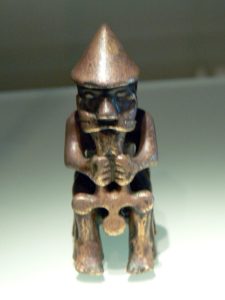 6.7cm/2.6” (with his hammer taking up a good deal of those centimeters/inches).
Finally, in before anyone can say “but that was Viking Age and a response to Christianity”, here’s the migration period Trollhätten “Tyr” bracteate.
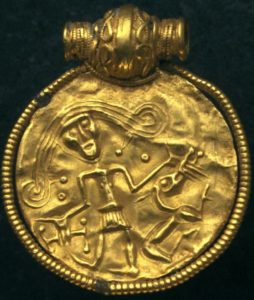
The funny thing about Heathen responses to Christianization is that per Danish archaeologist Lotte Hedeager, the entire myth of Tyr losing his hand was a migration period invention created in response to Christianization (Lotte Hedeager, Iron Age Myth and Materiality, pp 207 – 211). There are literally hundreds of years of Heathen responses to Christianization before what we typically think of as the conversion period in the North.
So what can we take from these statuettes?
They simply don’t make sense for community worship, and as the Vatnsdæla saga story of Ingimund and his Freyr amulet demonstrates, people do seem to have carried personal deity representations. Why would they have done this if only communities looked to gods?
Important Lessons for Modern Relationships
There are more examples I could have included here, but this blog post is already quite long (congratulations for making it this far), so I will move on to summarizing a few of the ‘lessons’ I think we could take from these sources.
The first is despite the examples given here, it seems to have been perfectly fine to just go to community events and do your part to uphold the customs of the community. Then as now, not everyone is going to be Hrafnkell or Þorkell level of relationship. And that’s fine.
One of the coolest things about these sources for me is the way in which people largely just did their own thing and didn’t really overly-concern themselves with what other people were up to in terms of belief and ritual unless it bled out onto the community level. Unless you have good reason to believe that someone is causing harm to others (and especially to those who cannot consent), it’s fine to just let people do what they’re doing. So if someone wants to set up a hof, start a cult around the worship of a preserved horse dick, or start some peripatetic Freyr sex cult, whatever. As long as it’s informed, consensual, and not illegal, go for it! You go get your damn völsi on.
But whatever you do, I think it’s wise to remember that these relationships go both ways, that that trustworthiness isn’t just something to be expected of a deity, but also on our end too. If you consider a deity to be your fulltrúi, ask yourself, are you really a faithful friend to the deity? Because sure, you can’t do nearly as much for them as they do for us, but wise kings always value their trustworthy followers. It’s the same kind of thing here. So don’t rush into these kinds of things, and remember that relationships are not built on oaths alone.
Sources
Jón Hnefill Aðalsteinsson – A Piece of Horse Liver: Myth, Ritual, and Folklore in Old Icelandic Sources
Jón Hnefill Aðalsteinsson – Under the Cloak: A Pagan Ritual Turning Point in the Conversion of Iceland
Lotte Hedeager – Iron Age Myth and Materiality: An Archaeology of Scandinavia AD 400 – 1000
Richard North – Heathen Gods in Old English Literature
Neil Price – The Viking Way: Magic and Mind in Late Iron Age Scandinavia (2nd Ed.)
The Old Norse World
The Saga Database
 de France. In one of her lais, Bisclavret, a man-turned-werewolf is prevented from returning to his shape of birth by an unfaithful lover hiding his clothes. You see, when it comes to masking and its sibling, shapeshifting,
  ”Woden worhte weos, wuldor alwalda,
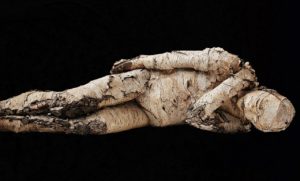 the island of Sámsey. There they encounter a ‘tree-man’ who speaks to them of his purpose and origin. He was the product of sacrifice, and had been made to bring about the deaths of men in the southern part of Sámsey. But over the years, he’d become overgrown and his clothes and flesh rotted away.
 makes the sacrifices until he receives a favorable oracle when he has a piece of driftwood brought in and fashioned into the shape of a wooden man. Then with “the monstrous witchcraft and python’s breath” of those two sisters, as well as the heart of a man sacrificed for the purpose and the proper attire for a man, they sent their tree-man, now named Þorgarðr, into the world to kill Þorleif (North 93 – 95).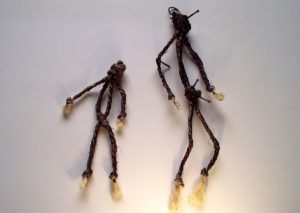
 them life. And this is where Óðinn steps up and breathes önd into them.
 with magic and necromancy. And we can infer that Skaldic craft was itself considered magical. We can also look at the story of Egill Skallagrimson covering his head with his cloak in order to compose poetry in Egill’s saga, and possibly infer certain practices related to the getting of inspiration (as Jón Hnefill Aðalsteinsson theorizes in <em> Going Under the Cloak</em>).
 ‘divine breath’ to fill the poet, bringing vision and other spiritual gifts.
 in Northern Iceland. I’d just been under the cloak and was thinking about the stories surrounding the falls when I found myself wondering about Óðinn in Iceland. Suddenly, my attention was drawn to the sound of heavy wing beats that somehow sounded louder than the roar of the waterfall. Two ravens were flying across the width of the falls and their wings were all I could hear. Time became weighty and the world more ‘real’. I became intensely aware of my breath, and suddenly I was not just myself anymore but engaging in a communion of sorts with the winds, the world around, and a certain one-eyed god. I was a part of the whole rather than a singular being. The ravens turned and flew towards me until they drew level and veered away, taking the moment with them.
 were though, and soon co-workers began to notice.
 trying to look as harmless as possible).
 inspiring and capable of producing that curious combination of “dread, veneration, and wonder”. (If your mind found that incongruous in any way, then you have some unpacking to do.)
 Other beings have produced awe to a lesser degree in me. Instead of outright terror, there’s an edge of caution. Over the years, I’ve noticed that these tend to be the beings who seem less capable of harming me, or at least can only harm me to a lesser degree. And so I’ve learned to listen to those feelings. When not obscured by bullshit ideas garnered from Victorian nonsense and scientific materialism, those feelings can be a useful guide to who you are dealing with and how careful you should be.
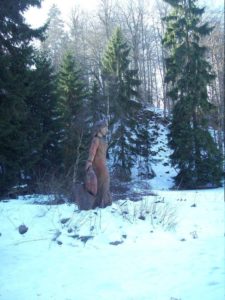 Hulle set not far from Wintersbach. And this is the tale that led me down the rabbithole so to speak. First came the spinning, and then more research and a pilgrimage of sorts to the Hollenteich up on the Hoher Meißner. There, on a frozen pond before a modern statue, I had a deeply holy (and unexpected) experience.
 But one day, while spinning at the side of a well, she accidentally drops her spindle into the well after pricking her finger.
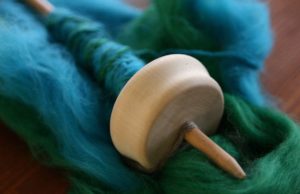 made sure to cut herself and throw a spindle into the well before she herself took the plunge is perhaps telling.
 First the dead pass over a thorny moor (‘Whinny muir’) that will prick them. Then they must pass over the ‘Brig o’Dread’. And then finally, because this is a Christian song, they must roast in Purgatory for a while. But at every turn, these tortures can be mitigated by one’s behavior in life. Those who gave the charity of socks and shoes (‘hosen or shoon’) will find socks and shoes to protect them on the thorny moor. Those who gave the charity of food and drink, will not be shrunk and burned by Purgatory’s fires. (The Brig o’Dread is its own challenge, and I’ll be taking a look at it in the next section.)
 century Icelandic poet Þórbjörn Brúnason made a curious mention of the ‘apples of Hel’. And apples also featured as grave goods in both Scandinavian and early English graves. But apples are not only associated with the dead in Norse lore. The apple seems to be both a food for the dead and a substance of renewal for the gods.(Davidson, Gods and Myths of Northern Europe, 165-166).
 ”Readers familiar with Neil Gaiman’s Sandman series might find some parallels here: the mundus imaginalis is like “The Dreaming,” a realm populated by the dreaming of every being, living or dead, god or human or plant, where each “place” has a geography only inasmuch as it’s necessary for those who visit to travel within it and find the same place again (or visit a place another once visited). In fact, Gaiman likely stole the entire idea for his cosmology from Corbin’s essay.”
 of map to this road to the afterlife. First the person dies/passes through water, and then they encounter two different trials. Yet the trials in both sources are far from insurmountable, presenting little problem for the compassionate person.
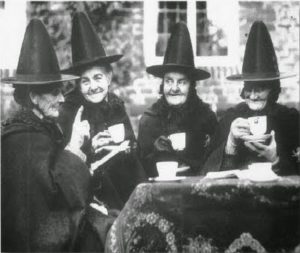 the power of loneliness, I guess. And I was lonely back then. I was a lone witch living in the kind of place people would shout threats at me on the street for being a witch (which they’d seemingly discerned from my general vibe as opposed to me being out of the broom cupboard).
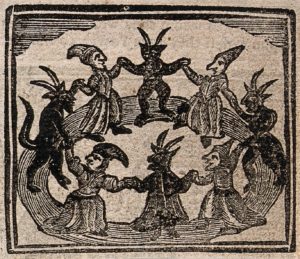 the fairy royalty or devilish figure to whom they are ultimately pacted (Wilby 84, 85). For the Early Modern person, it was the familiar that made the witch, but that familiar (though often appearing as a solitary figure),
 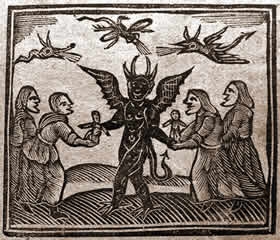 whose testimony we get the first attestation of the word ‘coven’), bears little resemblance to this more modern familial imagining. Where members of modern covens center their bonds with each other, it is the otherworldly power to whom each witch (and familiar) is pledged that is at the center of any group or proceedings in the historical sources (Wilby 81). This is about the familiar rather than the familial, and rather than protecting her ‘sisters’ at any cost as an Owens would, Isobel named the members of her group in her testimony (apparently without the use of torture to loosen her lips). Which can seem quite treacherous until you consider that for her, her main loyalty was probably not to any humans at all.
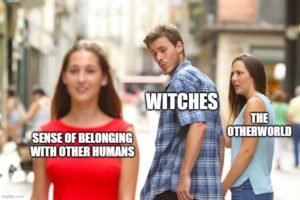 occurred that I believe we need to pay attention to here.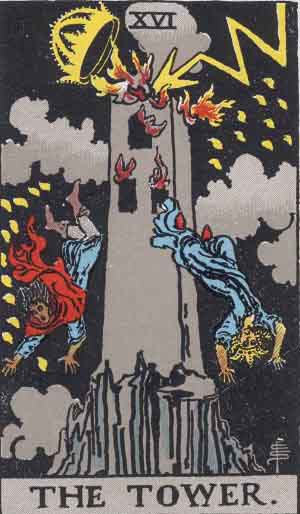
 employees, and grocery store clerks (among others, please forgive me if I missed you).
 People have been writing about ‘The Storm’ and
  offerings.
 a couple of weeks, we’re going to have a lot of dead people. And these are people who are going to have passed in terrifying, lonely circumstances. I already personally know one person with the story of only being able to say goodbye to a dying relative over FaceTime because they could not risk allowing family members to be with the dying because of the risk of infection.
 rising of the Pleiades. Moreover, their Beltane disappearance coincided with the yearly disappearance of the Pleiades from the night sky. It seemed a little too coincidental, especially when the characters you’re writing are Gentry who worship the ‘Seven Queens’.
 As outlandish as all of this may seem, this is not so different from the kind of otherworldly interest in creative types recorded in older sources. The storytelling bard has become the TV show writer, artists who may have painted scenes from Fairy while locked up in Bedlam, now create digitally, and famous Fairy-Firkler Morgan Daimler has been pointing out the weird waves of disinformation about Themselves online for a while.
 their own Pagan period peers. Yes, as unjust as a monstrous read is when it comes to figures like Medusa and Circe, that’s probably how many people at the time probably saw them.
 If there’s one thing about the underlying ‘string-pullers’ of Hellier, it’s that the history doesn’t quite add up – at least not in the usual way. Greg is sent a pdf of The Rebirth of Pan: Hidden Faces of the American Earth Spirit, a book by a man called Jim Brandon (pseudonym). It’s a wild ride through archaeology, conspiracy theory, cryptozoology, paranormal phenomena, and Crowley. Rather than the Ancient Greek figure, the ‘Pan’ spoke of in this book (a being which the author argues is actually the conscious, collective identity of the earth/contained within the earth) is an aggregate term, a way of naming what the author believes to be manifestations of this consciousness of/within the earth.
 kid’ on the block. Based on what I’ve seen so far of this new kid, I’m pretty sure the ‘old kids’ aren’t too happy with it. Something – a collection of beings in a trench coat masquerading as something else is trying to come onto their turf. And as humans, the creators and consumers of stories that shape the dominant consensus, we’re faced with a choice (another one).
 I walk. I hear the rush of the water and feel the wind beating against my ears.
 Christian alike.
 practices like that though, if I’m being honest.)
 in my heart even, and search them out with my eyes.
 too.
too.