Breath is sacred to me. And not just because I rely on it to stay alive.
As a Heathen, breath was the first life-bringing gift given to humans in the poem Völuspá. These first humans (at least according to this mythological account) began their existence as “trees”. In Gylfaginning, these “trees” are found on a windswept beach, I imagine them as logs possibly washed up by the sea.
So three gods happen upon these dendrous layabouts, and decide to give 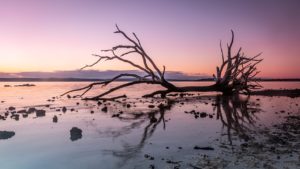 them life. And this is where Óðinn steps up and breathes önd into them.
Just imagine for a moment – the cold and unyielding wood somehow coming to breathe. I have to imagine those first breaths to be creaking and harsh, possibly even painful.
But then comes Loðurr with what might have been heat and color. (I say ‘might’ here because there’s some discussion about the ‘heat’ part.) I now imagine the harshness of creaking wood softening to flesh, and those harsh gasps becoming sighs of relief.
It’s probably a kindness that Hœnir’s gift came last really. Because he gave them óðr or mind, and presumably only then, an awareness of self.
There’s a lot to be said about these gifts and their relevance to magic. Today though, I’m going mostly to focus on Óðinn’s gift of önd.
Breath and ‘Soul’
You may have already inferred from the retelling above that önd is breath, and it is. But önd wasn’t just speaking to the breath that oxygenates the body. In both the Zoega and Cleasby-Vigfusson dictionaries, it is also translated as ‘soul’ too.
For me though, önd is also the steed upon which inspiration, or óðr rides. A fitting gift from the god of Skalds.
The Nature of Inspiration
But before we follow that thread any further, we first need to take a look at what inspiration may have originally been.
Unfortunately, the Norse and Germanic corpus isn’t particularly forthcoming on the nature of inspiration. We know that there are poetic meters associated  with magic and necromancy. And we can infer that Skaldic craft was itself considered magical. We can also look at the story of Egill Skallagrimson covering his head with his cloak in order to compose poetry in Egill’s saga, and possibly infer certain practices related to the getting of inspiration (as Jón Hnefill Aðalsteinsson theorizes in <em> Going Under the Cloak</em>).
However, in my opinion, our best clues come from the Welsh sources.
Like the Norse, the Welsh had an advanced culture of poetry (as too did the Irish). To be a poet, was to be capable of magic, and poets possessed of awen had the ability to influence kings.
The Welsh word awen, or ‘poetic genius’ carried supernatural and magical connotations, and was associated with spiritual enlightenment and wisdom. This was not “inspiration” as we know it today. This was inspiration associated with ideas of ‘spiritual wind’ and ‘divine breath’. The words ‘awen’ and awel (a Welsh word meaning ‘wind’ or ‘breeze’) are both derived from the Indo-European *uel, or ‘breath’. (You can find out more about awen in this video by Welsh scholar, Dr Gwilym Morus-Baird here.)
But it’s when we get to the purported origin of awen that things become interesting. Because in the Welsh sources, awen comes from the Welsh Otherworld, or Annwfn, the ‘Very Deep World’, rising up as a ‘spiritual wind’ or  ‘divine breath’ to fill the poet, bringing vision and other spiritual gifts.
As one might expect of the ‘Very Deep World’, Annwfn is often depicted as a chthonic realm in the medieval Welsh texts – an underworld, if you will. It is a realm connected with spirits, both Otherworldly and dead alike. An idyllic realm, a perfected realm. And it’s here with this idea of inspiration that comes from spirits and is breathed in (inspired) where we come crashing back into the Norse sources.
The topic of spirits entering a person for prophecy or other purposes can be quite controversial in modern Heathenism – taboo in some circles even. But as Eldar Heide demonstrates in Spirits Through Respiratory Passages , there is ample evidence of spirits entering a person through the breath. The evidence presented by Heide in the paper is primarily concerned with hostile attacking spirits who enter by forcing a yawn in their victims and enter on the in-breath. But an example given from Hrólfs saga kraka, shows that ingress by spirits may have also been a part of seiðr. In the account given in Hrólfs saga kraka, a seiðkona is depicted yawning before giving (or attempting to give) prophetic answers. Moreover, it was not uncommon This occurs multiple times in the account. Could this be a potential parallel to the awen-filled speech of the Welsh poets?
Working with Breath
In the magico-religious practices that I’ve developed over the years, breath is one of the key ways through which I connect with Óðinn. For many people who work with this god, he is called Allfather because of his role in enlivening Askr and Embla. However, for me, he is the Allfather because as the giver of breath, he is the giver of the one gift that all humans share regardless of ethnicity. We all breathe from the same air when we take our first breaths as newborn infants, and our final breaths will leave us to mingle once more with the winds. This is one of the main ways in which we are all connected, and it is with that understanding that I explore the breath in my work.
Meditation
There are many ways in which you can work with breath in Heathen magic and magic in general. But today I’m going to begin with meditation.
Many types of meditation work with the breath. Usually, it is used as a vehicle for changing one’s mental state and/or as a focus or support for meditation. But breath can also be used as a medium for exploring that sense of interconnectedness I mentioned above.
The first time I experienced this, I was stood at the side of Goðafoss waterfall 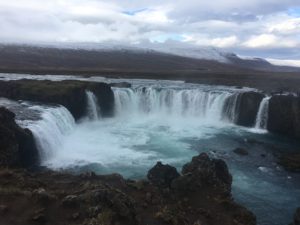 in Northern Iceland. I’d just been under the cloak and was thinking about the stories surrounding the falls when I found myself wondering about Óðinn in Iceland. Suddenly, my attention was drawn to the sound of heavy wing beats that somehow sounded louder than the roar of the waterfall. Two ravens were flying across the width of the falls and their wings were all I could hear. Time became weighty and the world more ‘real’. I became intensely aware of my breath, and suddenly I was not just myself anymore but engaging in a communion of sorts with the winds, the world around, and a certain one-eyed god. I was a part of the whole rather than a singular being. The ravens turned and flew towards me until they drew level and veered away, taking the moment with them.
It is this experience I try to replicate when I meditate in this way. I begin with offerings and a prayer before taking a few moments to calm myself and fall into a light trance state. Then I focus on my breath as a connecting medium. Each time I breathe in, I do so with the awareness that I am breathing in a substance of winds, spirits and inspiration shared by everybeing else that breathes as I do. Then I release it back into the wholeness of the world completing the circle once more. Each breath is a micro-reenactment of life from birth to death. On good days, I focus so completely on the breath and what it carries that I no longer feel the separation between myself and the whole, and that is when the real magic happens.
In my experience, this exercise is the most satisfying when performed in a high place where the winds blow free, but you do not need to be on a mountaintop to do this. Your backyard or sitting indoors near an open window will work just as well.
A Story in Parts
In this post, we’ve covered a lot of ground. We began in mythological time, with three gods on a windswept beach giving life to the first humans, and followed the breath to its connections with spirit-gotten inspiration in the Welsh tradition before returning to the North and the theme of spirits through respiratory passages. Those of you who are more familiar with the ON material will have probably noticed that the more typical word for both ‘inspiration’ and possibly also ‘possession’ too. There is no doubt that there is some overlap here, but we’ll be getting into that further in the next post.
Speaking of the next post, we’re going to be taking a look at the other gifts of life, some of their most important uses in magic, and the possible connections between those gifts and the most common elements found in Old Norse magic. Well, at least as I see them.
Until we meet again, friends!
Be well.
 were though, and soon co-workers began to notice.
 trying to look as harmless as possible).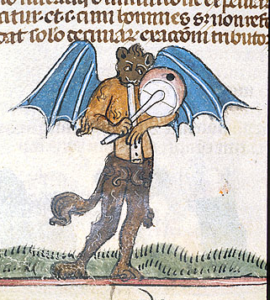
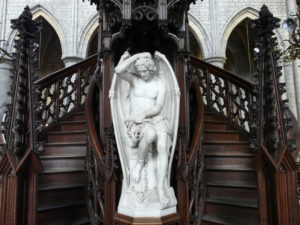
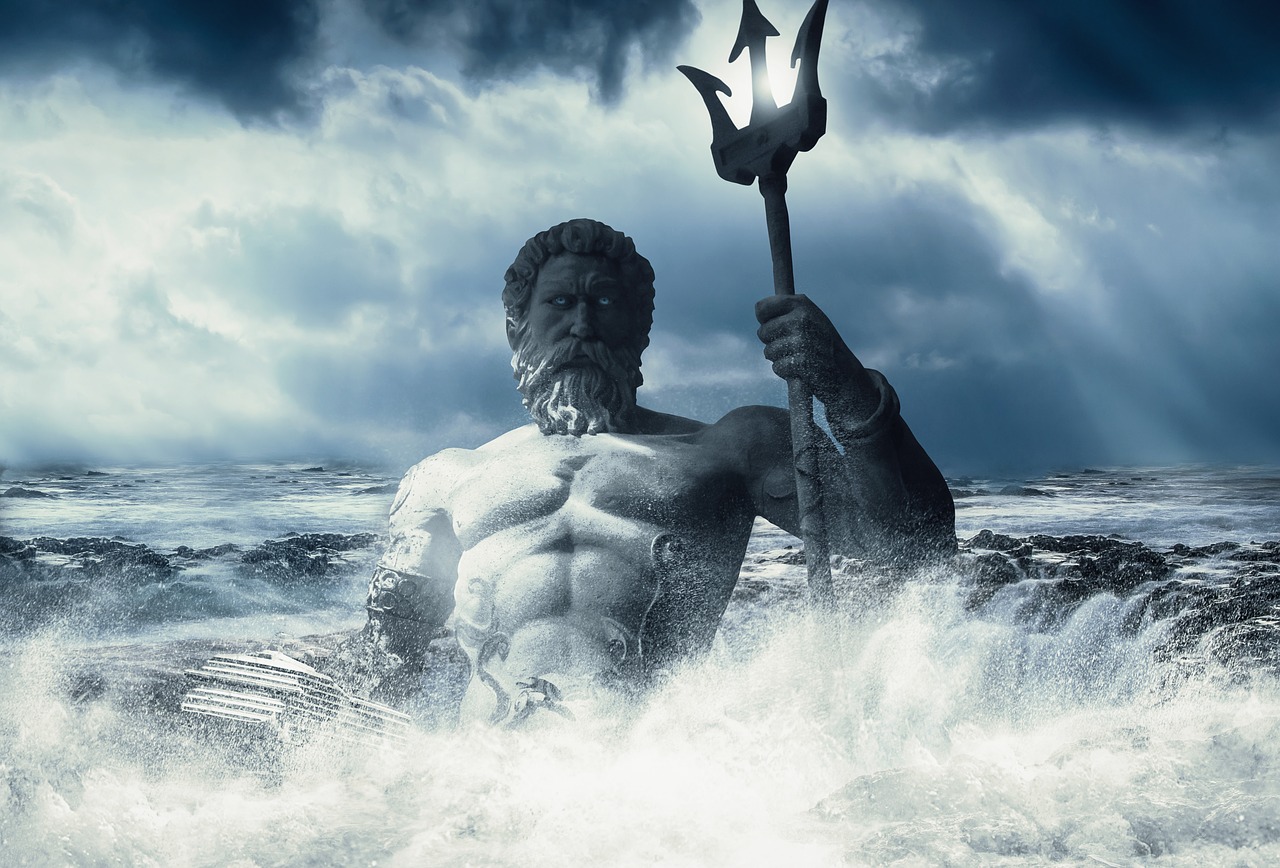
 inspiring and capable of producing that curious combination of “dread, veneration, and wonder”. (If your mind found that incongruous in any way, then you have some unpacking to do.)
 Other beings have produced awe to a lesser degree in me. Instead of outright terror, there’s an edge of caution. Over the years, I’ve noticed that these tend to be the beings who seem less capable of harming me, or at least can only harm me to a lesser degree. And so I’ve learned to listen to those feelings. When not obscured by bullshit ideas garnered from Victorian nonsense and scientific materialism, those feelings can be a useful guide to who you are dealing with and how careful you should be.
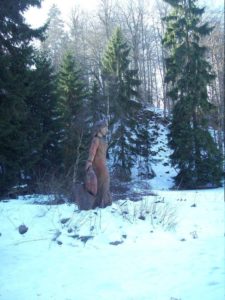 Hulle set not far from Wintersbach. And this is the tale that led me down the rabbithole so to speak. First came the spinning, and then more research and a pilgrimage of sorts to the Hollenteich up on the Hoher Meißner. There, on a frozen pond before a modern statue, I had a deeply holy (and unexpected) experience.
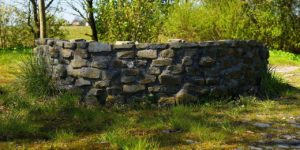 But one day, while spinning at the side of a well, she accidentally drops her spindle into the well after pricking her finger.
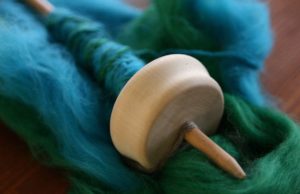 made sure to cut herself and throw a spindle into the well before she herself took the plunge is perhaps telling.
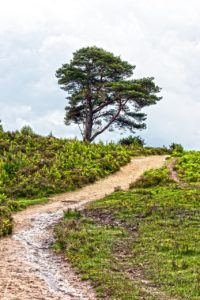 First the dead pass over a thorny moor (‘Whinny muir’) that will prick them. Then they must pass over the ‘Brig o’Dread’. And then finally, because this is a Christian song, they must roast in Purgatory for a while. But at every turn, these tortures can be mitigated by one’s behavior in life. Those who gave the charity of socks and shoes (‘hosen or shoon’) will find socks and shoes to protect them on the thorny moor. Those who gave the charity of food and drink, will not be shrunk and burned by Purgatory’s fires. (The Brig o’Dread is its own challenge, and I’ll be taking a look at it in the next section.)
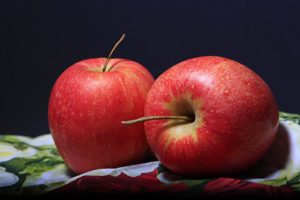
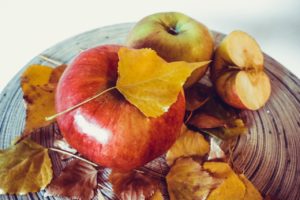 century Icelandic poet Þórbjörn Brúnason made a curious mention of the ‘apples of Hel’. And apples also featured as grave goods in both Scandinavian and early English graves. But apples are not only associated with the dead in Norse lore. The apple seems to be both a food for the dead and a substance of renewal for the gods.(Davidson, Gods and Myths of Northern Europe, 165-166).
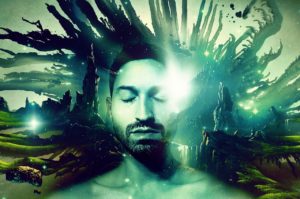 ”Readers familiar with Neil Gaiman’s Sandman series might find some parallels here: the mundus imaginalis is like “The Dreaming,” a realm populated by the dreaming of every being, living or dead, god or human or plant, where each “place” has a geography only inasmuch as it’s necessary for those who visit to travel within it and find the same place again (or visit a place another once visited). In fact, Gaiman likely stole the entire idea for his cosmology from Corbin’s essay.”
 of map to this road to the afterlife. First the person dies/passes through water, and then they encounter two different trials. Yet the trials in both sources are far from insurmountable, presenting little problem for the compassionate person.
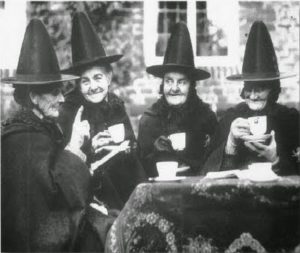 the power of loneliness, I guess. And I was lonely back then. I was a lone witch living in the kind of place people would shout threats at me on the street for being a witch (which they’d seemingly discerned from my general vibe as opposed to me being out of the broom cupboard).
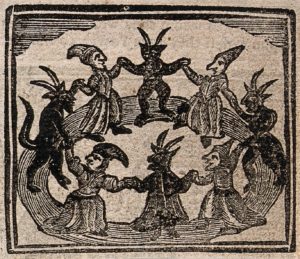 the fairy royalty or devilish figure to whom they are ultimately pacted (Wilby 84, 85). For the Early Modern person, it was the familiar that made the witch, but that familiar (though often appearing as a solitary figure),
 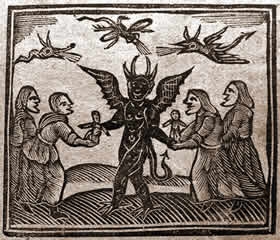 whose testimony we get the first attestation of the word ‘coven’), bears little resemblance to this more modern familial imagining. Where members of modern covens center their bonds with each other, it is the otherworldly power to whom each witch (and familiar) is pledged that is at the center of any group or proceedings in the historical sources (Wilby 81). This is about the familiar rather than the familial, and rather than protecting her ‘sisters’ at any cost as an Owens would, Isobel named the members of her group in her testimony (apparently without the use of torture to loosen her lips). Which can seem quite treacherous until you consider that for her, her main loyalty was probably not to any humans at all.
 occurred that I believe we need to pay attention to here.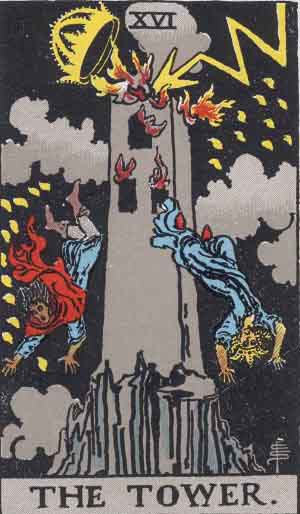
 employees, and grocery store clerks (among others, please forgive me if I missed you).
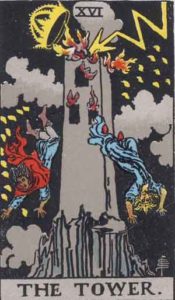 People have been writing about ‘The Storm’ and
  offerings.
 a couple of weeks, we’re going to have a lot of dead people. And these are people who are going to have passed in terrifying, lonely circumstances. I already personally know one person with the story of only being able to say goodbye to a dying relative over FaceTime because they could not risk allowing family members to be with the dying because of the risk of infection.
 rising of the Pleiades. Moreover, their Beltane disappearance coincided with the yearly disappearance of the Pleiades from the night sky. It seemed a little too coincidental, especially when the characters you’re writing are Gentry who worship the ‘Seven Queens’.
 As outlandish as all of this may seem, this is not so different from the kind of otherworldly interest in creative types recorded in older sources. The storytelling bard has become the TV show writer, artists who may have painted scenes from Fairy while locked up in Bedlam, now create digitally, and famous Fairy-Firkler Morgan Daimler has been pointing out the weird waves of disinformation about Themselves online for a while.
 their own Pagan period peers. Yes, as unjust as a monstrous read is when it comes to figures like Medusa and Circe, that’s probably how many people at the time probably saw them.
 If there’s one thing about the underlying ‘string-pullers’ of Hellier, it’s that the history doesn’t quite add up – at least not in the usual way. Greg is sent a pdf of The Rebirth of Pan: Hidden Faces of the American Earth Spirit, a book by a man called Jim Brandon (pseudonym). It’s a wild ride through archaeology, conspiracy theory, cryptozoology, paranormal phenomena, and Crowley. Rather than the Ancient Greek figure, the ‘Pan’ spoke of in this book (a being which the author argues is actually the conscious, collective identity of the earth/contained within the earth) is an aggregate term, a way of naming what the author believes to be manifestations of this consciousness of/within the earth.
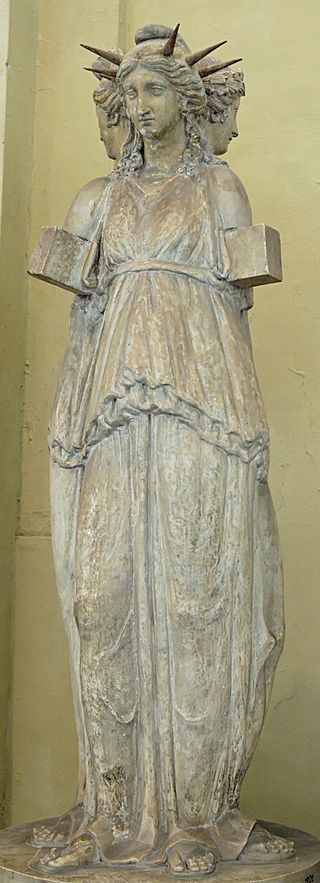 kid’ on the block. Based on what I’ve seen so far of this new kid, I’m pretty sure the ‘old kids’ aren’t too happy with it. Something – a collection of beings in a trench coat masquerading as something else is trying to come onto their turf. And as humans, the creators and consumers of stories that shape the dominant consensus, we’re faced with a choice (another one).
 I walk. I hear the rush of the water and feel the wind beating against my ears.
 Christian alike.
 practices like that though, if I’m being honest.)
 in my heart even, and search them out with my eyes.
 too.
too. than clickbait masquerading as a so-called ‘enlightened’ and pro-science point about wider society. It was a collection of cheap shots against groups of people who already face discrimination in society. Rather than emerging as a ‘defender of science’, Ceri Bradford cast herself as the ‘mean girl’ that would be more at home in a schoolyard picking on the kid she hopes can’t fight back.
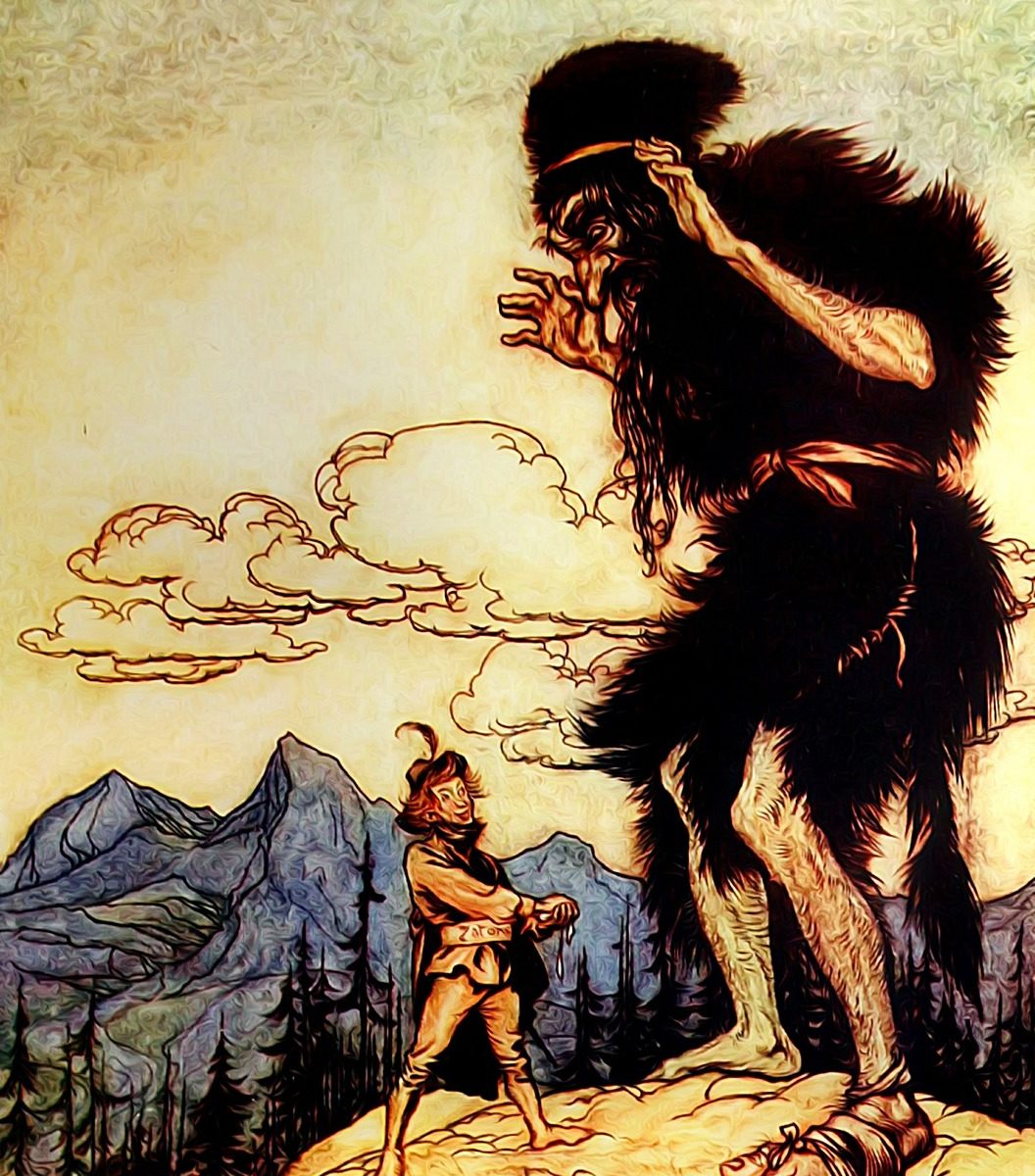
 book”, or “just a story”. Storytelling, in whichever form it takes, is inherently magical. It is the mirror that shows us who we are, shadows and all. But most importantly, it can be an agent for change. Especially when millions of people become emotionally invested in a story.
 created through mysterious and deadly processes in order to fight the otherworldly and monstrous on the Continent. It sounds like the stereotypical D&D dungeon crawl (but on TV), right?
 cops on Black people for having the audacity to have a BBQ.
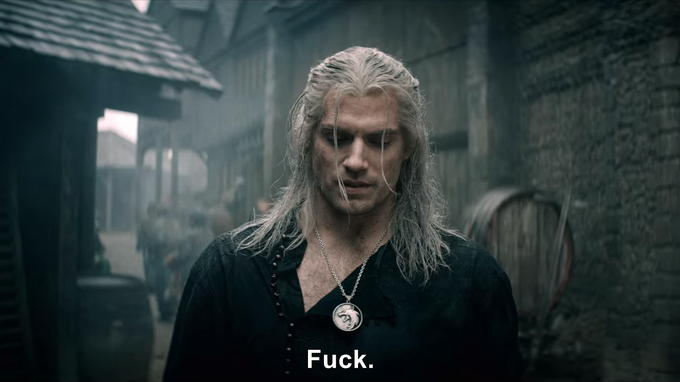 have become the person people go to for clearings at around the age of nineteen, but it really didn’t start there for me. I was very…popular…with all manner of beings as a kid, and a good percentage of them were quite harmful. So it’s a work in progress, and a lot of dealing with the old shadow baggage.