
Reader, I have a confession to make.
This blog series isn’t just about grimoire spirits and fairies. In fact, as we will see in this post, the concepts of spiritual authority and hierarchy aren’t limited to grimoire spirits and fairies. My choice of grimoire spirits and fairies when introducing this topic was, in a sense, a foreshadowing of the argument that I would make here: that hierarchies and authority among non-human person groups are not simply the product of Judeo-Christian influence. As we will see in this post, these things are relevant and have implications for us too.
I’m going to begin this post by first taking a look at what a reciprocal relationship is, the various types of reciprocal relationship found in Pagan period sources, and the ways in which they also exist within a framework of hierarchy and authority. Then I will take a look at why spiritual authority is important and the various types of spiritual authority.
Curious? Dive on in!
The Role of Reciprocity
The concept of reciprocal relationships have been out of favor for a couple of millennia. (Caveat here: this has not been, nor is the case with all human societies.) So it’s unsurprising that a lot of modern Pagans and Heathens struggle with the concept of reciprocity, and understanding the various kinds of reciprocal relationship. This issue is further exacerbated by the baggage that many carry from prior religious affiliations. It would seem the submission demanded by the Abrahamic faiths makes it difficult for many among us to freely give those acts of worship they associate with their former faiths.
Do ut Des
Reciprocity is the idea that we cannot get what we need from others, unless we are willing to give something back in return. This is do ut des or “I give so that you may give”, and it’s important for us to understand that this cycle of gifting is the foundation of every single relationship that the ancient Pagan or Heathen would have had. Without that relationship built by reciprocity and perhaps further cemented by oaths, there simply wasn’t any reason to care a whole lot about what happened to others. The land spirits you have no relationship with will not help save your crops, and the Patron you do not serve will not give you support.
But here is where hierarchy and authority come in, because like the spirits, humanity has never existed as a society of equals. Yet reciprocity was a fact of life, and something which applied to all relationships; regardless of whether those involved were of equal or unequal status. Reverend Kirk Thomas of ADF identifies three types of reciprocal relationships in his book Sacred Gifts: Reciprocity and the Gods. What follows here is a but a (necessarily) brief summary of what he covers in far more depth.
Holy Hospitality
The first type of reciprocal relationship was that of guest and host. Hospitality in the ancient world was not a choice but a duty, and it was incumbent upon both host and guest to obey the rules of conduct. The host was expected to feed, house, and entertain any guests; in return, the guest was expected to be on their best behavior (Thomas 16-17). Within the context of hospitality, either guest or host may be of equal or unequal status, with each expected to provide within their means.
A Friendship of Equals
The second type of reciprocal relationship is one that would be familiar to all of us: friendship. This is a type of  relationship which has historically tended to exist between people of equal status. Traditionally, differing social status was thought to be a barrier to friendships outside one’s social milieu. Of course nowadays (at least in our society), that is not always the case, and there is some blurring of the lines. However, even now, it can be hard to ignore the power differentials at play in friendships between people of unequal status. One example which Thomas gives is that of the friendship with one’s boss. Yes, a friendship can exist there, however, that boss may one day be called upon to fire you.
Patrons and Clients
 The final form of reciprocal relationship that Rev. Thomas gives in his book is that of Patrons and Clients. This is a form of relationship in which one party has vastly more resources than the other, and in which the Patron would essentially take care of his clients in exchange for that client’s service and loyalty. Sound familiar? This is the form of reciprocal relationship which, if we’re truly honest with ourselves, most closely matches what we humans have with the majority of non-human persons we interact with.
Admittedly, there were some relationships mentioned in the primary sources between gods and mortals that did look more like friendships (such as that between Athena and Odysseus). However, that does not change the basic fact that the power balance between mortal and god is still unequal (Thomas 160 -161). In my opinion, these cases are perhaps best viewed as examples of patrons having favorites.
Reciprocal Relationships, Hierarchy, and Authority
Hopefully, If there is anything this (very) brief survey of reciprocity has demonstrated, it’s that even when you leave the grimoires( with their undeniable Judeo-Christian influence) out of the equation, it’s impossible to get away from matters of hierarchy and authority. That can be hard for a lot of modern people to swallow, however nothing says that we have to abandon our modern ideas of equality. It just means that lobsters are gonna lobster, and that when 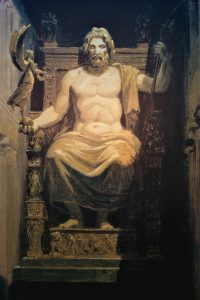 dealing with the gods and Other, the old rules probably still apply.
But given my rant in last week’s post about the perils of anthropomorphizing the Other, how do we know that these types of reciprocal relationships also apply here?
In this case, I believe we can find explicit evidence for at least the first and third types of reciprocal relationship among both fairies and gods.
Hospitality seems to be as important to gods as it was to Pagan period Europeans. For the Greeks, it was from the gods – or more specifically, Zeus – that the rule of hospitality originally came (Thomas 18-19). Similarly, stanza 135 of the Hávamál (or “Sayings of the High One”, a text attributed however erroneously to Odin) contains the following advice regarding hospitality:
I advise you, Loddfafnir, to take advice;
you would benefit, if you took it,
good will come to you, if you accept it:
do not scorn a guest
nor drive him away from your gates;
treat the homeless well.
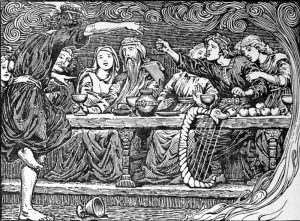
Refusal of hospitality could be disastrous too. In the Irish text, Cath Maige Tuired, the lack of hospitality shown by Bres towards a poet, as well as his own ill-treatment of his clients (the Tuatha Dé Danann), was what ultimately led to his own downfall (Thomas 38). The violation of the rules of hospitality among gods or god-adjacent beings also led to Loki’s downfall in the Lokasenna.
Evidence of hospitality among the Good Neighbors – while not absent – is not nearly as forthcoming. I turned to intrepid Fairyologist (just kidding)…ahem…Fairy Doctor, Morgan Daimler for an answer on that one:
“In stories that’s hard to say – we more have stories have them as rivals with other groups and having strict rules about things like theft and honor between themselves.
We do have stories of them expecting hospitality from us and also offering hospitality to us, although the second bit can of course get tricksy.
But there are stories for example of how people were expected to leave the fire banked but glowing and a bit of food and drink out for any of the Good People who might come in during the night (when the household was sleeping) and also of people who stumbled across the Fair Folk having some sort of gathering who were welcomed in and offered a place in the dancing and food, etc., as a guest – usually if the offer was extended by the Lord or King/Queen though”
(Thank you, Morgan!)
The Patron/Client relationship is also well attested in various Pagan period cultures. The Irish, Norse, and Greek cultures all considered there to be rulers or kings among the gods. Lugh (formerly Nuada) ruled over the Tuatha Dé 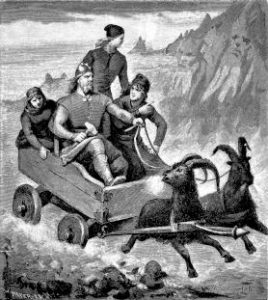 Danann; Odin was described as being the foremost among the Norse (at least per Snorri); and among the Greeks, it was Zeus who was believed to rule the Olympians. Flowing down from the High one, domains/riches and roles are divided accordingly; with the domains perhaps representing the physical support provided by the High God/Patron, and the roles performed by each of the clients/deities the service rendered to the High God. This pattern is also repeated between the other gods and their respective servants (such as with Freyr and Skirnir, and Thor with Þjálfi and Röskva).
In my opinion, the concept of reciprocity, or rather the different types of reciprocal relationships (with their implied status differentials) further support the assertions that I made in my last post regarding hierarchy and authority. Only this time, these assertions are more firmly grounded with an Indo-European Pagan worldview.
Spiritual Authority, Or “Why This ALL Fucking Matters!”
So having made the case (a few times now), that hierarchies are not only important, but basically underpin the entire system through which we build our reciprocal relationships, it’s time to look at why that matters.

The most obvious reason why it matters boils down to respect, and showing the proper amount of respect to those with whom you have relationship. As I argued above, while many humans have changed with regards to how we consider hierarchy, the old rules still apply when it comes to the Holy Powers. So in order to show the proper respect, you need to understand your place within the hierarchy. We humans are lower, but this isn’t necessarily a bad thing, and the various kinds of reciprocal relationships (with their attendant expectations and duties) provide us with avenues through which we may petition to have our needs met.
The less obvious reason (at least for those who really don’t bother with that magic and witchcraft rubbish) is authority; namely, how you can gain enough favor in order to have what is the magical equivalent of your queen or king’s seal upon your person when you ride out into the land. Royal seals are useful, because they confer upon the bearer the authority of the royals themselves. This means that subjects of those royals are compelled to do what you say, and this is the underlying idea when it comes to spiritual authority.
Authority is a layered thing too, because why bother trying to get the seal of the High King or Queen when you only need the subjects of a dukedom or clergy at a temple to do what you need? Sometimes you just need to court the favor of the more specialized bosses. However, if they don’t come through, then like why not go up the “chain of command”?
Without that royal seal, or (to bring this analogy back to the magical) deity patronage, you’re essentially just some snot-nosed human rocking up and demanding shit. And it’s generally a pretty terrible idea. No one knows who you are, and they’re under absolutely no obligation to do anything you ask of them. Equally bad is showing up with the magical equivalent of a royal seal from a ruler not recognized by the group of spirits you wish to work with. Because again, why should they listen to you? So if any of you are liking the look of Verum spirits (for example), but think you could somehow “Paganize” the superior spirit and deity names – please don’t. “Tech” we can borrow, but we cannot just plug in the names we like better and play.
But just how do you gain that royal seal?
The Role of Piety in Authority
The pre-Christian Pagan Europeans were orthopraxic. In other words, they considered how a person worshipped to be more important than what a person believed. This, and the framework of reciprocity, had major implications for how they saw the matter of piety.
Piety was about fulfilling religious duties, about keeping up with one’s prayers and offerings. It was about carefully nourishing those relationships and not letting them fall away. It was about being a good client. Piety was so important, that it could be held up as a form of authority in itself when compelling the dead. Take the following from the Greek Magical Papyri (PGM), for example:
“I ask you, daimon of the dead, not to listen to them [but to] listen [only] to me, Neilammon, [since I am]/ pious [toward the] gods, [and to cause them to be] ill for their [whole] life.
Excerpted from PGM LI 1-27
Equally, a lack of piety could be used as incitement of the dead against a person.
…[Spell to bind…(?)]: Take a lamella [made of lead]…: “I say to you who died prematurely and who were [called and taken] away by the wicked [Typhon. Commanding you] is/ the great god who has [dominion above and rules over the lower [gods]. Take into custody this wicked [and impious] man, because this [is the one who burned the papyrus boat of Osiris] and who [ate the sacred fish]. Take into custody [him, NN, whom NN bore…]
PGM LVIII 1-14
See what I’m saying? In order to have authority, you need to have patronage. In order to have patronage, you need to have cultivated relationship, and in order to cultivate relationship, you need to be pious.
You may not always need to “flash your royal seal”; most of us seem to get by in day to day life just fine through building relationship. But for the times you do, you’ll be glad of the hours of prayer and offerings.
In next week’s post, I’m going to take the discussion of authority a little bit further, and move into an examination of  wands and how they relate to the matter of authority. For now though, I’ll leave you with the following words taken from the Rig Veda (RV 1.26.8).
Let us pray with a good fire.
May all your fires be good.
Sources
Rev Kirk Thomas – Sacred Gifts: Reciprocity and the Gods
Morgan Daimler
Greek Magical Papyri

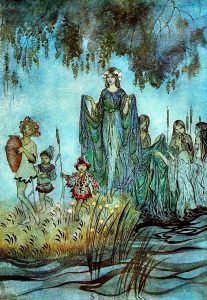 “Whether or not there are two set courts of Fairy, one thing that is clear is that the social structure does seem to operate as a hierarchy ruled ultimately by kings and queens. When we look at the bulk of the folklore it is usually a Fairy Queen who holds power, often with an unnamed King at her side or else ruling alone. In only a few Irish examples do we see solitary Fairy Kings. In the later folklore and ballads the Fairy Queens and Kings are often unnamed, going simply by their titles, but in older mythology and some local folklore we do have examples of named Fairy Queens and Kings, often beings who we know were once Gods.”
 because they are the most powerful. Power is a universal passport to authority other others, and it doesn’t matter if a spirit or fairy belongs to a particular court or hierarchy, inherent power is always recognized. Especially by those who appreciate the ability to size up and not antagonize those who are stronger as an excellent means of ensuring continued existence.

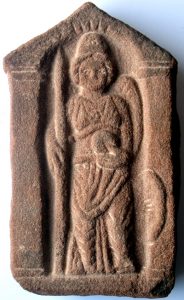
 goddess in the land. Always an advocate of authentic Irish culture, Lora also described the continuing importance of Brighid in Ireland, and the traditions that persist to this day.
 fire up my ass. I’ve been hardcore getting things done! For anyone who is interested in Lora’s work and a chance to experience trance as she does it, she does actually offer journeying courses,

 her experiences with receiving healing as a cancer patient, and about how she was even able to perceive who was sending her healing by tracing back the golden strands of healing energy she saw entering her body. She then talked about how to go about healing and some of her traditions surrounding her healing practices – a lot of it was stuff that I could see my family engaging in, but it also stuff they never really explained to me in a coherent way. I really appreciated Julia making the point that people shouldn’t promise to pray or heal others if they’re not actually going to do it. I think we all see a lot of promises to pray for people or light candles for them online, but I often wonder how many people actually do it. Julia also touched on healing cauldrons, but sadly didn’t get to spend as much time on that as I hoped.
 I’m currently working through the first round of editing this insomnia-fueled, oath-bound mess before handing it over to my beta readers, but it’s coming in at around 78k words so far. So it was no small undertaking. In case any of you are curious, it is a book about Pagan/Heathen/Witchy things. But more specifically, it’s a book of Helrunan and Seidr. My working title is “The Path of Ivy”, and it focuses on more chthonic practice. I’m also reproducing the liturgy for the
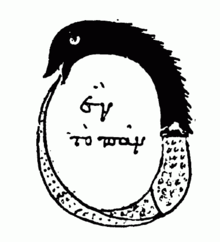 granted and covered by phrases such as “do the usual”. It is no coincidence that the ouroboros features in later grimoires such as the 18th century Clavis Inferni. Indeed, it’s likely that the use of a protective circle in the form of an ouroboros and directions marked out (and associated with elemental entities) were inherited magical tech from those old-school Graeco-Egyptian magicians (Skinner 87).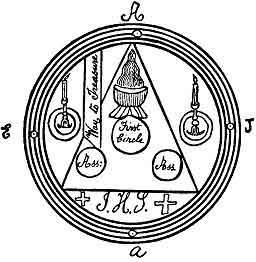
 This idea of going to “play” with a different cosmos can be hard to get your head round. After all, everyone thinks their worldview and idea of how things are in the cosmos is right, right? Relativism can be hard, especially when it comes to deeply held beliefs that are often also tied up in personal experience.
 sub-level. Even worse, there are some rumors that some of those grimoires even made it down to the basement a few centuries before the current crop of magic users started their sneaking expeditions down there. So you know, that’s a whole lot to take into consideration.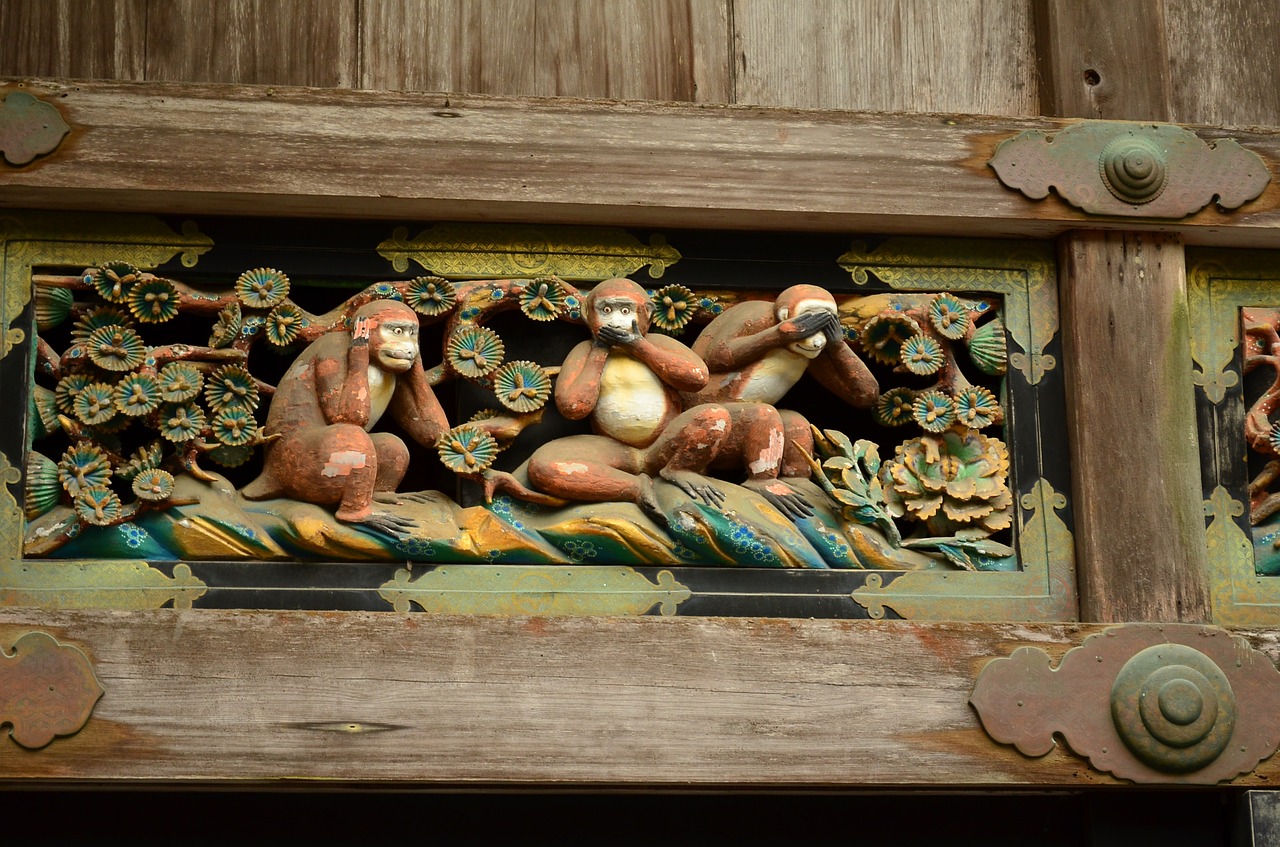
 botched practice run, attended to the fire alarm, and started again. There’s a lot to be said for perseverance and not giving up too quickly.
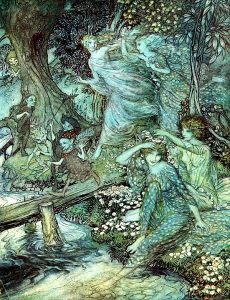 “Why do you do this when you know what is real?”
 control)? And yet, it might be argued that we live in a time in which the psychic censor not only exists but is further supported by human-made material distractions and barriers.
 Removing phones from one’s bedside is a good move here too – the psychic censor is a material thing, and those first interactions with that symbol of modern materiality is one of the best methods of banishing memories of dream.
 the person with it generously on the temples, and above the eyes and on the top of the head and the breast and under the arms. This salve is good against each tribulation of the enemy and ælfs?den and Lent-illness.
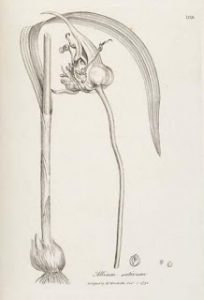 Make a salve against ælfcynne and a night-walker and for/against those people whom the devil has sex with: take hops(?), wormwood, bishopwort, lupin, vervain, henbane, h?rewyrt, viper’s bugloss, stalk of whortleberry, (?)crow garlic, garlic, seed of goosegrass, cockle and fennel. Put these plants in a vessel, place under an altar, sing 9 masses over them; boil in butter and in sheep’s fat; put in plenty of holy salt; strain through a cloth. Throw the plants into running water. If any evil tribulation or an ælf or a night-walker happens to a person, smear his face with this salve and put it on his eyes and where his body is sore/in pain, and burn incense about him and sign [with the cross] often; his problem will soon be better.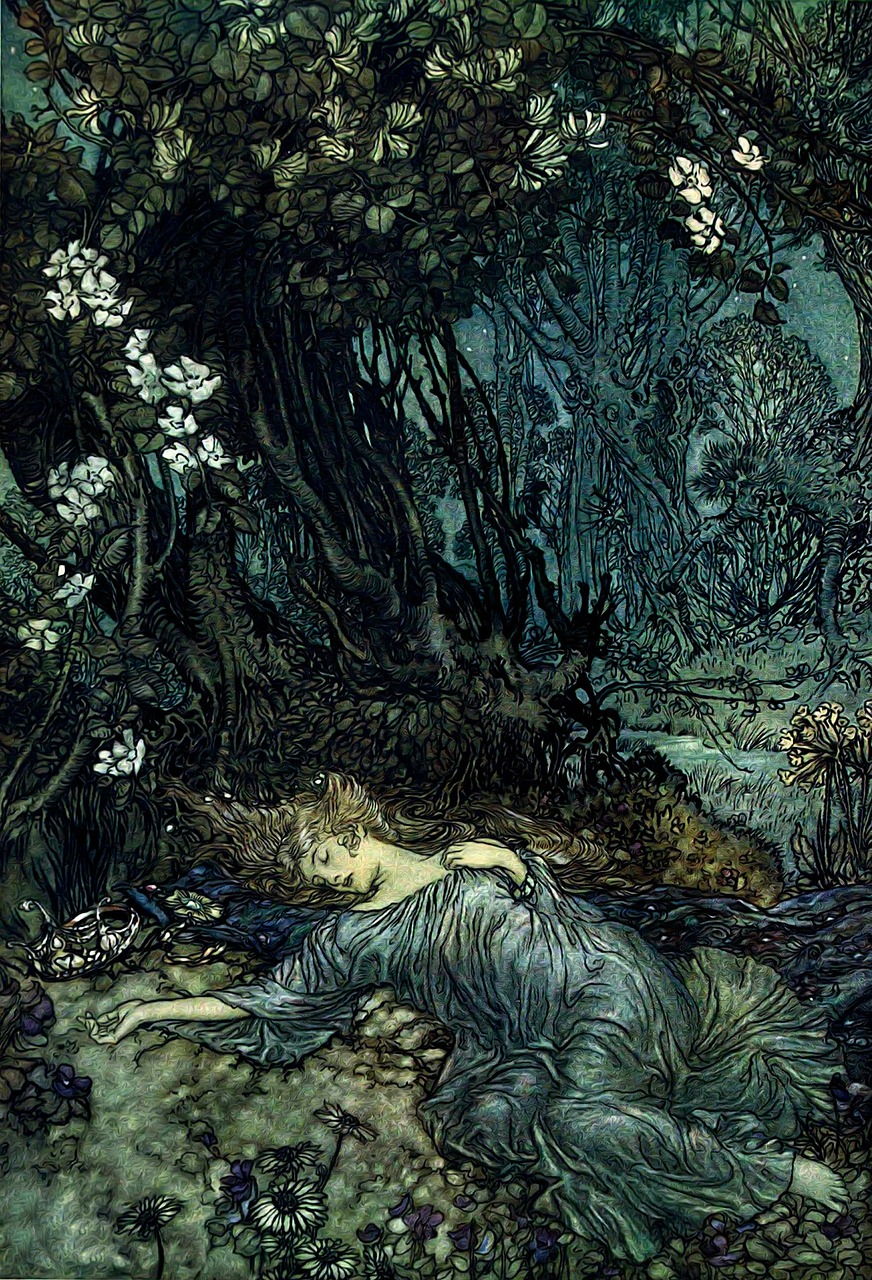
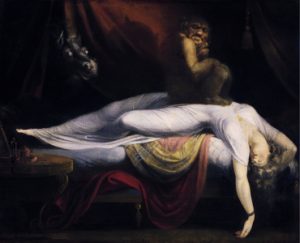 elves or night-goers need apply!), modern descriptions of this experience would have been familiar to our ancestors. In some accounts, such as that of the Swedish king Vanlandi of the Ynglinga saga, the victim was even “trod on” or “pressed down on” until dead. It is worth mentioning here that the attacking force was the witch/mara Drifa (Hall 125, 135). Interestingly, while the Ynglinga saga was composed post-conversion, a segment of the 9th century Ynglingatal referencing the death of king Vanlandi as a result of the witch (referred to in the Ynglingatal segment as mara) attests to the potential Heathen origins of this concept.
 the availability of books and tools we have now), would have been unimaginable.
 We get attached to possessions, and to make matters worse (?), we live in a society in which we’re constantly told that we need to have the right product in order to fix whatever it is that is wrong/fill that hole/make life perfect.
 mindfulness and discipline, form a chunk of the core of our training.
 discerning the will of the gods (and perhaps receiving a heads up from them about the future), for finding that which was lost, and for discovering past and present events that were not yet known to the enquirer. To know what was past and what was yet unseen was to be able to have a greater chance of predicting the future.