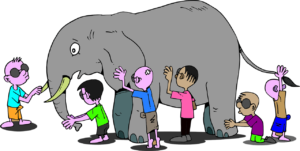
A while ago now I invited my Facebook friends to “ask me anything.” Sometimes I’ve just got the devil in me and want a bit of chaos to keep me going.
This is now how I’ll always see Old Nick (j/k)
I’ll be honest: I was hoping for unhinged.
I was hoping for the kind of questions that would make me cackle maniacally before spewing out an even more unhinged response.
What I got, however, were a handful of sensible, useful questions. I’m not. complaining, of course. I just wanted to give them some time to marinate in the old brainmeats before I responded. And well, this one’s probably more fermented than anything. It’s been a while, as I said.
The AMA Question That Launched 1000 (ish) Words
The first of the questions (and topic for this post) went as follows:
“What are your fave methods for letting go of real world junk and stress before doing magical work?”
Now I could say something along the lines of “I like to take a ritual bath and do a few minutes of meditation.” But honestly, I’m finding the classics somewhat deficient nowadays. It’s not that they don’t work; it’s just that my view of the overall picture has changed. Nowadays I find myself increasingly aware of the battle of consensus raging in our midst. We are, as the saying goes, in the time of monsters between the old world and new, each faction fighting for its preferred shape.
In my opinion, that “real world junk and stress” is a lot weightier than most might think.
Stories As Spirit-People
If you’ve been reading this blog for a while, you’ve no doubt seen me talk about Story and narrative. After all, it’s something I do a lot. You see, I sincerely believe that some of the stories in the ThisWorld would be better understood as a kind of spirit-person, imbued with their own agency and power of shaping. And as strange that might sound, I’m not alone in that belief, either.
Take, for example, Elizabeth Gilbert of Eat, Pray, Love fame. Her book Big Magic opens with an account of how a story came to her at a time when she couldn’t fully devote herself to its work. Some time later though, she happened to meet up with a fellow writer, who then excitedly described her new book. The plot, it turned out, was almost exactly the same as the one that Gilbert had had to pass up.
When I first read Big Magic, I felt excited. (I also, naturally, spent a bunch of time shouting “That’s Awen!” at the pages, like Gilbert could somehow hear me through the paper.) My own experiences with Story and story-spirits (mentioned here) had already led me to much the same place as Gilbert. But it’s always nice to discover you’re not the only weirdo in the village, so yay!
I suspect the only real difference between Gilbert and myself is our framing. Well…that and the whole “making sigils for protagonists” and “actively channeling their words” parts of it as well. Those bits are probably different.
The Troubles With Story-Spirits
What I’m getting at here is that most people don’t typically think of stories as a kind of people. But what if they were? Regardless of your beliefs on this matter, just imagine for a moment that some of the big stories you know are spirit-people. How would that change your approach to, for example, (Christian) religious baggage or nationalist narratives? What tools might you create or seek out to help with discernment?
Ask any group of Witches or other practitioners what they look for when discerning the influence of a demon, ghost, or fairy, and you’ll get answers for days. (Bonus points for a fight or fights breaking out in the comments!)
Discernment is Witchy 101, right?
But ask that same group a similar question about Story, and you’ll most likely be met with confusion. Some of those same folks might even think you crazy, or confidently inform you that “You can’t feel the influence of a story!”
Well, not with that attitude you won’t!
All differences aside, however, I think we can all agree that stories do have the power to shape. That power plays out in propaganda, marketing, national, and religious narratives each and every day. It’s always been there, but our modern tools have supercharged its capabilities. How many of us nowadays inhabit societies where people experience very different realities?
Even worse, those stories continue to maintain their grip even when proven detrimental to their participating groups or individuals.
Brimstone Birb Blessing
Imagine a demon with the power to enthrall entire nations to the same degree as a religious or national narrative – how fearsome they’d seem!! For all the breathless reporting about the odd demonically influenced murderer, there are stories out there inspiring people to commit whole-ass genocides. Some stories frankly make most demons look like petty bitches. Our society just takes their influence for granted, so most don’t even see it coming.
Anyway, back to my “fave methods of letting go of real world stress and junk before doing magical work.”
The Story-Spirits And Games At The AMA’s End
My current approach is to do the classics (purification, grounding/centering/shielding, and meditation). But I’m also well aware that stories aren’t so easily banished. How often have you done all of the above only to later catch old narratives creeping into your mind while working? As I blogged about here, our minds not only run on story, the stories within us shape our entire perception of reality.
All of which leads me to roleplaying games (RPGs).
Ordinarily we tend to think of RPGs as separate from magic. However, as the academic Sarah Lynn Bowman makes clear in her book, The Functions of Roleplaying Games, RPGs have clear ritual elements and may even fulfill the need for community ritual for some participants. Once upon a time, I tried to solve this issue by creating an alternate persona for ritual and magic via self-hypnosis (terrible idea, by the way). But what about creating an aspirational character as a way of sidestepping the stories currently shaping me for a glimpse outside their box? Though often overlooked, play can be powerful – a disarmingly liminal Fool-space full of potential. Some of my best channeling sessions with my ancestors have come because I decided to “just pretend” I was doing it, and in so doing, got out of my own way.
So, why not choose to embody the story I want until those other stories (hopefully) lose their grip? After all, I’m “just” playing, right?
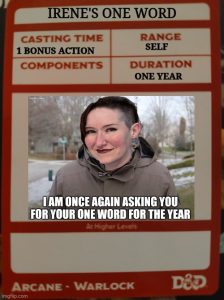
A couple of weeks ago while wandering the fetid wastelands of Facebook, I came across a post by my friend Irene/Glasse Witch. If you’ve ever seen the Bernie Sanders meme where he’s once again asking for donations, it was kind of like that. Except instead of asking for donations, Irene once again posted about her practice of choosing an intention word for the coming year and invited us all to participate.
Much like the Sanders meme, there was something soothing in seeing Irene’s annual “One Word” post. No sooner had I clapped my eyes on it, than I felt something inside me relax. And for a few precious moments, the world felt a little less uncertain and slightly more predictable. Safe. Without realizing it, those annual posts had become one of the many tiny, but no less mighty, anchors in my world.
If “Irene’s One Word” were a D&D Spell, it would belong to the category of transmutation. It does, after all, take specific collections of letters (themselves bags of holding for meaning) and make guiding stars of them as well.
This spell is a “Choose Your Own Components” adventure.
So naturally, I tapped out a quick comment.
“My word is ‘unhinged,’” I replied.
That probably sounded like trolling, but those words spilled from my fingertips with my whole chest.
A few seconds later though, I added a follow-up to explain what I’d actually meant. You see, growing up neurodivergent in the 80s and 90s, I got used to tucking away the weirder, more feral parts of myself to only maybe sorta fit in. ADHD was something American kids had on TV, and Rain Man was the only kind of autistic. Back then, you were just an obsessive, bizarre kid with the vocabulary of a “posh Victorian bitch” who pretty much lived on the naughty table at school and came up with ideas like “I should try walking to London” and “Maybe we could rock climb through that gorge with these mountain bikes?”
(In case any of you were curious, I give both of those activities a tentative 3/10.)
So is it really any wonder that “unhinged” became somewhat synonymous with those hidden-away pieces of self?
Maybe, maybe not. But most folks would probably use the word “authenticity” for that kind of thing.
Well…to a point. Pied Pipering a bunch of other kids into walking to London with me that one time was clearly a bad thing.
Authenticity Hunger in an Ersatz World
Hope for me has always been as dangerous as it is nourishing; I keep a cautious ember alive at best. Since Irene’s post though, I’ve seen others express that same desire for greater authenticity again and again. I’m seeing it so frequently now, it’s a struggle to keep that ember from bursting into flame.
Has our culture finally grown sick of this dystopian hellscape full of AI slop, propaganda, and online personalities who are more brand than actual people?
Time will tell, I suppose.
Fair warning, but this next part is probably going to sound like bullshit unless you know my kid. Around seven years ago (and I know this because I just checked FB memories), she randomly informed me that “Reality isn’t real. Reality is fake news.” She was all of four years old at the time, but there she was, sitting on the floor with her coloring book and crayons, laughing her little head off at the whole thing.
Startling statements and my kid go together like PB&J.
Clearly, the “fake news” part of it had come from overhearing adults discussing current events. It was after all 2018, and she’s always understood more than most kids her age. As for the rest of it, she either put it together for herself or it surfaced—as many of her statements often do—from goodness only knows where.
Usually when she does this, I encourage her. I ask her questions to try and flesh out where she’s coming from, then follow along to see where her thoughts next lead. Children often notice things that most adults miss or have been trained out of seeing.
I no longer remember where that conversation went, but my daughter was essentially right. This thing we call “reality” <em>isn’t</em> real—at least not in the way that most think.
However, I am old enough to remember a time when that unrealness was, or still felt, mostly organic—a world with the space to be authentic instead of constantly curated and always “on.”
This ersatz unrealness makes avatars of us all.
The Organic Unrealness Of Reality
“How might authenticity look for me, and how would I recognize it?”
Those were the two questions I began with at the start of this journey. While I knew this would likely be a process of separating the “wheat” from the “chaff,” I’m also well aware that the chaff is everywhere and, even worse, has its tricks. It’s very well-practiced in convincing humans that it’s wheat.
In the end, I decided my quest for authenticity was also really a search for that organic unrealness as well, and that is where I begin here too.
First and foremost, no human sees the whole of reality as it actually is, and believe it or not, that’s at good thing.
According to two different studies—one by the neuroscientist Karl Friston, and the other by cognitive psychologist Donald Hoffman—raw reality is too much for our brains to handle (Kastrup 2023, 13 – 14). It’s the kind of “extra” that nobody needs. Apparently, things would devolve rather quickly into “Warning! Danger Will Robinson!” territory in the brainmeats, then it would be off to the forever box. The End.
So how do we humans navigate reality then without melting our brains?
Well, this is where perception comes in.
In his book Making Up The Mind, neuroscientist Chris Frith explains that perception is a working model of the world produced and constantly modified by the brain. So, a filter between ourselves and our otherwise overwhelming reality (Frith 2007, 111 – 137). If you’re a fan of analogies (as I am), you might find the following from the former CERN scientist Bernardo Kastrup useful:
”Perception is like a dashboard of dials: it contains information about the world only in an encoded form, thereby limiting the entropy of our internal states, just as a dashboard of dials intrinsically limits the entropy of information pilots have to contend with…” (Kastrup 2023, 14).
See, in another version of the ThisWorld, Bird Box could have actually been good.
Prediction, Story, And Perception
But how does the brain know which modifications to make? The answer to this question, it seems, is prediction.
According to predictive coding theory, your busy bee of a brain modifies what you perceive based on the predictions it makes in response to sensory input. Like all working models, our perception has its foundational premises, its systems and criteria—frameworks through which the brain can interpret new information then respond.
It just so happens that the building material of human perception appears to be story.
Now, to be clear, when I say “story” here, I mean everything from personal past experience, preferences, and relationships to cultural wisdom, academic knowledge, political bias, media, and religious beliefs. As I will explain shortly, story is the language of experience, and the experience of it goes much deeper than the spoken or written word.
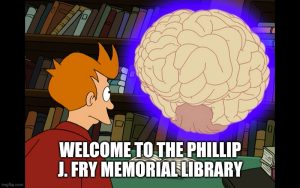
In a sense, each and every one of us carries entire libraries of memory in our hearts and minds. Some of them are our own whereas others are added from elsewhere. But it’s these “libraries” that are the foundation and frameworks for those perception-shaping predictions that keep us alive.
The world may be a vampire, but the evidence suggests we humans are hardwired for story. To quote the neuroscientist Antonio Damasio, “story is something brains do, naturally and implicitly.” It is the solution our brains arrived at to solve the problem of which of the 11,000,000 bits of sensory input per second to keep, cut or edit (Cron. 7-8).
We humans have been storytellers since perhaps even before we became homo sapiens sapiens. No matter our culture or language, we all teach, learn, and pass on warnings via story (Ibid). It is, as I said earlier, the language of experience, without which we humans wouldn’t have survived. However, it also enables us to form relationships with others and maintain community bonds. In an existence of navigating reality by proxy, shared stories create common ground. They’re the bricks and mortar of society itself.
Moreover, stories are “sticky” in ways that facts are not. Brain imaging studies have found that well-crafted narratives light up the same regions that process sights, sounds, tastes and movement in real life (Cron p.4). So you know, in addition to all of its other roles, story can also be a holodeck for our brains.
In case you were wondering, that hardwiring and felt experience are a large part of why people rarely change their minds when faced with new evidence. The rest we can mostly blame on cognitive bias and the incredible irony that lizard-brain-tickling narratives almost always DESTROY facts and logic.
It seems the brain has never prioritized accuracy when it comes to perception. Unsurprisingly, the goal has always been survival; that is the priority. If you’re not careful, your brain will edit/add to those inner libraries and fuck with the indexing. When you consider the fact that the brain can just edit obvious physical phenomena from your sensory input so you literally don’t perceive it, that’s actually quite disturbing.
(As an aside, this is why it’s especially important for those of us from minority religions to frame “reality” as a consensus of perception. We need to be aware of where the overcultural consensus ends and ours begin, and to be mindful of that line.)
Anyway, also in our Bear Grylls brain kit: an equally innate negativity bias. This little Swiss Army Knife of misery is why we tend to focus much more on negative experiences and media. So, not only do our brains proactively tweak perception to privilege survival regardless of accuracy, it also privileges the negative while doing so.
What do you get when you cross a survivalist with pessimism and a high level of anxiety?
You get an easy access point for an ersatz or unwanted reality to slip in.
Final Thoughts
When I first sat down to write this, I had something much shorter in mind. As it turns out, I’m far from done spilling words on this topic. However, attention is precious nowadays, and I’ve kept yours with this behemoth for long enough. It’s only fair that I give your eyeballs a break. (Worry not, the next post is mostly already written!)
In this post, I’ve talked a lot about perception, its mechanics and vulnerabilities. I’ll be digging further into those ersatz unrealities, the propagandist’s/marketer’s art, and its overlap with this thing we call “magic.” There’s also a possible third post in the works too, but more on that later.
For now though, if you find that you also thirst for the organic, then I encourage you to practice noticing your own easy access points and to sit with them. Consider how you might best shore up your defenses in a way that is both compassionate and respects your needs and the innate mechanisms of your brain.
However, most of all, I invite you to try reframing some of the news you see as stories in a book. What are the plot points? Who are the protagonists, and what drew them in? What is the prologue? Where might this story be going, and what emotions does it stir up? Lastly, where are you in this story, who is doing the telling, and what might the storyteller or storytellers hope to achieve?
The Final, Final Words (No, Really)
I’m excited to share that I’ll be presenting at the Sacred Space/Between the Worlds 2026 joint conference in College Park, MD in February!
The Sacred Space Conference is the premier annual esoteric conference on the East Coast for intermediate to advanced practitioners. The Between the Worlds Conference is offered at particular intervals aligned with specific astrological events.
When these two conferences come together you can expect a wide variety of high caliber workshops and rituals designed to discuss important magical needs and timely topics.
Check out the schedule and register here ➡️ https://sacredspacebtw2026.sched.com/
That’s all from me for now. Please enjoy this bonus pic of Irene (who, again, is absolutely not Bernie Sanders) as a reward for making it this far.
A few years ago, back when this idea of the otherworld bleeding through began to make its way into Pagan/Witch discourse, I had a curious incident at the side of a river with a witchy friend. We’d been on a walk together as we often did back then in the pre-plague years, end eventually (unsurprisingly) we’d begun to “talk shop.” You see, both of us had noticed the uptick in otherworldly activity, in a similar way to how hunters are often the first to notice disease in deer.
Now, please don’t get me wrong. I’m not comparing the Other with disease here (I wouldn’t dare). I’m just saying that as magical practitioners, we tend to be among the first to notice this kind of thing.
But we were both also getting messages from multiple people. Moreover, these were often from people who didn’t ordinarily experience our kind of strangeness, and that stood out.
At some point in our discussion, I mentioned the fact that a witch’s knowledge and power was believed to come from otherworldly sources where I’m from. And I wondered what the effects of this otherworldly “bleed” would have on magic and what we humans can do with magic. Naturally (because I’m an idiot like this), I grabbed a stick and drew a sigil I use when creating portals into the sand and silt of the riverbank.
The effect was almost instantaneous: a shifting sensation that used to take more effort to achieve.
I closed it and scrubbed it from the sand almost as soon as my friend and I noticed the shift. But I’ve been musing about the changing limits of magical possibility, consensus, and opposition ever since.
John’s Rising Currents
Discourse is a funny old thing. Sometimes we can have an observation or thought sitting in the soil of our mind for a long time without writing about it. But then, something will happen to water it, and it’ll take root and grow.
(As an aside, it’s interesting how we refer to events that spark action as “precipitating events.” Soil and seeds. Soil and seeds.)
I’m a firm believer that most things have their season. And if the blog John Beckett posted this morning is anything to go by, then this subject’s season has come.
In The Currents of Magic are Getting Stronger, John Beckett makes the same observation I did at the side of that river. Ironically, he uses the analogy of a river running higher and faster to explain his observation that the “currents” of magic are getting stronger and enabling an increase in possibility/greater results. He also goes on to cautiously suggest some possible causes, and this is where I feel like I have something to add.
Magic and the Otherworldly
I’ve blogged about this before, but in the historical witchcraft traditions where I’m from, the source of the witch’s power and knowledge was otherworldly. This is where we get into familiars and hierarchy. These are all complex topics, and more than I can cover in this blog, so I encourage you to read the posts I’ve linked here if you want to go deeper. That’s not to say that what we call the “otherworldly” is the only possible source of magic and knowledge though, nor the only possible framework through which these changes can be understood.
We also cannot ignore the fact that most of the discussion on this topic is coming from US sources. I’m not saying that strange things aren’t also happening elsewhere—some of my mother’s stories from back in Lancashire have been decidedly stranger than usual of late. But we also cannot assume that just because this stuff is happening here, it’s happening everywhere.
In my opinion, an important consideration in this discussion of how widespread or localized this “trend” is, boils down to the relationship between a culture and the otherworldly beings they interact with. ( Assuming the relationship between Otherworldly beings and magic is found within those cultures in the first place.)
Fairy-like beings are found in lore pretty much all over the world, but not all cultures have responded in the same way to their presence over time. Some cultures—such as many Western European cultures—equated them with demons and/ fallen angels, destroyed their sanctuaries, and drove them out after humans converted to Christianity (LeCouteux, Claude. Demons and Spirits of the Land. Pp. 23-28, 68-80).
And I’m not saying that folk practices involving the otherworldly didn’t still exist, of course. We know they did. But as I’ll hopefully make clear in the next section, consensus (like all stories) is a powerful and often binding thing.
This process wasn’t limited to Western Europe either. If Cotton Mather is to be believed in his Wonders of the Invisible World, early colonizers in what would become the US also drove out “devils.” He even goes on to blame the apparent preponderance of witches in Salem on a counterattack by the devils, thus retaining that link between witches and the Otherworldly in his interpretation of events.
The otherworld is bleeding through, the devils are coming back, and they’re bringing us witches with them?
However in some places, maybe the Otherworld didn’t need to bleed back in from anywhere else at all.
Reality, Consensus, Possibility, and Feedback Loops
Another story now. Back in the mid-2000s, I came across an interesting interaction at a Pagan Conference in England between a gentleman from an African country (I didn’t get chance to ask him which), and a vendor who was selling these tacky, crystal-encrusted “wish books.” For her, even as someone who considered herself a witch, these books were just a bit of fun and to be commonly understood as such. There was no real expectation that writing your wishes in them would yield any concrete results. But her potential customer clearly had far greater expectations of the “wish book” than her and kept asking her in a deadly serious voice if it really worked.
As you might imagine, this became increasingly more uncomfortable the longer it went on.
This is impossible to separate from consensus. I believe that consensus, in a sense, both delineates and limits the boundaries of possibility.
From this perspective, the more people that experience and/or interact with the strange and Otherworldly, the more the consensus that THIS DOES NOT HAPPEN IN “REALITY” is challenged. And over time if enough people start to have these experiences, the consensus of a culture shifts to include them in the realm of possibility. This in turn, creates a kind of feedback loop in which that consensus is progressively widened. (A process that is not so different from what you find in a propaganda campaign.)
This is theory, but I would argue we have historical proof of the reverse: the binding effects of consensus.
I’ve written about this before, but we can see this in how concepts of dreaming change in Northwestern Europe after the advent of Christianity. People went from considering dreams a place where they could encounter the dead and otherworldly in a concrete way, to a state of consciousness in which people only experience nonsensical or anxiety-driven scenarios.
(Again, another way of driving out the otherworldly, I might add.)
This is all very exciting to think about, but I think we need to also be cautious here too.
The Other Side of the Coin
Within the Pagan and Witch communities, I think there is a tendency to assume that we are the only ones out there working magic. We forget that Christians also have their magic, and that a more forgiving consensus is also going to benefit them as well.
Unfortunately for us, they tend to be very much against our kind of magic, and they still largely label the Other as “demonic.” They also have an established tradition of weaponized “prayer” in the form of “prayer warriors,” who often work together in groups and are capable of a level of faith and zeal very few Pagans and Witches can muster.
Another area of concern is that I suspect a lot of the more “fringe” Christians are feeling the same uptick in activity as we are. I’m far from an expert on this subject, but I keep an eye on some of these groups as part of my omen-taking, and this is something I’ve noticed. There seems to have been an uptick in videos of “demonic possession” over the past few years. And talk of spiritual warfareagainst demons and witches seems to have become more common. (Here’s a recent example.) There have also been large events such as the Jericho March earlier this year. Participants of the march blew shofarim and marched around the Capitol building seven times while praying- a clear imitation of the Israelite siege of the city of Jericho. The next day was 1/6, in case you were wondering about their intentions.
If there’s anything we can learn from history when it comes to religious fundamentalists of a certain kind, it’s that this usually doesn’t go well for us. The more people believe in the possibilities of magic in general, the more they tend to blame magic (and practitioners) when things go wrong. So, the Otherworldly may be more present, and “currents of magic” may be rising and growing in strength, but they’re not without a brewing backlash.
I just hope we don’t wind up in a place where humans meet the same fate as books.
Reality is a funny old thing, isn’t it? For starters, everyone thinks they know what it is. We all have clearly defined ideas of what is ‘real’, and what is ‘a bridge too far’, and while there is some degree of variance between individuals, on the whole there is still something of a consensus.
This my good people, is what is known as “consensus reality”.
Examining Consensus
I’ll admit, the first time I heard the term “consensus reality”, it somehow managed to make all the sense in the world, and also sound like bullshit all at the same time. It just sounds like one of those terms that crazy people make
Another wonderful experience in a human-created reality! Thank you for trusting Rekall for your memory needs!
up, that sound scientific, but really are not.
However, when you think about it, and especially in the context of what we know about how the brain perceives and stores information, it makes a lot of sense.
You see, consensus and prior experience (which is also subject to consensus) provide the framework for how we perceive and remember the world around us. This is part of why the Overton Window is such a big deal. Because if you shift the consensus, then you shift the very framework through which people perceive and interact with the world. (Those “culture wars” don’t look so fucking stupid now, do they?)
But how does this all work?
From Senses to Storage
Our senses take in a lot
of information per second. According to the Hungarian-American psychologist, Prof. Mihaly Csikszentmihalyi, we take in around 2 million bits of information per second through our five senses. Now that’s a massive amount of information, and so it’s probably no surprise that the brain cannot store it all. After all, the brain is like any other storage device – it has finite capacity.
So what does the brain do?
Well, this is where the conscious mind steps in and basically edits, deletes, distorts, and generalizes this information down to a more reasonable 134 bits per second.
This is also where consensus comes in, as part of that prior knowledge is informed by consensus. It is quite literally the ‘style guide’ for your brain’s internal editor.
So when I see arguments online about “reality” that are largely based in the enforcement of the scientific materialist consensus that has dominated for so long, I can’t help but roll my eyes.
Why?
Unbelievably, Pixabay has no images of fairies wearing roller skates with neon signs. I am disappoint.
Because if you hold to that consensus strongly enough, a fairy could literally skate by you wearing a tutu and leg warmers, with big, flashing lights saying “I’m here!”, and it wouldn’t matter because your brain would just edit it out anyway. It would just be another bit of information out of 2-11 or so million that just gets edited out within less than a second. You wouldn’t even know you’d seen it. Hardly makes you an arbiter of reality, right?
Let’s not kid ourselves here, there is no objective reality when it comes to your senses and what is stored. If anything, the consensus that people cleave to is probably best thought of as being something akin to the Matrix. So why not go ahead and trust your senses (after you’ve ruled everything else out)? Well you know, as long as they’re not leading you to do something harmful to yourself or others…
Hacking ‘Reality’
However, unlike the Matrix, both the brain and consensus are somewhat “hackable”. All you really need to do is just change the narrative and keep repeating the same narrative until it becomes the prior knowledge that “everyone knows”. This is basically how people like Donald Trump get entire groups of people to believe in things that would have been considered too ridiculous to consider even five years ago.
This is also how you can consciously choose to change your perception. Ever wonder why some people always see weird shit and others don’t? It’s all down to perception and the ‘style guide’ your conscious brain editor is working to.
In my opinion, this is a big part of why you see some of these ‘trends’ in the kind of phenomena that people report experiencing around the same time that entertainment media is focusing on similar things. Are people really seeing that stuff, or are those things arising from the energy and belief of the consensus and becoming entities in their own right? Who knows? It’s kind of like Schroedinger’s cat in that we just don’t know and cannot know without somehow opening “the box”. But ultimately it doesn’t matter either – especially for magic workers. Because we tend to have to work with what we encounter, in the form in which we encounter it, and at the time when we encounter it regardless.
(As an aside, this is also why it doesn’t matter what fairies originally were. If you don’t work with what they are now, learning from the people who have continued to experience them, then you’re not only being an arrogant dick to the cultures in which these beliefs still survive, you’re also probably going to run into trouble sooner or later. That is if you’re actually encountering them, of course.)
To return to the main point though, this is also how you can work to hack your brain to see more stuff that you may not otherwise see. And you do this by repeatedly and consistently setting down the layers that change your ‘prior knowledge’ about the world and what is possible. In other words, you demolish that “bridge too far” brick by brick.
Unpacking Realities
All of this talk of a somewhat malleable consensus reality though, does beg the question of whether or not there is an absolute reality that is untouched by consensus. A reality that exists regardless and that serves as the foundation upon which all else is built.
Personally, I think this is something that is self-evident. After all, if we are editing things out to fit in with this created reality of the consensus, then it’s
“Is it me, or is this reality thing a little cold, hard, and wrinkly?”
logical that the unedited version is the absolute reality, or at least as much as a human can perceive of it. Moreover, if dogs can smell more than us, and mantis shrimp can see colors we cannot even conceive of, then we can infer that this absolute reality is also beyond human concepts.
But what is this absolute reality?
I don’t know, but I personally believe it is one that is interconnected – that we are all connected in a tapestry of energy, consciousness, or whatever other word best fits here. And that the interplay between absolute and consensus realities is best imagined as being like a glass of milk with melted butter floating on top.
This absolute is beyond concepts and limitless. It is also a state in which a magical practitioner who is able to perceive and manipulate even the smallest portion, would not only have greater wisdom, but also possibly the ability to do some truly wondrous stuff.
There’s just one catch though: if this absolute reality is one of interconnectedness, then if you ever get to that level, it’s a cookie either poisoned or blessed by your actions that we must all ultimately eat.









 that entertainment media is focusing on similar things. Are people really seeing that stuff, or are those things arising from the energy and belief of the consensus and becoming entities in their own right? Who knows? It’s kind of like Schroedinger’s cat in that we just don’t know and cannot know without somehow opening “the box”. But ultimately it doesn’t matter either – especially for magic workers. Because we tend to have to work with what we encounter, in the form in which we encounter it, and at the time when we encounter it regardless.