But I’m posting today because I feel like a definite line has been crossed.
The Book Burners Set Their Sights on Witches
The Pagan blogosphere was full of takes about Greg Locke’s book burning antics in TN, and rightfully so. The act of burning books is a line in and of itself, and historically, often a precursor to far worse.
Most people don’t want to believe that “far worse” will ever happen. But if there’s anything history teaches us, it’s that plenty of people have thought “it” (whatever it is) will never happen only to have it happen to them. The sad truth of the matter is that humans are capable of great evil, but a fear of consequences (where present) generally keeps us in check.
This morning a friend sent me this link. It contains clips of Greg Locke’s preaching. But this isn’t the usual fare of a fire and brimstone preacher. Here, Locke is talking about how he has the names of six witches, three of whom are allegedly members of his church.
Now, the chances are, there are no actual witches in his church. But that doesn’t really matter now, does it?
It doesn’t change the atmosphere of excitement among the congregation or shouts of encouragement. It doesn’t change his ability to rile them up against witches.
This is bringing the nameless and unknowable “witches” of earlier preaching videos into the realm of the knowable, and gods forbid, actionable.
This is how people wind up getting killed, witches or not.
The Profit and Potential of Hunting Witches in Uncertain Times
And he probably won’t be the only preacher to go down this road either. People often forget that witch-hunting was very profitable. The art of providing spectacle and convenient scapegoats is a tried and tested formula for making that profit. And if there’s anything these preachers love, it’s money, right?
Another factor we need to take into account when considering this issue is that we live in uncertain times and are facing issues on multiple fronts. We live in a time The witch-hunt has never really been a feature of prosperous times. For example, the Bamberg witch trials, some of the most infamous in Germany, began after a series of crop failures against the backdrop of the Thirty Years war. And Matthew Hopkins, the infamous Witchfinder General, plied his trade during the English civil war. Witch-hunts tend to rear up when people are struggling, violence and division are rife, and resources more difficult to obtain.
You know, the times when people really want an easy scapegoat to blame for their suffering.
Today, we’re in the third year of a pandemic that’s killed around a million people in the US alone. We live in a time of intense social and political division and are looking at further possible challenges in the form of a truckers’ blockade. (This was a tactic used by the CIA destabilize the democratically elected Chilean government to install the dictator, Augusto Pinochet, I might add). And Russia is looking set to invade Ukraine, possibly (probably?) dragging us (and NATO) into conflict.
In short, these are exactly the kind of times when this kind of witch-hunting bullshit happens.
So, what can you do?
Witches Staying Safe
My best recommendation would be a book that my friend Amy Blackthorn wrote about protection (magical and mundane) that’s coming out in a couple of weeks. But until then, here are some other things you can do to stay safe:
Be discreet.
Cultivate situational awareness. Know your exits, potential threats, and possible improvised weapons at all times.
Get to know your neighbors (if possible) and figure out who could be a problem.
Work protection magic.
Keep an eye on your local fundamentalists and share anything particularly worrying with other Witches/Heathens/Pagans in your area. (Because let’s face it, we’re all targets to these folks.)
If you are comfortable with weapons, get a gun. This may be an unpopular suggestion, but I’m not joking here. If things keep on going as they are with everything that’s happening, debates about who should be able to own what aren’t really going to be a concern. If you do get a gun though, be sure to train with it and store it in a responsible way.
There are probably a bunch more suggestions I could put here, but our lunch hour is almost done and I need to get back to teaching. I welcome and will add any good suggestions sent my way though.
Paranoia?
Now, I realize all of this might sound pretty paranoid, but I’m of the opinion that it’s always better to prepare for the worst and hope for the best. I’ve also been here before, and not in a “past life” kind of way.
I’ve been threatened for being a witch and physically attacked. I’ve had photocopied book pages about killing witches posted through my door. And that was mild compared to some of the stories my friends have.
The people who attacked me weren’t even religious or particularly ideologically invested. Most importantly though, they still worried about consequences and I suspect that limited how far they were prepared to go.
But there’s a point with religious fundamentalists, where the fear of consequences is superseded by self-righteousness or belief in divine decree. The other becomes dehumanized and actively demonized, and that’s when things get really dangerous, even without the power of a state behind them. (I think a lot of people are only thinking about this issue in terms of if the fundies seize power.)
That’s what I think we have in people like Greg Locke and his ilk. (Well, in Greg’s case there’s probably also the draw of profit too, as I said before.) And they are exactly the kind of people who will walk that road to hell one “good” intention at a time.
Worse still, they’ll even convince themselves that what they’re doing is holy.
A few years ago, back when this idea of the otherworld bleeding through began to make its way into Pagan/Witch discourse, I had a curious incident at the side of a river with a witchy friend. We’d been on a walk together as we often did back then in the pre-plague years, end eventually (unsurprisingly) we’d begun to “talk shop.” You see, both of us had noticed the uptick in otherworldly activity, in a similar way to how hunters are often the first to notice disease in deer.
Now, please don’t get me wrong. I’m not comparing the Other with disease here (I wouldn’t dare). I’m just saying that as magical practitioners, we tend to be among the first to notice this kind of thing.
But we were both also getting messages from multiple people. Moreover, these were often from people who didn’t ordinarily experience our kind of strangeness, and that stood out.
At some point in our discussion, I mentioned the fact that a witch’s knowledge and power was believed to come from otherworldly sources where I’m from. And I wondered what the effects of this otherworldly “bleed” would have on magic and what we humans can do with magic. Naturally (because I’m an idiot like this), I grabbed a stick and drew a sigil I use when creating portals into the sand and silt of the riverbank.
The effect was almost instantaneous: a shifting sensation that used to take more effort to achieve.
I closed it and scrubbed it from the sand almost as soon as my friend and I noticed the shift. But I’ve been musing about the changing limits of magical possibility, consensus, and opposition ever since.
John’s Rising Currents
Discourse is a funny old thing. Sometimes we can have an observation or thought sitting in the soil of our mind for a long time without writing about it. But then, something will happen to water it, and it’ll take root and grow.
(As an aside, it’s interesting how we refer to events that spark action as “precipitating events.” Soil and seeds. Soil and seeds.)
I’m a firm believer that most things have their season. And if the blog John Beckett posted this morning is anything to go by, then this subject’s season has come.
In The Currents of Magic are Getting Stronger, John Beckett makes the same observation I did at the side of that river. Ironically, he uses the analogy of a river running higher and faster to explain his observation that the “currents” of magic are getting stronger and enabling an increase in possibility/greater results. He also goes on to cautiously suggest some possible causes, and this is where I feel like I have something to add.
Magic and the Otherworldly
I’ve blogged about this before, but in the historical witchcraft traditions where I’m from, the source of the witch’s power and knowledge was otherworldly. This is where we get into familiars and hierarchy. These are all complex topics, and more than I can cover in this blog, so I encourage you to read the posts I’ve linked here if you want to go deeper. That’s not to say that what we call the “otherworldly” is the only possible source of magic and knowledge though, nor the only possible framework through which these changes can be understood.
We also cannot ignore the fact that most of the discussion on this topic is coming from US sources. I’m not saying that strange things aren’t also happening elsewhere—some of my mother’s stories from back in Lancashire have been decidedly stranger than usual of late. But we also cannot assume that just because this stuff is happening here, it’s happening everywhere.
In my opinion, an important consideration in this discussion of how widespread or localized this “trend” is, boils down to the relationship between a culture and the otherworldly beings they interact with. ( Assuming the relationship between Otherworldly beings and magic is found within those cultures in the first place.)
Fairy-like beings are found in lore pretty much all over the world, but not all cultures have responded in the same way to their presence over time. Some cultures—such as many Western European cultures—equated them with demons and/ fallen angels, destroyed their sanctuaries, and drove them out after humans converted to Christianity (LeCouteux, Claude. Demons and Spirits of the Land. Pp. 23-28, 68-80).
And I’m not saying that folk practices involving the otherworldly didn’t still exist, of course. We know they did. But as I’ll hopefully make clear in the next section, consensus (like all stories) is a powerful and often binding thing.
This process wasn’t limited to Western Europe either. If Cotton Mather is to be believed in his Wonders of the Invisible World, early colonizers in what would become the US also drove out “devils.” He even goes on to blame the apparent preponderance of witches in Salem on a counterattack by the devils, thus retaining that link between witches and the Otherworldly in his interpretation of events.
The otherworld is bleeding through, the devils are coming back, and they’re bringing us witches with them?
However in some places, maybe the Otherworld didn’t need to bleed back in from anywhere else at all.
Reality, Consensus, Possibility, and Feedback Loops
Another story now. Back in the mid-2000s, I came across an interesting interaction at a Pagan Conference in England between a gentleman from an African country (I didn’t get chance to ask him which), and a vendor who was selling these tacky, crystal-encrusted “wish books.” For her, even as someone who considered herself a witch, these books were just a bit of fun and to be commonly understood as such. There was no real expectation that writing your wishes in them would yield any concrete results. But her potential customer clearly had far greater expectations of the “wish book” than her and kept asking her in a deadly serious voice if it really worked.
As you might imagine, this became increasingly more uncomfortable the longer it went on.
This is impossible to separate from consensus. I believe that consensus, in a sense, both delineates and limits the boundaries of possibility.
From this perspective, the more people that experience and/or interact with the strange and Otherworldly, the more the consensus that THIS DOES NOT HAPPEN IN “REALITY” is challenged. And over time if enough people start to have these experiences, the consensus of a culture shifts to include them in the realm of possibility. This in turn, creates a kind of feedback loop in which that consensus is progressively widened. (A process that is not so different from what you find in a propaganda campaign.)
This is theory, but I would argue we have historical proof of the reverse: the binding effects of consensus.
I’ve written about this before, but we can see this in how concepts of dreaming change in Northwestern Europe after the advent of Christianity. People went from considering dreams a place where they could encounter the dead and otherworldly in a concrete way, to a state of consciousness in which people only experience nonsensical or anxiety-driven scenarios.
(Again, another way of driving out the otherworldly, I might add.)
This is all very exciting to think about, but I think we need to also be cautious here too.
The Other Side of the Coin
Within the Pagan and Witch communities, I think there is a tendency to assume that we are the only ones out there working magic. We forget that Christians also have their magic, and that a more forgiving consensus is also going to benefit them as well.
Unfortunately for us, they tend to be very much against our kind of magic, and they still largely label the Other as “demonic.” They also have an established tradition of weaponized “prayer” in the form of “prayer warriors,” who often work together in groups and are capable of a level of faith and zeal very few Pagans and Witches can muster.
Another area of concern is that I suspect a lot of the more “fringe” Christians are feeling the same uptick in activity as we are. I’m far from an expert on this subject, but I keep an eye on some of these groups as part of my omen-taking, and this is something I’ve noticed. There seems to have been an uptick in videos of “demonic possession” over the past few years. And talk of spiritual warfareagainst demons and witches seems to have become more common. (Here’s a recent example.) There have also been large events such as the Jericho March earlier this year. Participants of the march blew shofarim and marched around the Capitol building seven times while praying- a clear imitation of the Israelite siege of the city of Jericho. The next day was 1/6, in case you were wondering about their intentions.
If there’s anything we can learn from history when it comes to religious fundamentalists of a certain kind, it’s that this usually doesn’t go well for us. The more people believe in the possibilities of magic in general, the more they tend to blame magic (and practitioners) when things go wrong. So, the Otherworldly may be more present, and “currents of magic” may be rising and growing in strength, but they’re not without a brewing backlash.
I just hope we don’t wind up in a place where humans meet the same fate as books.
If you’ve ever watched Chilling Adventures of Sabrina, you may remember an episode that begins with a few seemingly inconsequential happenings. These are subtle things that range from the way a loaf of bread splits while being baked in the oven, to a broken mirror in an empty room.
Omens can be tricky things, especially when they’re subtle. How to know whether that flock of birds fighting in the parking lot is an omen or just some avian drama? Or what about the vultures that scream at each other so loudly you can’t help but look outside? (Double points if they fall silent as soon as you “get the message”.) Are those crows really sent by the Morrigan or those ravens of Odin? And what’s with that sudden, unseasonal influx of black insects in the home?
“Speak rede, birb!”
These things tend to be subtle—until they’re not.
“Human Omens”
So far, the omens I’ve described are quite traditional. People have been reading the movements of birds and insects (among other things) for a long time. But one thing we don’t seem to read as much when it comes to omens, is the behavior of other humans.
We humans often make plans and telegraph what we’re about to do next. That’s not the kind of thing I’m talking about here though—as always, we deal with subtleties. The kinds of human behaviors that interest me are those that aren’t quite so consciously realized.
So, what do I mean by that?
Inspiration, Creativity, and Prophecy
When I get the sense that something is stirring on a subtle level, one of the first places I look for omens is our collective “fruits of inspiration.” So, in other words, I look to what our writers and artists are putting out, both in our communities, as well as in larger media productions. I’ve discussed this before on this blog and will talk about it in more depth in my upcoming class, but inspiration is a deeply strange and other thing. In its purest form, it originates from outside the human (as least in the traditions I practice). And out of the three different sources of “human omens” I will detail in this post, this is the one that can also serve as a heads-up that something is brewing long before anything even begins.
Take this passage from the commentary in Jung’s Red Book, for example:
“In the years directly preceding the outbreak of war, apocalyptic imagery was widespread in European arts and literature. For example, in 1912, Wassily Kandinsky wrote of a coming universal catastrophe. From 1912 to 1914, Ludwig Meidner painted a series of works known as the apocalyptic landscapes, with scenes of destroyed cities, corpses, and turmoil.” (Jung Carl and Shamdasani Sonu, Pp 18-19)
My preference is to view these things in aggregate, with an eye to spotting patterns or themes. And when you get down to it, this is not so different from the process that comparativist scholars engage in when working to trace early Indo-European beliefs and practices through multiple descendant cultures. One a very basic level, you’re looking for frequency as well as cross-cultural examples—especially in cultures that aren’t known to have interacted with each other. Here, I’m looking for frequency as well as cross-tradition examples, and especially in groups of people who don’t know each other. Those are the patterns and themes that interest me the most—even if they run counter to my own experiences and impressions.
Strange Behavior
Finally, the third source I look to, is strange behavior (albeit with some caveats).
In Germania, the Roman writer, Tacitus, wrote about a form of omen-taking from observing the behavior of sacred horses. Unfortunately, I don’t have any horses, sacred or otherwise. But over the years, I have found the observation of my fellow humans to be similarly effective.
Again, we’re talking about subtleties here. But we humans are no less affected by subtle energies and the stirrings of the unseen layers of our world than our fellow inhabitants of Middle Earth. We are no less a part of nature and no less animals for all our plastic and technology. And I’ve found that many of us will subconsciously react to changes in energy as well as whatever-the-hell our gut instincts are telling us at the time. Unsurprisingly, our behavior will often show it too.
I’m reminded here, of my epileptic brother’s behavior in a famously haunted house that stopped as soon as he was removed from the premises. Before my mother wrestled him out the door though, his behavior had become animalistic; he’d taken to the floor on all fours, barking and growling at the tour guide and fellow (ghost) adventurers.
Now, people do strange things all the time. But when you’re finding a lot of unrelated people behaving similarly, it’s time to pay attention, especially if you cannot discern a common cause. And again, in my opinion, this kind of thing is best observed in aggregate and with an eye to spotting patterns. Speaking of patterns: my brother apparently wasn’t the only person to have behaved like that in that space.
In other words, if the tour guide were to be believed, there was a pattern of some people exhibiting animalistic behavior at that site.
That was an extreme example, and I clearly cannot prove that my brother behaved like that due to the unseen of that place. But I do hope you understand what I’m getting at here.
The One-Eyed God on the Road
This all brings me to some of the possible omens I’ve noticed recently. On the one hand, there have been multiple strange conversations with neighbors about an increase in shadow people that “don’t move like shadow people” in the street. (Think less “dart-y” and more “people-y”.) Friends have told me about incidents where they have an experience of “pareidolia” that sounds more like glamour, and that leaves them in doubt of what is actually “real”. Other friends have told me about seeing critters that aren’t there. And a bunch of people are telling me about the disturbing dreams and messages they’ve received of late. Some of these things I’ve also experienced for myself.
But I’ve also noticed that a certain one-eyed god seems to be getting around a lot more nowadays too. More people (some of whom have never interacted with him before) are now telling me about their interactions with him and asking for advice. I’ve felt driven to write about him in great depth. An entire Heathen community performed a days-long ritual in his honor, erecting a 20ft god post. And for two Wednesdays in a row now, there’s been news that’s felt pointed in either its direct association with him (such as the announcement of this hoard of bracteates), or associated symbolism (such as the suspected electrical fire at this “Midgard’s” church on the island of Grímsey). Then today (as of the time of writing), this video of a Spiritualist who allegedly channeled Odin was shared in a group chat I’m on.
The bread has split, the ink has spilled, the mirror in the empty room is broken. But what could it mean?
Winter is Coming, Winter is Here, Winter is Coming Back for Another Go
I’ve followed the Old Man for over a decade and a half now. But even though I am very much “Team Odin”, I also know he has a tendency to become more prolific during “interesting” times.
Before that (in another time of death and desperation), his hands were probably guiding the spears of the Germans and Celtiberians led by a couple of one-eyed leaders who fought against Rome (Enright 217-240).
And before that, who knows?
Something tells me though, that it was probably another time of death and desperation. With this in mind, this new rise of the Spear God doesn’t exactly fill me with comfort in our time of plague, climate crisis, and burgeoning far right movements.
Death Will Make a Door
The final point I want to make today, is that times in which there is a lot of death, are times in which the dead and otherworldly tend to draw closer. If you’ve ever read about times of mass death in human history, you may have noticed that there are usually a lot of strange goings on reported during those times, as well as humans getting involved in strange cults and practices. If that kind of thing interests you, here are some folktales from the time of the bubonic plague. Pay attention to the kinds of beings sighted in conjunction with the plague, as well as the plants and days mentioned in the purported cures. Some of them are downright other.
They really shouldn’t have killed that stag.
Until the next time, good humans!
Be well.
Books Cited Enright, Michael J. Lady with a Mead Cup: Ritual, Prophecy, and Lordship in the European Warband from La Tène to the Viking Age. Jung, Carl and Shamdasani Sonu, The Red Book/Liber Novus: A Reader’s Edition
In my last post, I talked about the origins of modern rune magic and the importance of the stories we connect with when working magic. In this post, I’m going to talk about my modern rune magic practice and some of the ways in which I use rune magic in my everyday life.
My Introduction to the Runes
As ridiculous as it may sound, my first exposure to the runes was in primary
I’m originally from the bit roughly labeled “Norse Settlements”.
school at around the age of eleven. Back then our history classes focused on an era per school term, so we spent an entire term learning about the Vikings. Growing up in what was once the Danelaw, the history felt more immediate. I think it’s always nice to know about where you live, to talk about historical things happening in familiar places. And it was in these classes that we also learned about the runes.
One of the things our teacher had us do during one of these classes, was to write a short essay in runes. We began with the Elder Futhark (with a few Anglo-Jutish additions to make transcription easier for us), but that was the start of it for me. It wasn’t long after that that I started to write on things in runes. I liked knowing a different alphabet and found them easy to write with and remember.
But it would be a while yet before I began to use them magically.
First Forays into Rune-ing It
My oldest magical journal goes back to 1998, and it’s here that I find the first references of rune magic in my practice. I was in my late teens back then, and on the whole, the Heathenry of those times was a lot less informed than the Heathenry of now. I was living in a backwards town that wouldn’t see its first coffee shop for another seven years, and my involvement in reconstructionism was just under a decade away. Despite being largely ignorant of the actual scholarship though (and absorbing a whole lot of dross),
Ah, the true song of my people!
I was deliriously happy soaking it all up anyway.
For those of you who weren’t around during this time, you have to understand how hard it was to find any information about Heathenry and/or magic at all in those days- especially if you grew up in a more rural area. And even when the internet became more widely accessible, it really wasn’t like how it is now. I mean, I’m talking about the days before Google existed here. So almost any source I could get my hands on was precious – even the junk. Printer access was also limited for me back then, and much of what I did find on websites and in library books had to be copied by hand.
But despite the lack of information, my rune divinations (which I performed using a set of runes I’d made out of oven-hardening clay), were shockingly accurate. I also started incorporating runes into what I would now recognize as petition papers and other forms of pen and paper magic. I used them to write charms and deity names when making offerings; visualized them and chanted their names; used them in shielding and protection, and for clearing spaces of unwanted guests; and enchanted with them to get work and escape bad situations.
If anything, I owe the life I have now to a combination of rune magic and fiber magic. And while my life isn’t perfect, it is measurably better than it was before. Embroidered rune magic put me on the path to the life I have now.
Early Stories
So as you might expect, I’ve done a lot of thinking about runes and how they work over the years.
An example of the kind of 90s era fantasy that was around when I was a young whippersnapper.
The first stories I told myself about the runes and how they work were that the runes themselves were inherently magical. That there was something in the shape and sound of the rune that made things happen. And why wouldn’t I think that when there are so many proponents of that idea out there? Moreover, I’ve also always been a fan of fantasy books and movies – a genre which largely reinforces that idea of runes. When you get down to it though, this isn’t all that different from the ideas put forth by Marby and Kummer; that these letters are not just letters that you can write words with, but energy fields permeating the cosmos that can be tapped into. (Like I said in my previous post, their ideas are still very pervasive.)
Runes and Story: The Mythology I Connect With
So which “rune stories” do I connect with now? Well, there are a few layers to this.
On the mythological level, I connect with the story of a One-Eyed god who gave all humans breath hanging on the tree for nine nights in a quest to snatch up the runes from (probably) Hel. I also (and this is perhaps more relevant to
Picture by Ludwig Burger
magic), connect with the story of how the Nornir inscribe the ørlög of every person on a slip and speak it into being before (presumably) dropping it into Urðarbrunnr to rest together with all the other slips of ørlög in the waters. And sure, we don’t know that the Nornir write on those slips in runes, but there’s something about it that fits.
The magical use of runes in the way that we use them now may not be historical, but that’s not to say that we can’t connect them with older stories anyway. There is value to emulating the divine in ritual and magic. As the Taittirya Brahmana says, ” Thus the gods did; thus men do”.
Nowadays I find myself thinking about the story or stories attached to the runes quite a lot. I’ve written a little about the magical qualities of story in this blog before. (You can find this in my posts on the Hellier phenomenon and the intersection of that story with that in The Chilling Adventures of Sabrina). Stories for me are inherently magical, and the more people buy into them, internalize and work with them, the more powerful that magic will be. And stories have never been more powerful; we now live in a world in which more people than ever before have access to books and mass media.
Runes and Story: The Rune Poems
On another level, the rune stories are the “stories” you find in the various rune poems. It’s possibly a stretch to call the short stanzas ascribed to each rune a “story” – they’re more like strange writing prompts if anything. But I’ve found they’re enough to spark the beginnings of story within the mind, stories that become enriched and filled out through time and experience.
The rune poems themselves have been theorized to have been created as mnemonic devices for the runes. But in some ways, I use the runes as mnemonic devices for the small “stories” of the poems. When I chant, visualize, create bindrunes, or stitch amulets, I am using the runes as visual and aural representations of the pieces of story that I’m weaving together. This is not so different from how I see and work with materia magica. For me, magic is about story, about bringing smaller stories together to either create or edit a larger metaplot.
Runic Touchstones
There’s also something very powerful about having a symbol or sound to focus on when working magic – especially when you’re working on a piece for a long time. It can give you something to focus on and come back to when your mind wonders. It can also give you something to cling to and put your faith in when scared, And for people who need things to be more concrete than abstract, having those things to hold onto can make all the difference (but more on that in a future post).
Rune Stories, Belief and Change?
But when you get into the realm of story, it’s never as simple as just deciding which stories you connect with and want to tell.
This is a discussion that has been cropping up in response to a post on the origins of the SATOR square. It’s a really interesting post, and in my opinion, very credible. But it has brought up the question of which “stories” are more useful when it comes to the SATOR square? Is the theorized origins story more useful than the ones that came later or are all the stories useful? Can they be selectively tapped into depending on the desired results?
Whatever the answer, the questions are not all that dissimilar from those we need to consider when contemplating modern rune magic. Because despite my desire to distance myself from the influence of Marby and Kummer, the stories they developed are still out there. At this point, generations of runesters have come up practicing modern rune magic, each learning that the runes represent and can be used to tap into cosmic energies.
Now just think about that for a moment.
How much belief, intensity, ritual, passion, and even blood has gone into that?
Stories upon stories upon stories.
The runes may not have originally been cosmic energy fields, but after decades of people working with them as though they are (plus the reinforcement from the fantasy genre), can we really say that the runes absolutely do not function in a like manner?
I don’t think we can.
That “story” is part of the wider magical “playing field” we all work on. Moreover, there are plenty of people out there (myself included) who can attest to the efficacy of that approach.
And that isn’t even taking into account other newer stories that are springing up about the runes. For example, you also have people who consider the runes to be beings in and of themselves. I personally cannot agree with that yet, and this is clearly my personal gnosis. But that’s not to say that they won’t ever become beings of a sort, especially if people continue to see them as beings and work with them in that way. I mean, if writers can create characters and then have sightings of them while out and about in the world (as in the case of John Constantine), who’s to say that someday we won’t be hearing of people reporting sightings of a being called FEHU?
Rune Contemplation
One of the things I love to do, regardless of whether a system of magic is ancient or modern, is to create and perform experiments. Modern rune magic is no exception to this and I will be talking about both my experiments and some of the ways that I work over the course of the next couple of posts. In this final section though, I’m going to talk about a couple of contemplative practices I experiment with that involve the runes. Feel free to try them out and let me know how they feel for you!
Where Do You Feel The Sounds?
As I’ve said before, I don’t consider the sounds of the runes to be particularly magical in and of themselves. But I also can’t deny that people have been intoning the runes since the beginning of the modern Heathen revival. Moreover, as “silly” as intoning letters that people use to write every day things may sound to more reconstructionist Heathens, it isn’t unheard of in Indo-European cultures. Pythagoras, for example, considered those everyday ordinary vowels to be the sounds of the planets, and vowel intonation was a part of the Graeco-Egyptian magic of the Greek Magical Papyri. And while I’m making this point, it’s probably also a good time to bring up the Greek Alphabet Oracle. Because for as much as people like to mock others for using letters that some guy called Halfdan might have used to write about his penis size, the Greeks had no problem with using their letters for writing about dick size or as an oracle.
Really, there’s a whole conversation we could have here about how this idea of having a separate language or alphabet for sacred things just doesn’t work when you look at the ancient world, but that’s not why I’m here.
So where was I?
“I’m sorry, but we’re out of aurochs right now. Please enjoy this cute cow instead.”
One of the practices I like to do is to intone runes, try to feel where they resonate the strongest in my body, and then contemplate how that location may or may not reflect the stories associated with that rune. So for example, when I intone URUZ, I feel it in my shoulders down to my fists. There’s a battering ram feeling there. But there’s also a feeling of groundedness and standing one’s ground, of being too big to be moveable unless I choose. In turn, I’ve found that this sensation itself brings up certain feelings surrounding being immovable and able to smash things.
When I look to my stories about URUZ – the ones I’ve internalized – I find that the sensations I experience when intoning this rune largely match. It’s the aurochs rune in the Old English rune poem – a beast that can fight and be quite destructive. It’s a beast of mettle, savage. It’s a beast that I imagine can stand its ground.
I’ve found this to be a useful exercise for a couple of reasons. The first is that it gives me insight into the stories I’ve internalized for each rune. The second is that over time, it’s proven to be a way to provoke necessary emotions for the magical work I’m doing. The more I do it and contemplate the sound, the stories, and the emotions, the easier it is to summon those emotions using the sound of the rune itself. This isn’t so different from using self-hypnosis to “program” yourself with body cues for things like grounding.
Grounding and Connecting with the Around World
Speaking of grounding, the second contemplative activity I’m going to describe today focuses on that very thing.
This is something I came up with while walking my dog in the local woods. I begin by closing my eyes and breathing for a moment. Just connecting my breath with the air around me and working to feel that sense of interconnectedness with every being else that breathes. Then, I move into
“The yew is a tree with rough bark, hard and fast in the earth, supported by its roots, a guardian of flame and a joy on native land.” OE Rune Poem
intoning a rune that’s grounding. For some people this is URUZ, for me it’s EIHWAZ (or a combination of the two). As I chant, I let my voice find its own pitch and melody if one comes. I try to feel the vibrations in my body and visualize rooting down deep into the earth.
Then, when I feel like I have got that, then I change to chanting MANNAZ. For me, MANNAZ is the story of connection between not just humans, but all kinds of people. And this is what I focus on as I chant. I focus on that animistic sense of interconnectedness. As strange as it may sound, I strive to allow the boundaries between myself and the rest of the world to melt away until all I can feel is vibration and energy.
And if I’m lucky and actually get to that place (which is surprisingly hard), I tend to set off all the local birds. Which is really neat.
One of my favorite times working with this technique was in a forest with a friend. We’d been walking and I started to show her what I’d been experimenting with. She joined in and we were getting good responses from the world around us. Then she decided to throw in some LAGUZ – the water rune – and it started to rain.
Around fifteen years ago I was sitting in a pub at a Pagan moot. It was the final moot I would attend before moving to Korea. I’d gone there to meet up with my co-host to discuss the moot we ran together (a different moot from the one I was at), and basically do the handover of my end of things. But at one point, a woman on another table called me over to her. She’d decided I needed to have a rune reading from her, and I, several pints into the evening, decided to go along with it.
So I pick up my pint and go over to this individual’s table. Because that’s another “funny” thing about this interaction – I didn’t even know her. But she’s getting out her runes, and soon those runes also include various crystals that she arranges around the table.
“These are amplifiers,” she informs me, then pulls out some jewelry that she starts to don. Before long, she’s wearing some kind of circlet and a bracelet. “Dampeners,” she says, as though it’s the most logical thing in the world.
I give her a puzzled look and ask “Why not just get rid of the amplifiers so you wouldn’t need the dampeners?”
That earns me a look that leaves me in no doubt that she thinks I’m an idiot. I work hard to keep the growing look of amusement off my face and she continues to set up, now making all kinds of spurious claims about runic ancestral teachings as she does so. Her mother apparently was taught this at her grandmother’s knee, and then there was non sequitur about illuminated manuscripts thrown in there too.
Unfortunately, I didn’t get to see where this whole thing would go as my fellow moot organizer chose that moment to come find me for our meeting and I left shortly afterwards.
History vs Story
Despite having practiced runic divination for years with some startling results, I was full of skepticism for what this reader was bringing. I knew there was no historical evidence solidly linking the runes to divination and that claims of hereditary rune reading going back to the 12th century (or whenever she claimed) were bunk. But what I wasn’t paying attention to (and what I have come to realize over the years), is that it’s not the history that makes a practice useful, but our abilities to connect with and buy into the stories surrounding that practice.
And runes, with their long inclusion in fantasy and slew of occult writings, have plenty of stories to connect with and buy into as tools for magical and divinatory practice.
Now, I would probably see that reader in the pub with her amplifiers, dampeners, and spurious claims as a weaver of stories. Her stories just weren’t any I could personally buy into.
Ruining the Runes I: Guido von List
But it would be wrong to consider modern rune magic and divination to have no historical precedent whatsoever. If anything, the early history of modern rune magic can serve as a cautionary tale that we should also be careful of the stories we tell – even with modern things/old things repurposed for modern use.
The unfortunate fact of the matter is that the vast majority of what we
consider to be modern rune magic actually comes from early 20th century ethnonationalist (or völkisch) occultists who had originally been inspired by Theosophy. For them, as members of the “Aryan root race” (a concept they drew from Theosophy), it was from the purported wisdom of Germanic ancestors that they should draw instead of India. One of the first proponents of this racial mysticism was Guido von List who claimed to have tapped into ancestral memories of the Armanen, the alleged priesthood of the “Aryans” (Our Troth, vol. 1, Pp232 – 233).
Eventually, List put forth an 18 rune futhark known as the Armanen runes, to which he ascribed complex symbolism and that was contained within a Kabbalah-like system (that List would go on to falsely claim was originally of Germanic origin but preserved by Jewish Rabbis in Cologne). Despite this, List would never go on to develop a system of runic practice (outside of some lame rip off of the New Aeon English Qabalah gematria).
Ruining the Runes II: Marby and Kummer
List died in 1919, but unfortunately völkisch mysticism would stick around for a while yet. The next two people of note were followers of List: Friedrich Bernhard Marby and Siegfried Kummer. This is when we see the development of “Runic yoga” and the use of “runic mudras” as well as chanted runes as a form of “mantra”. For Kummer, who developed these chants, runes were energy fields permeating the cosmos that could be tapped into. ( (Our Troth, vol. 1, Pp233-234)
Now there’s a lot we could say about the whole “chanting runes as mantras” thing. Mantras are ancient (the earliest dating back to the Vedic period) and enough common elements have been found between different Indo-European cultures that comparativism is an established methodology. But the fact of the matter is that we simply can’t make the argument the ancient Germans or Scandinavians had mantras or what they would have been. Some modern esotericists might make an argument for “ALU” based on personal gnosis, but again, that’s not something we can prove.
As it happens though, this story did not end well for either Kummer or Marby. And ironically, it was their fellow racists that took them out. Because once the Nazi Party got into power, they were all about suppressing those weird pagan and occult groups. Marby was imprisoned from 1937 to 1945 and Kummer disappeared. And in 1941, the Gestapo was ordered to take out “secret doctrines and fringe societies” (Our Troth, vol. 1, p244-245).
Which makes you wonder why any modern Heathen would ever find sympathy with racist ideologies really. And despite racist Heathen talk about the primacy of “the folk” and “no more brother wars”, comments from non-Heathen far right spaces reveal a desire to stamp out far right Heathens almost as much as anyone else. Patterns repeat, people! Mark this one well if you are “folkish”, your fellow “brothers” will take you out if they ever gain power.
Ruining the Runes III: Edred Thorsson and the Modern Movement
But unlike Kummer, the ideas about runes developed by the völkisch mystics wouldn’t disappear for long – at least not in the grand scheme of things. If the ideas surrounding runes and the practices surrounding them (such as chanting) sounded familiar to you when reading through the section on Marby and Kummer, you can largely thank Edred Thorsson for that. Because it’s from Marby and Kummer that he largely drew his material (albeit adapted to the 24 rune futhark) (Our Troth, vol. 1, p 234).
The influence of Marby, Kummer, and to a lesser extent, List’s work on modern rune magic is pervasive. Which is unsurprising given how prolific Thorsson is and how influential he has been over the years. The chances are that if you pick up a book on modern rune magic, Thorsson’s influence is present.
Uncomfortable Histories and Bad Stories
There’s no doubt that the origins story of modern rune magic is bad. Some of us might also feel that the practices initially developed by Marby, and Kummer were poisoned by the ideology of the same racist movement that would eventually turn on Marby and Kummer.
But the fact of the matter is that modern runic magic has been with us for around forty-five years now, in a religious movement that’s not really been around for a whole lot longer. In many ways, the origins story of modern rune magic parallels that of Heathenry itself in that many of the early founders of modern Heathenry were also folkish/völkisch. (Btw I really recommend you pick up Our Troth Vol. 1: Heathen History or check out the Heathen History Podcast and learn about the early history of the modern Heathen movement.)
Yet though there are some outside of Heathenry who feel that no one should be Heathen because of this history, the majority of us stick around. Why?
The same reason as always: We found something within Heathenry that made sense to us and made our souls sing (whatever a “soul” is). And as someone who has been a Heathen since roughly 1997, this is the first time I’ve seen anything approaching a coherent inclusive movement within Heathenry that is based in relationship and ideas of interconnectedness, and it is beautiful. More importantly, it has the potential for growth.
The far right may have had a heavy hand in its creation (especially in the Anglosphere), but it’s our Heathenry now. It’s what we do now that matters.
Stories for Runes
As mentioned above, I find it ironic that it was the poisonous part of Marby and Kummer’s ideas that eventually came back to bite them. I also find it meaningful and a potential lesson. Because here’s the thing about magic: It doesn’t matter how new or old it is, if you are getting results and seeing change then you are interacting with “something bigger”. And whatever that “something bigger” is, however you experience it within your paradigm, you will find out when you fuck up (and usually in a way that highlights the nature of your fuck up). So to me, the fate of Marby and Kummer suggests that their völkisch beliefs were the fuck up.
Now this is clearly only my personal gnosis. And just to be clear, the magical slap downs I’m referring to here tend to come from angered deities/spirits and/or broken oaths vs the threefold law or the pervasive (and inaccurate) Western idea of Karma.
So where do we go from here with modern rune magic (for those of us who do find value in it)?
Inclusive Runes for Inclusive Heathens
The first thing is to be aware of the origins story of modern rune magic. We cannot erase that story, but we can damn well decide where we take it from here.
And there are people out there who are creating new/old stories for the runes,
The Sacrifice of Odin by Frølich
stories that reflect their own ideas of interconnectedness and connection and who connect those ideas and their practice with mythological elements. Such as the story of a hanged god who gave all beings breath snatching up the runes from Hel. Or the Nornir who carve the ørlög of every person on slips despite having no way of knowing whether the Nornir do actually carve in runes. They’ll take inspiration from Hávamál, Sigdrífumál, and Egil’s saga for their magic. Chant “ALU” from the bracteates and derive their meanings for divination from the rune poems.
These aren’t historically accurate stories, but that doesn’t really matter. Because they’re good stories, and more importantly, they’re stories they can buy into.
Just don’t try to pass them off as something they’re not. Be clear that your practice is modern. Embrace that.
In the next post, I’m going to talk about my modern rune magic practice and how I see what I do when I am working with the runes in this way. I’m also going to talk about the ways in which I use it, and especially how useful it’s been for my daughter.
If you’re a long time reader of this blog then you probably already know that dreams are important to me, that they’re something I work with. I keep a dream journal that lives in an app on my phone with a secondary residence in the cloud. Other people have dedicated paper and pen journals that they keep in a handy-to-reach place for when they wake up.
It doesn’t really matter what you use to record your dreams though. It just has to work for you, and more importantly you have to actually use it. Which means developing the discipline to write down everything you remember as soon as you wake up. (As opposed to clicking on social media and letting it all get washed away.)
What’s in a Dream?
Dreams aren’t just random brain junk for me. Many of them contain lessons and interactions. Sometimes I find myself in what might be called the Otherworld, and occasionally there’s a good bit of prophecy in there too. But all of this only really becomes clear when you start recording your dreams. A clear record can make the various patterns and themes in your dreams clear, which can in turn, help you understand what those dreams could mean for your waking life.
Moreover, if you also are the kind of person who encounters otherworldly beings in dreams, then it’s just smart to keep a record of those interactions full stop. As humans we’re largely at a disadvantage in dream, and lucidity can be hit or miss (depending on how practiced you are). You may receive requests, be given tasks to do, or even pressured into making oaths with some of these beings. At the very least you need to create a record. An agreement made in dream is still an agreement to the Othercrowd (and as with all agreements they expect you to keep it).
Oh the Places You’ll Go (in Dream)!
Before waking up on Monday morning, I’d been at a bus interchange. I knew the place – had been there six months earlier. (Thank you for the reminder, dream journal!) And I also knew what had happened in my life after having that dream. (Hello, pattern!)
In short, it got me thinking about the places we find ourselves over and over again in dream, what they mean, and the role/s they can play in waking life (if you let them).
For the sake of simplicity I’ve divided these different types of spaces into two categories: the ‘Regular Spaces’ (ie spaces you visit on a reasonably regular basis that seem ‘fixed’), and ‘Intermediary Spaces’ (or spaces which either indicate transition or may be transited through to the Otherworld).
These are some of the spaces I encounter. (I’d love to hear about yours!)
Regular Spaces
The Otherworldly School
This is a space I find myself in quite often. I’m never alone there but in classes full of what I suspect may be other sleeping witches. The environment is extremely strict – it would make a Victorian school room look lax. And there’s an underlying sense of danger should you mess up. But as with all schools, there are lessons here too (and not only in etiquette). I’ve received some of my most interesting magical lessons from this school, and yes, they often assign homework too.
The Old House with a Hearth
Another interesting space I often find myself in is an old house somewhere in Germany. Well I say “somewhere”, but that’s not quite right either. It’s like an amalgamation of the town where I used to live in Germany and several others. The house is situated along a winding street of old houses that date back to the 16th century and has a flagstone floor and huge hearth upon which various symbols are carved. The back of the house is somewhat lighter thanks to the great windows that open out into the hof. It’s a familiar place to me despite never having lived there. And every time I am there I am working magic in what appears to be an earlier period of history.
The Creepy Ruined Church
Until last year, the Creepy Ruined Church was my least favorite place to find
See this ruin? Yeah, it’s way nicer than where I go.
myself in dream. There has always been something malevolent about the place. It feels twisted. Unhæl. And I’ve always wanted to leave. But last year I realized that the Creepy Ruined Church was a training ground of sorts – a kind of magical troubleshooting simulator, if you will. And the more I’ve worked with it in this way, the more it’s become somewhere I don’t really mind anymore. It even looks better now.
Out with the possessed pigs and in with the chill dead people, I guess.
The Kindergarten
You know, it’s kind of “funny” really that an ex-Kindergarten teacher winds up in a dream kindergarten helping to teach non-human children. But it is what it is.
The Facsimile of Iceland
Ever since I went to Iceland in 2018, I feel like a part of myself sort of dug in there like some kind of anchor for when I die. There was a sense of home to Iceland, and so it’s probably not surprising that I end up there quite often in my dreams. Out of all the recurring places, Iceland, and especially northern Iceland, probably features the most. And these dreams almost always come with a message or involve elves in some way.
Intermediary Spaces
The Train Station
When I encounter the train station, it’s usually as a transitory space in and of itself that symbolizes an upcoming period of transition in life (surprise!). But it can also be something that I call to me in dream or trance to escape a space that’s either uncomfortable or just plain dangerous.
(There’s a whole backstory there about lessons from dead relatives who reside in Fairy but I’ll have to save that for a different post).
The Bus Interchange
The bus interchange is not so different from the first function of the train station. The only major difference that I’ve found is that the clothes I wear while at the bus interchange seem to be indicative of the type of change that I’ll be facing in waking life.
So for example, wearing armor at the bus interchange would be a bad sign (it was).
The Unrealistic Supermarket
What if I were to tell you that one of my most common entrances into the Otherworld (and lucidity) in dream, was through a massive supermarket?
When we think about the Otherworld, I think there’s a tendency to imagine it as some old-fashioned, almost Renn-Faire-looking kind of deal. And don’t get me wrong – in my experience, those places do exist. But I’ve also found that there are a lot of modern-looking places associated with the Otherworld as well.
The Unrealistic Supermarket is one such place for me.
Imagine a supermarket, but even more random than your local Walmart Supercenter. Maybe there is an entire row of functioning shower cubicles along one row with people using them? Or maybe there’s an aisle full of preserved, ornate human hands? Perhaps next to those there are hammers and Oreos?
See what I mean? Random and unrealistic.
When I find myself in the Unrealistic Supermarket, I usually start at the front of the store and move toward the back. And as I’m walking to the back of the store, I encounter a series of bearded men who stare at me as I pass.
It’s pretty weird and uncomfortable. But it also snaps me into lucidity right before I enter whatever section of the Otherworld proper I wind up in that time. (And for that I’m grateful.)
Housekeeping
So did you all know I have a book coming out next month? I do! It’s called Elves, Witches and Gods: Spinning Old Heathen Magic in Modern Day. If a somewhat atypical look at Heathen worldview and magic with an emphasis on experimentation and practice interests you, then it may be right up your alley. Available for preorder here.
I’m also running my class ‘Against the Evil that Roams the Land: Practices of Protection and Purification from the OE and ON/Icelandic Sources’ again on 2/27/21. This is for those of you who missed it last year, but also contains new material that I’ve been working with since the last time I ran this class. Interested? Sign up here.
The first time I cursed someone by accident I was angry. No, scrub that – I was furious. It was the kind of rage that heats the blood and causes the body to shake, to drive that pre-fight shot of adrenaline up the spine. And before I knew it the words had taken flight from my tongue, fully formed before I had even realized they’d been marshalled and ready to depart.
I’d felt it too at the time. There was the sensation of something leaving, something being unleashed into the world, and I knew then and there that what I had spoken into the world would come to pass; that my victim would fall from his ladder at work.
I remember then rushing to work protective magic on the person I’d cursed. You see, I didn’t really hate them, and I really didn’t want them to be hurt either. I was still young in my craft back then and my fury had been the one in the driving seat.
The next day the target of my wrath experienced the effects of both my curse and protection. He fell from his ladder at work while cleaning the top floor windows of a house and walked away completely unharmed. His boss was so shook up by the entire thing he gave him the rest of the day off anyway and sent him home.
This isn’t a boast. If anything, I’m not particularly proud of this moment. There is no ‘win’ here, just a loss of control that could have potentially seriously hurt someone I didn’t actually want to hurt. But it is a memory that has been coming up of late as I’ve been digging into the relationship between inspiration, fury/frenzy, and charms.
Furious Gods, Inspired Gods
As both a writer and magic worker, inspiration forms an integral part of my practice. In my fiction I birth new characters, and commit to word the speech of beings who I am fairly sure existed long before my birth and who will still exist long after I am gone. In magic…well, maybe in another post (this one is super long).
I’ve written about Óðinn/Woden here before, of his wisdom and relationship to breath. Without a doubt he is the god who has had the greatest influence over my life, answering my prayers and gifting to me in return in every land I’ve ever lived. But there is one element of this god that hasn’t really made sense to me until relatively recently, and that is the collocation between fury/frenzy and inspiration.
Óðinn’s connection with the poetic (and by extension, the inspiration that makes poetry possible) is quite well established in the lore. In Skáldskaparmál, it is Óðinn – or as he is also known, Fimbulþulr (Mighty Poet/Mighty Speaker) – who steals Óðroerir, or the ‘mead of inspiration/poetry’ from the giant Suttung (Price 63). It is because of him (at least according to the Prose Edda), that any of us even have any poetic ability at all (even the bad poets, who apparently are the recipients of the mead Óðinn shat out while escaping Suttung – seriously, look it up!). Yet as the myth makes clear, he is not the source of inspiration but its liberator – he too had to acquire it.
Egill – the man, the legend.
Óðinn’s association with the poetic and inspired seems to have persisted outside the mythical realm as well. In the sagas we find the famous Viking Age poet Egill Skallagrímsson, the protagonist of Egils Saga. Egill was a quintessentially Odinic figure, a warrior-poet who had knowledge of runes, was possessed of a berserker’s wrath, and carried one of Óðinn’s heiti as a compound in his name (Grímr).
Further possible support for a connection between Óðinn and poets comes from more modern criticism of the Eddas and the worldview they present (that of Óðinn as the head god who presides over a Norse pantheon). For these critics, this is a skewed perspective that was likely unknown to people who lived away from the centers of power that arose during the migration period, the ruling elites that inhabited them, and the poets they patronized. After all, what was a ruler back then without a poet to provide PR?
This is the core of the argument that scholar Terry Gunnell makes in Pantheon? What Pantheon? and From One High One to Another: The Acceptance of Óðinn as Preparation for God. For Gunnell, it is potentially thanks to the poets – those purveyors of Óðinn-centric religion – that the Eddas and the skáldic corpus survived in later years. The art of poetry was valued by both Heathen and Christian alike, and these sources may have been used as skáldic teaching texts therefore justifying their preservation.
Of course, an easy counterargument to this theory would be that the god of poets in the Eddas was Bragi and that the Óðinnic focus of the skálds could be easily explained by the necessity of pleasing their Óðinn-worshipping patrons. However, we should also note the inclusion of poetic meters such as galdralag (magic spell meter), and as Magnus Olsen argued, even dróttkvætt in magical charms – an area with which Óðinn is far more securely associated (Simek 98; Olsen 1916, “On Magical Runes”).
But we’ll get to that later. First, we need to embrace the fury.
Woden id est Furor
Writing in Gesta Hammaburgensis ecclesiae Pontificum IV, the German chronicler Adam of Bremen wrote of Woden, Woden id est furor, or “Woden, that is to say fury” (Simek 1993, 242). This is probably the most well known reference to Woden or Óðinn’s furious tendencies, but it isn’t by any means the only one. We’re going to return to this phrase and the other possible translations of the Latin word fūror later, but a translation of “fury” or “frenzy” is sufficiently complete for now.
Although best known as Óðinn (a name which may be translated as “Frenzied/Furious One”), the deity we mostly call “Óðinn” is a god of many names or heiti. In The Viking Way: Magic and Mind in Late Iron Age Scandinavia, Neil Price lists roughly 180 different heiti for the One Eyed God (depending on how you count them), which he divides thematically into 17 different categories. In the ‘Frenzy-, trance- and anger’ category, Price counts no fewer than 22 heiti or 10.5% of all heiti listed (including the name Óðinn itself) (Price 63 – 68).
Woden id est furor indeed!
What’s in a Name?
One of the most amusing things to me as a long-time worshipper of Óðinn is the tendency for those (usually on the far right) to see him as some unyielding, hypermasculine force. And as I’ve argued before, often the associations they place upon Óðinn are far more reflective of their own ideas about leadership and masculinity as opposed to what we find in the source material.
The etymology of Óðinn/Woden/Wodan/Wuotan/Wuodan (as they are all phonetic variants of the same name), is another area I believe further disproves this idea of the One Eyed God (Liberman, “Wednesday’s Father”). Not that that’s the point of this essay, but I may as well mention it while I’m here.
The name Óðinn is related to the ON adjective óðr, a word that translates as “frantic” or “furious”. In turn, óðr is believed to derive from the Proto-Germanic *wōda, a word meaning “delirious”. Also derived from *wōda and related to the ON óðr are the Gothic wods (“possessed”), OE wod (“insane”), and the now obsolete Dutch word woed meaning “frantic”, “wild”, or “crazy”.
Generally speaking, the further you trace an etymology back, the less secure and more theoretical that etymology becomes. If you notice, I used the term “believed to derive from” when referring to the Proto-Germanic root of óðr. This is because etymology at this time depth largely relies on words that are reconstructed using a series of educated guesses about things like sound changes. Words that are reconstructed in this way are written with an asterisk (*) at the beginning so as to clearly delineate them as linguistic reconstructions.
When you do trace that etymology back further to the WEUR (Germanic/Italo-Celtic) root *uoh2-tó though, you also arrive at the root of a number of Celtic language terms related to prophecy and soothsaying such as the OIr fáith (“soothsayer, prophet”), fáth (“prophesy”), and the Welsh word gwawd (“poem, satire”).
Interestingly, despite the degrees of linguistic separation that stand between the Celtic descendants of that WEUR root and ON óðr, the meanings of the nounóðr occupy a surprisingly similar semantic field as their Celtic counterparts on the other side of the language tree. As a noun, óðr may be translated as “mind”, “feeling”, “song”, and “poetry”. This is the óðr that is the third of the life-giving gifts to Askr and Embla.
All words for mutable, intangible qualities bobbing around in the shifting sands of etymology, but a remarkably consistent picture all the same.
Furor?
Which brings us quite neatly back to the Latin word fūror. Because although you only ever usually see it translated as “fury” or “frenzy” within the context of Woden, the word fūror carries a number of other meanings that make Adam’s choice of descriptor really quite accurate.
According to Cassell’s Latin & English Dictionary (1987, 98), the word fūror may be translated in the following way:
Once again, even with a word most commonly translated as “fury”, when we dig down further, we find that same collocation of fury, frenzy, poetry and prophecy as we saw in the etymology of óðr and its various linguistic relatives given in the section above.
Charm Father
As mentioned above, the art of the poet could also be turned towards the sorcerer’s art – there was even an entire poetic meter for writing spells (galdralag). Unlike with poetry however, Óðinn’s position as galdrs föður, or “Father of Galdr” (as he was named in Baldrs Draumar) is both explicit and well-established, and not just in the ON sources either (Simek 242). Woden is the only Heathen god to be mentioned in the OE magico-medical manuscripts; it is he who rests at the center of the so-called “Nine Herbs Charm” found in the Lacnunga. And it is Woden who is depicted chanting a spell over an injured horse’s leg in the Second Merseburg Charm (Waggoner, xv).
In my opinion, it is noteworthy that it is Óðinn who features in two of the most well known healing charms, especially given the normally combative nature of magical healing in Germanic cultures. Sickness was often perceived as being an invading force – often personified in some way -to be driven out or defeated, rendering the healer a magical warrior of sorts (Storms 49-54).
And this is where the various pieces of information laid out in this post begin to coalesce.
Enter The Tietäjä
For the final part of our exploration of fury, inspiration, and charms, we’re going to leave behind the Old Norse world and move eastwards and forwards in time to the lands of the Finnish magical specialist, the tietäjä (“knower, one who knows”).
The first written record of a tietäjä is relatively late, dating back to the 18th century at the earliest, However there is evidence to suggest that the “technology of incantations” that form the basis of the tietäjä’s interactions with the unseen world was adapted into North Finnic traditions from Germanic cultural influences during the Iron Age (Frog. “Shamans, Christians, and Things”).
That is not to say that the tietäjä somehow belongs to the Germanic cultural
Tietäjä Pekka Ruotsalainen and his wife. Photo by Ahti Rytkönen. Source: https://www.finna.fi/Record/musketti.M012:KK1482:315
sphere though. If scholars such as Anna Leena Siikala are correct in their assertion that the ‘tietäjä institution’ took shape in the first millennium CE, then there have been at least hundreds of years of Finnish cultural adaptation of this “technology of incantations” despite its Germanic roots (Frog. “Shamans, Christians, and Things”). Rather than looking at the tietäjä’s art as a wholesale survival of Germanic charm magic, it is the potential echoes of those older Germanic “technology of incantations” that interest us.
Throughout the course of this essay we’ve focused on the figure of Óðinn and the seeming paradox of a god of charms who is associated with poets, inspiration, fury, frenzy, madness, and berserkers (remember Egill?). I believe these characteristics provide the best clue to those older Germanic echoes that survived in the tietäjä’s art. Moreover, I believe that through examining accounts of tietäjäs (some of them from the perspective of the tietäjäs themselves) – especially where behavior is concerned – can provide important insight into working with Germanic charm material in the modern day.
The Tietäjä’s Body and Behavior
According to the account of a tietäjä recorded in 1835, the tietäjä had to possess “terrible luonto (inner supernatural force)” and anger in order to perform a charm successfully. The theme of extreme anger and violence is one that is often conveyed both in the ritual actions of the tietäjä as well as embodied by the tietäjä himself while working his magic. It is not enough to just feel enraged, one must act like it too.
Of the tietäjä’s behavior, Finnish folklorist Elias Lönnrot gives the following summary:
“the tietäjä 1) becomes enraged, 2) his speech becomes loud and frenzied, 3) he foams at the mouth, 4) gnashes his teeth, 5) his hair stands on end, 6) his eyes widen, 7) he knits his brows, 8) he spits often, 9) his body contorts, 10) he stamps his feet, 11) he jumps up and down on the floor, and 12) makes many other gestures.”
-taken from Laura Stark, The Charmer’s Body and Behavior in Charms, Charmers and Charming
For the tietäjä, fury was a source of power, and as such people took great pains to avoid incurring the wrath of a tietäjä. In one story an old tietäjä becomes so angry at a farmhand who unwittingly vandalizes his bird-trap that the farmhand goes insane. And when asked if the farmhand could be spared his fate, the old sorcerer simply tells them that it’s impossible as he became “too angry” (presumably while working his magic) (Stark, 8).
A Berserker and a Tietäjä Walked into a Bar…
There are also some interesting parallels between the tietäjä and ON berserkr here as well. Though the behavior is more extreme in the following account (a depiction of the berserker’s famous imperviousness to fire and iron), there are still notable parallels between this account and the list of behaviors compiled by Lönnrot.
“These men asked Halfdan to attack Hardbeen and his champions man by man; and he not only promised to fight, but assured himself the victory with most confident words. When Hardbeen heard this, a demoniacal frenzy suddenly took him; he furiously bit and devoured the edges of his shield; he kept gulping down fiery coals; he snatched live embers in his mouth and let them pass down into his entrails; he rushed through the perils of crackling fires; and at last, when he had raved through every sort of madness, he turned his sword with raging hand against the hearts of six of his champions. It is doubtful whether this madness came from thirst for battle or natural ferocity.”
-Saxo Grammaticus, Gesta Danorum Book VII.
Like the berserker, the tietäjä was also said to be impervious to fire and iron ( Stark, 9). There was a belief that the tietäjä had to “harden” his body, making it impervious to both magical and physical damage.This “hardness” was not only dependent on the tietäjä’s inherent qualities (such as a “hard” or “strong” luonto), but could also be achieved through incantation and ritual as well.
Hardening the Body
Much like ourselves, tietäjäs also seem to have made use of magical shielding. But whereas modern practitioners might set themselves inside a magical bubble, the tietäjä seems to have called down protection from holy powers in the form of magical iron clothing or armor.
Give to me an iron coat, Iron coat, iron cap, Iron mantle for my shoulders, Iron mittens for my hands, Iron boots for my feet, With which I shall enter the Hiisi’s lands, Move about in Evil’s realm, So that the sorcerer’s arrows will not penetrate, Nor the wizard’s knives, Nor the shooter’s weapons, Nor the tietäjä’s blades (Stark, 8)
The tietäjä who was summoned to war was said to be bulletproof – “hardened” by wearing a shirt in which a corpse had been buried, or by holding a bullet that had killed someone in the mouth. One former soldier by the name of Alatt claims to have “brushed handfuls of bullets off his chest when they didn’t penetrate his skin” (Stark, 9).
Conversely, we do not know what rituals (if any) were performed by berserkers (though there have been plenty of theories suggested over the years).
Conclusions and a Question
At the beginning of this essay I began with a story of rage and magic. Of what rage can do, and what can (almost) happen when it’s allowed to burn out of control. Over the course of this study, we’ve looked at Óðinn’s seemingly disparate associations with poets, poetry, charms, frenzy and fury. We’ve dug into his heiti as well as the etymology of his name, and a surprisingly consistent collection of characteristics have emerged. From there, we shifted focus to the tietäjä and the ways in which they embodied many of those characteristics while working their charms and incantations (themselves a form of poetry). Finally, we looked at the similarities between tietäjäs and berserkers and methods used by tietäjäs to “harden” their bodies against physical and magical attack.
Though the tietäjä institution is undoubtedly Finnish, there seem to be some distinctly Óðinnic echoes here. It’s my opinion that the tietäjä’s use of fury as a source of magical power may be seen as a model for not only understanding Óðinn’s fury, but also the potential role of that kind of weaponized fury in galdr. However, despite the meaning of his name or the 10.5% of heiti pertaining to frenzy, we never actually see Óðinn in the kind of berserker rage that is so associated with him (at least not in any sources that I can think of).
Rage is powerful – it is a source of power when chanting spells – yet without control it is just as easily our undoing as our success. The berserker wielded rage without control, becoming a danger to not only his enemies but his allies too, and was often outcast for it. The tietäjä wielded rage with control, but still often fell into the trap of becoming petty and punitive, and in some cases dooming entire families with their incantations (Stark, 11). Yet the “furious” god of many names does not seem to rage but remains the “Father of Charms”.
Gunnell, Terry – Pantheon? What Pantheon? Kroonen, Guus – Etymological Dictionary of Proto-Germanic Liberman, Anatoly – “Wednesday’s Child”, OUP Blog Olsen, Magnus – On Magical Runes Price, Neil – The Viking Way: Magic and Mind in Late Iron Age Scandinavia (2nd Ed.) Simek, Rudolf – Dictionary of Northern Mythology Stark, Laura – “The Charmer’s Body and Behavior as a Window Onto Early Modern Selfhood”, in Roper, Jonathan (Ed.) Charms, Charmers and Charming: International Research on Verbal Magic Storms, Godfrid – Anglo-Saxon Magic Waggoner, Ben – Norse Magical and Herbal Healing: A Medical Book from Medieval Iceland
I’m going to begin this post with a story about the Devil. And I dare say it’s one many of you already know.
It begins with a young witch in the employ of a local monastic order. Of course, they weren’t overtly monastical when the witch applied – assurances were made.
“We’re a secular company,” promised the interviewer. So the witch took the job and went to work for a monastic order in a hamlet on the moors.
For a while, things were fine. The witch enjoyed the work, the workplace was satisfyingly haunted, and life went on. At no point did the witch hide what they were though, and soon co-workers began to notice.
In the beginning, it was little things. Like the way the witch would argue with the dead people who would make it impossible to open windows and doors. Or the way the witch saw the shadowy figure come to carry off one of the residents when they passed. Then there was that time when the witch divined the delicate marital situation of a co-worker. And well…these kinds of things tend to get noticed, and as that’s when the questions typically begin.
For the most part, I’m happy to answer genuine questions. But there is one question that I find particularly irritating (though not for the reasons you may think).
“Do you worship the Devil?”
Christian Baggage: The Devil Edition
In my younger years, it was almost a knee jerk reaction to disavow any and all connections with Old Nick. I was very mindful of how my response could reflect on other Witches/Pagans/Heathens (and in turn affect their future treatment).
“No no no, not I,” I’d say, half-paranoid that they wouldn’t believe me (while trying to look as harmless as possible).
But over the years, I’ve found myself thinking about the Devil quite a bit. After all, why do I as a Heathen and witch give two shits what Christians say about a being? It’s not like they’re particularly kind about my (non-Devil) gods! I mean, let’s face it, all of our gods are devils and demons to them.
And yet how many of us find ourselves unconsciously buying into Christian ideas about the Devil? How many of us would recoil at the thought of saying the Lord’s Prayer backwards, or walking counterclockwise around a church at midnight (lest we meet Old Scratch)?
When we typically think about Christian baggage within the context of modern Paganism/Witchcraft/Heathenry, it’s usually more about our issues with their god and church. But I would argue that the way we see the Devil is also a form of Christian baggage, and in these “interesting” times, it’s a form of baggage we’d do well to face.
History is Written by the Victors
“We have never heard the devil’s side of the story, God wrote all the book.” ― Anatole France
Also available in a one-Devil-band ‘Party Satan’ edition!
We’ve encountered this concept before – that history is written by the victors. Yet why do we never consider this when it comes to the Devil? I don’t have the time to give a full history of the Devil here (if you are interested in that though, I recommend reading Lucifer: Princeps by Peter Grey). Perhaps fittingly, the Devil’s story is full of twists, turns, and deceptions.
One of the simplest explanations of the Devil is that he’s aggregate. He is a cloven hoof comprised of Lucifer and Satan (to borrow Grey’s analogy). But there is more to this spirit – especially the Devil of the (witch) confessional record. Per Wilby, this Devil was rooted in ”genuinely popular ideas about embodied folk spirits, such as fairies and the dead”.
And that part about Lucifer and Satan may sound quite frightening at first. But when you dig into the actual histories of those beings, there’s something undeniably Pagan in a really cool chthonic-astral kind of way. Oh, and let’s not forget those fairies and the dead! That’s familiar territory, no?
Pagan Respectability Politics
Yet this prejudice (let’s be honest about what this is) cannot solely be the product of Christian baggage. A large part of how we react to the question of
Now I’m not saying that we should all start worshipping huge Devil phalluses at our altars and making the beast with two backs with some seriously cold Nick dick (though if that’s your thing, I’m not going to yuck your yum). What I am saying though, is that we shouldn’t buy into Christian propaganda about a spirit/entity/deity. And also that we should remember that we aren’t the harmless people we may present ourselves as (or at least shouldn’t be).
Because we live in the kind of times where the older, more potent forms of magic are needed. By all means, be the kind of person to take tea with the vicar. But don’t forget the mounds, spirits, and stars in that veneer of mutual respect and nicety. The Devil isn’t always the worst deal-broker in town.
I would like for you to take a few moments and think about the last time you experienced awe.
When was it? And what was the source of that awe?
As a word, awe is used somewhat loosely nowadays. It has become more
According to whoever labeled this photo on Pixabay, this is an example of “awesome”.
commonplace and casual than it used to be. How often do you hear people referring to something quite ordinary as being awesome? Or the performance of an athlete as being awe-inspiring? Perhaps you’ve even told a friend that you’re in awe of them?
But despite these modern uses, awe is actually a powerful (and useful) word. More importantly though, I would argue that an understanding of, and experience of awe is integral to witchcraft.
Defining Awe
According to the Merriam Webster dictionary, awe may be defined as an emotion that variously combines “dread, veneration, and wonder”, and “that is inspired by authority or by the sacred and sublime.”
Witches have always held a reputation for transgression and subversion. So clearly it’s not the kind of awe that is inspired by authority that is of interest here. As always, we are concerned with the sacred (at least to our eyes) and sublime.
In its most archaic meanings, awe is “dread” and “terror”, but also having the power to inspire that dread. And this is where we come to the numinous. Because beings that are capable of inspiring awe in the first place, cannot be harmless and always “good” (at least by human standards). There can be no awe without the ability to cause dread and terror, and no ability to cause that dread and terror without the agency and capacity to either seriously harm you or take your life.
If you have never encountered a being that you have known, on some bone-deep level, could hurt and/or even kill you, then you have arguably never experienced awe or the numinous.
And this isn’t even about encountering hostile beings or having bad experiences. You can have the best and most wonderful experiences and still experience that awe. Because awe is not about what happens on the day, but rather an ever-present potential outcome should you misstep.
Awe and Fear
In 2016, I wrote a post entitled Witchcraft is not Safe (and nor Should it Be!), in which I detailed a nocturnal experience from over a decade ago in an ancient burial mound. To cut a long story short, we encountered a hostile numinous being, got out okay, and it was a learning experience for all.
As one might expect, it provoked a variety of reactions. One of the most confusing of those reactions though, was the notion that witches should only interact with those beings that are “on their level”. Or in other words, “don’t punch above your weight”.
Which is a rather curious response. Because every time we invite deities and/or members of the Other to our rituals, or try to cut deals, we are attempting to “punch above our weight”.
(Yes, deities, and the Other are “above our weight”. We wouldn’t need to bother them if they weren’t.)
Yet few seem to realize this, and if anything, deities (especially) are almost seen as being “safe” to work with. There are of course layers of nuance here. And as many will point out, there is an association between many deities and some form of social/cosmological order. This (or so many seem to believe), makes them less unpredictable (and ergo less potentially harmful) than other types of numinous being.
Witches and the Numinous
However, as witches, those of us working within a Northwest European framework have to recognize that much (if not all) of our magic originally comes from the Other. This is a consistent theme that you find from the Viking Age to the Early Modern Period. In fact, it was the initial encounter with the more mercurial and Otherworldly numinous powers that made the witch. And these encounters were often quite terrifying! For example, one 17th century cunning woman, Janet Trall, claimed to have almost lost her mind with fear on encountering the fairies (Wilby 82)!
Moreover, this is something we see even with a spirit as intimate to the witch
Victorian Arthur Rackham Vintage Old Ancient
as their familiar/s. There is a power imbalance inherent in this relationship too, and one that does not favor the witch. Familiars too are “punching above” the witch’s “weight”! And when you further contextualize that relationship within the wider system of Otherworldly hierarchies, then the witch really ain’t all that and a sack of spuds when it comes to position and power!
That’s not to say that we human witches are like driftwood being tossed by a far greater sea though. If we’re clever, we can make allies, employ risk management strategies, and use our cunning to bring down much bigger foes. If we’re not…well…
All of this is simply part and parcel of being a witch.
Awe with ‘Big’ Numina vs ‘Smaller’ Numina
Before concluding this post, I’m going to make one final point regarding hierarchy and awe. And that is, that in my experience, there is a difference in the degree of awe experienced when encountering a ‘big’ numen vs a ‘smaller’ numen.
Let me explain, the first time I encountered Frau Holle/Holda, I had crept over frozen ice to lay an offering at the foot of a statue. (This is clearly a ‘don’t try this at home, kids’ moment.)
When I first stepped out onto the ice, I thought I was just going to look at a cool statue of a folkloric figure. I wanted to get a photo from up close. But as soon as I got there, I was hit with such a sense of awe that I instinctively fell to my knees. Looking up to the eyes of the (modern!) statue, I knew I wasn’t just seeing the statue of a folkloric figure. Flashes of deep, ancient roots going back through time ran through my mind. And though it was my first time “meeting” her, I felt love, wonder, terror, and yes, dread.
Oaths, Offerings, and Omens
Oaths started to tumble from my lips – to dig into those roots and put information out into the world about her true origins. There was a strong sense that I should give her some incentive to not take me on my way back over the ice. I gifted her a small berkano pendant I’d been sent by a silversmith friend out of the blue, buried it at the foot of her statue in the snow to run off into the pond with the spring melt.
Then on my way back over the ice, I heard this indescribable sound. It sounded as though it was rushing up from depths and whirring all at the same time. I rushed back to the banks of the pond and into my husband’s arms.
Tense moments passed as we stood and waited for an omen. Then suddenly the atmosphere changed. The fog cleared and bright sunshine broke through the trees to bathe the statue and us in golden light. When we went to walk back to our car, we found we’d been parked less than five minutes walk from the pond though it had taken us around two hours of wandering over a frozen mountain to get there.
Awe and the Degree of Potential Harm
Other beings have produced awe to a lesser degree in me. Instead of outright terror, there’s an edge of caution. Over the years, I’ve noticed that these tend to be the beings who seem less capable of harming me, or at least can only harm me to a lesser degree. And so I’ve learned to listen to those feelings. When not obscured by bullshit ideas garnered from Victorian nonsense and scientific materialism, those feelings can be a useful guide to who you are dealing with and how careful you should be.
So I ask you again. When was the last time you felt awe?
Like many people, my first introduction to the witch goddess Holda was through folklore. I don’t remember if I ever read Grimm’s fairy tale Mother Holda before I moved to Germany. But one of my first purchases in Germany was a book of folk tales local to where I lived. My reasoning was that I could translate the tales as a learning activity, and then my husband and I could go and visit the places mentioned in the tales.
The book, Es Spukt in Franken by Michael Pröttel begins with a tale about Frau Hulle set not far from Wintersbach. And this is the tale that led me down the rabbithole so to speak. First came the spinning, and then more research and a pilgrimage of sorts to the Hollenteich up on the Hoher Meißner. There, on a frozen pond before a modern statue, I had a deeply holy (and unexpected) experience.
But the tales I encountered in Franconia and Hessen aren’t the most famous. That distinction goes to the tale retold by Jacob and Wilhelm Grimm, and it’s this tale and its deathly themes that we’re going to take a look at today.
Down the Well with Mother Holda
Perhaps you’ve heard this tale before?
It begins with a girl and a cruel stepmother who is forced to labor while her step-sister sits idle. This girl is industrious and kind, conscientious and good. But one day, while spinning at the side of a well, she accidentally drops her spindle into the well after pricking her finger.
Her stepmother is consistent in her cruelty, and orders her into the well to retrieve the lost spindle. Terrified and filled with despair, the girl jumps into the well expecting to find death in the dark watery depths.
But there is no death for the girl (maybe). Instead, she finds another world in which she is asked to complete a series of tasks. After completing these tasks, she encounters the scary-looking figure of Mother Holda. Unlike her stepmother, Mother Holda is fair and treats her kindly. She gives her a home and the girl performs her chores with diligence.
And that is where we’re going to leave the retelling of this tale – at least in this blog post. The rest is not necessary for our discussion here.
Mother Holda’s Origins
A lot of words have been written about the origins of Mother Holda and her related beings. (If you’re interested, you can find some of them here.) But those are not the origins I’m going to look at today.
The portion of the tale recounted above can be found in Kinder- und Hausmärchen gesammelt durch die Brüder Grimm. And although it may appear to be the “king’s road” to Holda’s origins (as German scholar Erika Timm puts it). As Professor Timm concludes, that is unfortunately not the case. In all likelihood, Grimm’s Mother Holda is the Germanic version of a fairytale that originated in the Middle East (Timm 7).
So you’re probably wondering why I’m blogging about this tale then? The answer, friends, is that symbolism and story are far more fluid and complicated than ‘who came up with what first’. And just because a thing came from outside your usual scope, doesn’t mean there aren’t important lessons to be learned.
Spindles, Water, and the Dead
As the girl’s adventure to Holda’s meadow begins with a spindle, this is where we will also begin. Because in many ways, the spindle acts like a key to Holda’s realm. Would the girl have found that meadow had she not followed a spindle and simply thrown herself in? We cannot say. But the fact her step-sister made sure to cut herself and throw a spindle into the well before she herself took the plunge is perhaps telling.
Spindles are symbolically rich across the Indo-European world, often connecting the living with the under and/or other worlds. European folklore is full of tales of otherworldly yarn and ghosts appearing as bloody balls of wool. For the ancient Hittites, a group of beings known as the Kattereš were said to spin the fates of kings from the underworld. For the Greeks, the dead were pulled down to Hades by means of the ‘snares of death’. And there is one mention of ‘Hel Ropes’ in Norse literature (Giannakis, “Fate-as-Spinner” I&II)
Whether snares or ropes though, it should be noted that both forms of ligature were the end product of something spun.
Water is also suggestive of a transition from the ThisWorld of the living to whatever lies beyond. As Norwegian scholar, Eldar Heide points out in Holy Islands and the Otherworld: Places Beyond Water, stories of the dead departing over water to their final destination are not uncommon in Northwestern Europe. And even where the journey to the afterlife takes place along some kind of Hel road, there is still typically a body of water that must be crossed.
Finally, we must consider the symbolism of the well itself. Most obviously, the well is a passage that leads down into the depths of a watery place. Some see parallels here with the birth canal. But the well has also served as a site for human sacrifice throughout the ages too (“Human Sacrifices?”).
Trials of Character
So whichever way you cut it, the girl was both symbolically and physically plunging to her death. But we do not see her die. Instead, she wakes up in a meadow and finds herself subjected to what might be thought of as trials of character. And it is here that I see a parallel between the afterlife journey of the girl in Mother Holda, and the journey described in the old song A Lyke Wake Dirge
A Lyke Wake Dirge is an old song, designed to be sung over a corpse. Thematically, the song both guides the dead to the afterlife and describes the tribulations along the way.
First the dead pass over a thorny moor (‘Whinny muir’) that will prick them. Then they must pass over the ‘Brig o’Dread’. And then finally, because this is a Christian song, they must roast in Purgatory for a while. But at every turn, these tortures can be mitigated by one’s behavior in life. Those who gave the charity of socks and shoes (‘hosen or shoon’) will find socks and shoes to protect them on the thorny moor. Those who gave the charity of food and drink, will not be shrunk and burned by Purgatory’s fires. (The Brig o’Dread is its own challenge, and I’ll be taking a look at it in the next section.)
Here, as in the story of Mother Holda, the dead must pass through trials that test their character. In both A Lyke Wake Dirge and Mother Holda though, it is their charity and generosity that is tested. The girl pulls the bread from the oven and shakes the apples from the tree because they cry out for relief. It is not merely a task to be done.
Bread, Apples, and the ‘Brig o’ Dread’
But what of bread, apples, and this ‘Brig o’ Dread’?
Bread (or the key ingredient, grain) has long played a part in offerings to the dead, both in England and continental Germany. It was a staple food for the living, so we should perhaps not be surprised to find it offered to the dead. The Penitential of pseudo-Egbert and Carloman’s Capitulary of 742 both indicate burnt grains as an offering to the dead (Griffiths, Aspects of Anglo-Saxon Magic, 113).
We may even see a similar transformation to that of the spinning and spun here. The grains offered by the living are the raw material. But it is in the realm of the dead that they reach their final form (just as we do).
This connection with the dead is one that apples share as well. The 11th century Icelandic poet Þórbjörn Brúnason made a curious mention of the ‘apples of Hel’. And apples also featured as grave goods in both Scandinavian and early English graves. But apples are not only associated with the dead in Norse lore. The apple seems to be both a food for the dead and a substance of renewal for the gods.(Davidson, Gods and Myths of Northern Europe, 165-166).
Finally, we come to the Brig o’Dread. This was the bridge that the deceased had to cross on the way to the afterlife. Curiously, given our spinning theme, this bridge of dread was described as being “no broader than a thread” in English folk songs. A similar bridge exists in Slavic lore, only here it is made of hair. Yet as folklorist Mirjam Mencej points out, there is little difference between hair and thread in folk tradition. Lithuanian legends tell of ‘spinning goddesses’ and witches who are wont to spin hair when they run out of flax (Mencej, “Connecting Threads”).
And here, despite our foray from German fairytale to a 14th century English dirge, we return to goddesses of spinning and witches. Funny how that happens, yes?
Uncovering the Imaginal in a Folktale and a Dirge
As we have seen, the themes of these two very different sources share some striking similarities. We tread here, I believe, in the imaginal.
For those of you who are yet to encounter the concept of the imaginal, perhaps the best way of introducing the mundus imaginalis is as something akin to Gaiman’s “The Dreaming”. This is the example that Rhyd Wildermuth gives in his amazing post The Imaginal World over on Gods and Radicals. Though not perfect (as Rhyd goes on to acknowledge), this analogy is both accessible and relevant to our discussion here:
”Readers familiar with Neil Gaiman’s Sandman series might find some parallels here: the mundus imaginalis is like “The Dreaming,” a realm populated by the dreaming of every being, living or dead, god or human or plant, where each “place” has a geography only inasmuch as it’s necessary for those who visit to travel within it and find the same place again (or visit a place another once visited). In fact, Gaiman likely stole the entire idea for his cosmology from Corbin’s essay.”
As previously mentioned, Rhyd does go on to acknowledge some important differences between the imaginal and the “The Dreaming”. But none of those differences affect the point I wish to make here about the nature of the imaginal.
A Revisited Place, A Liminal Place
The road between the land of the living and that of the dead is one that has been encountered and journeyed many times (arguably repeatedly depending on your afterlife beliefs). As with all things imaginal, it is a place none of us have ever seen concretely, but once we catch a glimpse of its representation in song or story, it feels familiar despite its strangeness.
This is also an inherently liminal road – an intermediary state in all senses of the term. And as such, it seems fitting to connect it with the imaginal given the liminal nature of the imaginal itself. To quote Rhyd once more:
“…the imaginal realm, intersects the others (and exists, according to these mystics, at an intersection of all other realms) and is accessed through the imaginal (not imaginary) capacities of humans.”
So we have tales of a liminal passage undertaken by people in a liminal state, being glimpsed in a liminal space.
Most of us who practice magic know the imaginal already. We just tend to call it UPG, SPG (Shared Personal Gnosis), or PVPG (Peer Verified Personal Gnosis).
The Magical Imaginal
When we get down to it, regardless of whether we seek it out for ourselves or rely on the visions of others, these glimpses and encounters with the imaginal lay the foundations for much of what we do. Take the afterlife journey discussed throughout this post, for example. These descriptions give us a kind of map to this road to the afterlife. First the person dies/passes through water, and then they encounter two different trials. Yet the trials in both sources are far from insurmountable, presenting little problem for the compassionate person.
(Remember how the bread in the oven screamed to be removed from the oven and the apples shook from the tree? Those trials were as much about relieving suffering as they were industriousness.)
Finally, the deceased comes to their destination, which varies depending on the underlying belief system. For the Christian dead in the dirge, it is to Purgatory they must go. But for the girl in Mother Holda, it is to live a kinder existence than she did before. She may have worked, but the work was fair. Mother Holda was kind, and the girl never wanted for food.
For those of us who work with the dead, this story and song can provide a useful model for necromancy and psychopomp work. The song itself is easily adaptable for both Heathen and Christian alike, and the symbolism of the bread and apples in the tale of Mother Holda leads us to handy suggestions for offerings.
See how easy that was?
We began this post with a story and a song, and we’re ending with the bare bones of ritual for guiding the dead along the road to/from the afterlife. And this is the thing, when you find those glimpses in poems/songs/folk tales/ the writings of mystics/in that space between wakefulness and dream, the magic usually isn’t all that far behind.
Sources Davidson, Hilda Ellis – Gods and Myths of Northern Europe Giannakis, George – The “Fate-as-Spinner” motif: A study on the poetic and metaphorical language of Ancient Greek and Indo-European (parts I & II) Griffiths, Bill – Aspects of Anglo-Saxon Magic Heide, Eldar – Holy Islands and the Otherworld: Places Beyond Water Mencej, Mirjam – Connecting Threads National Museum – Human Sacrifices? Rumens, Carol – Poem of the Week: A Lyke Wake Dirge Timm, Erika – Frau Holle, Frau Percht und verwandte Gestalten: 160 Jahre nach Jacob Grimm aus germanistischer Sicht betrachtet
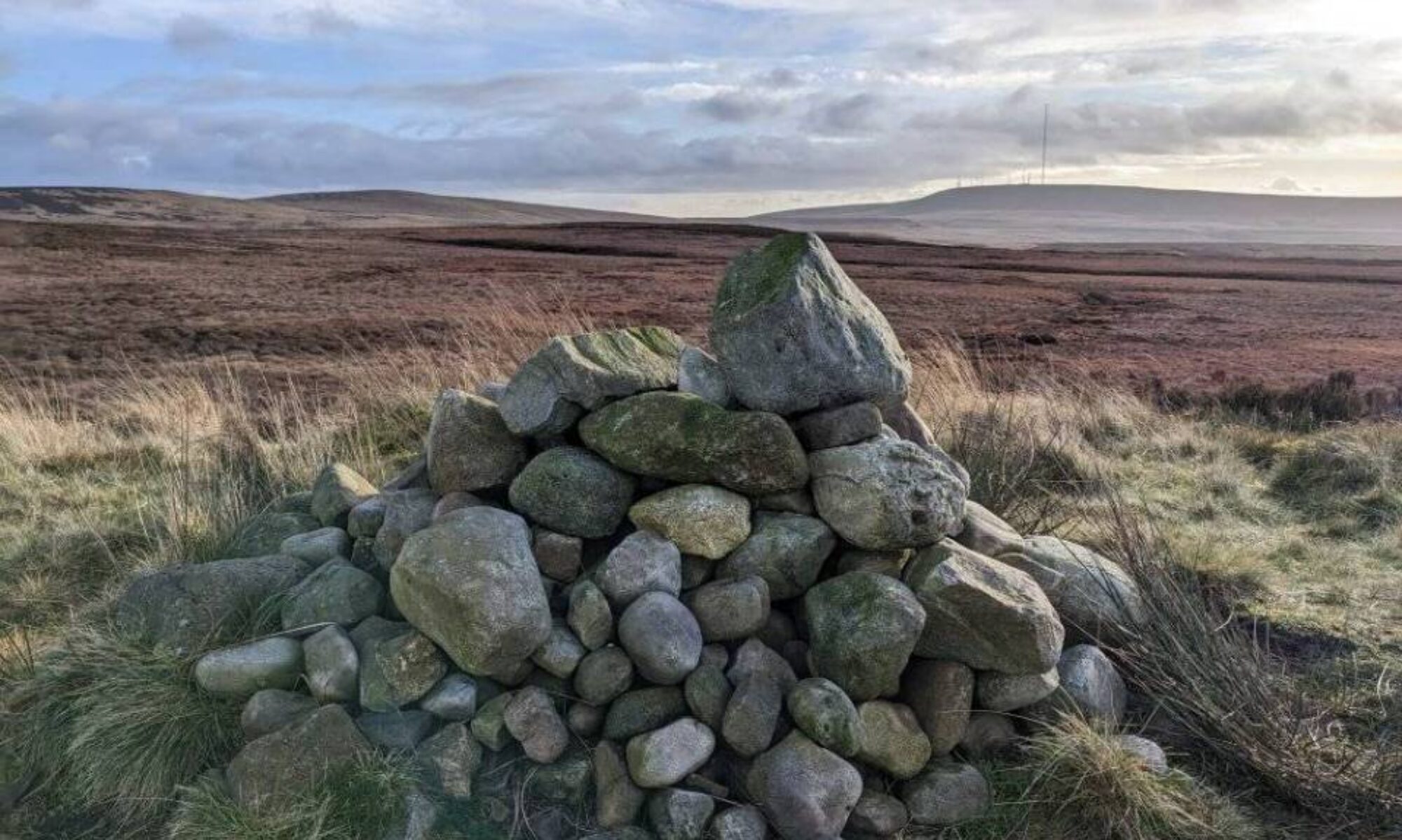

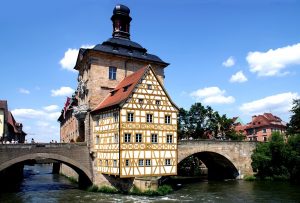


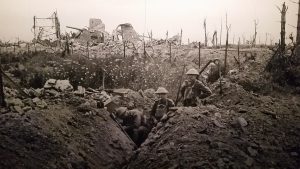
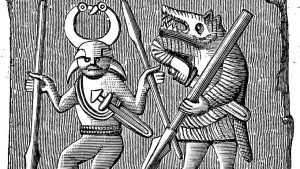

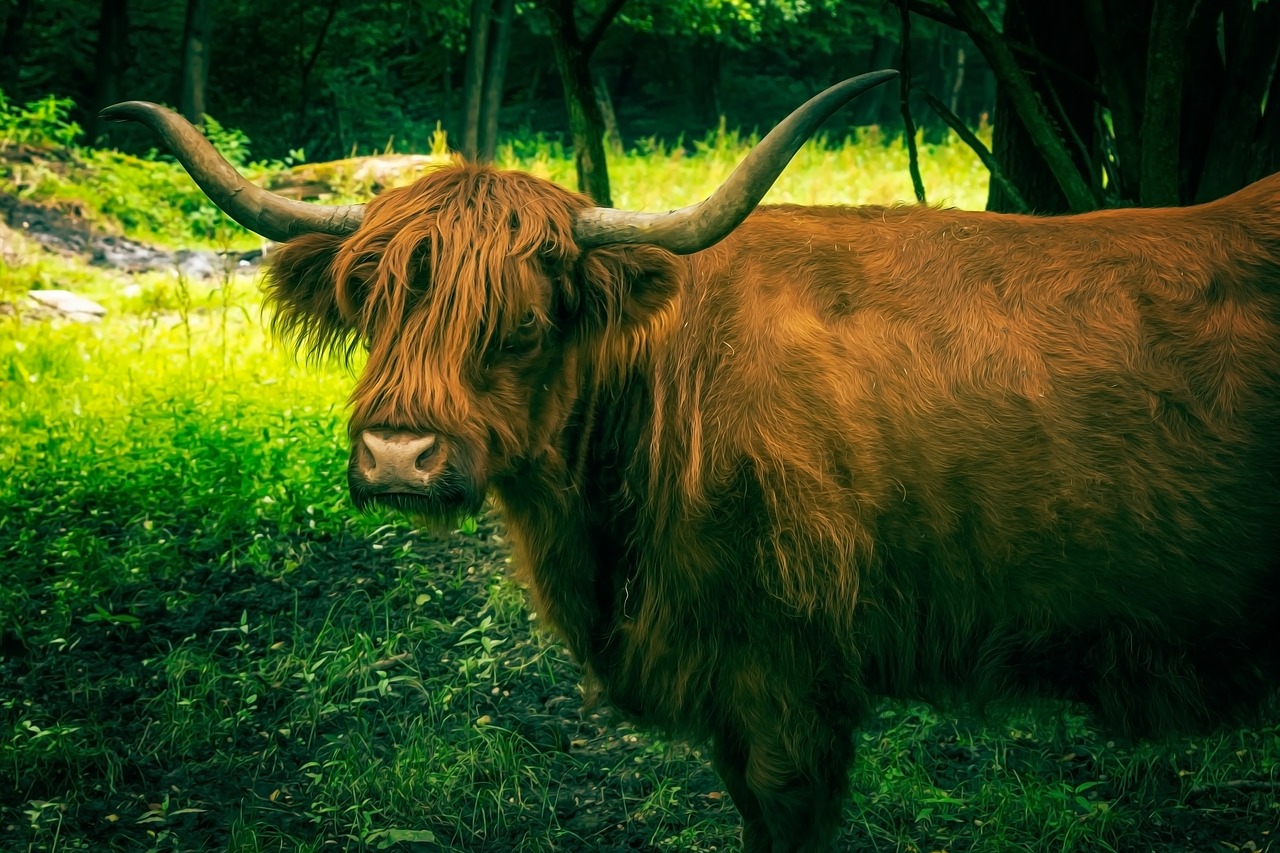
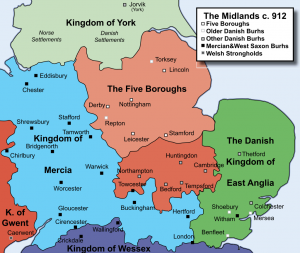

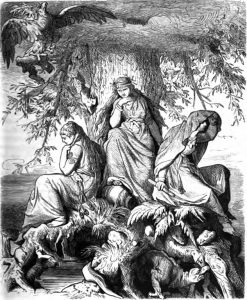

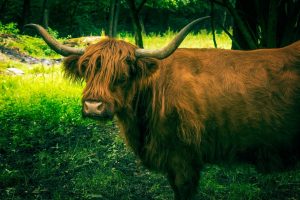
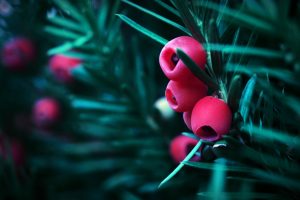
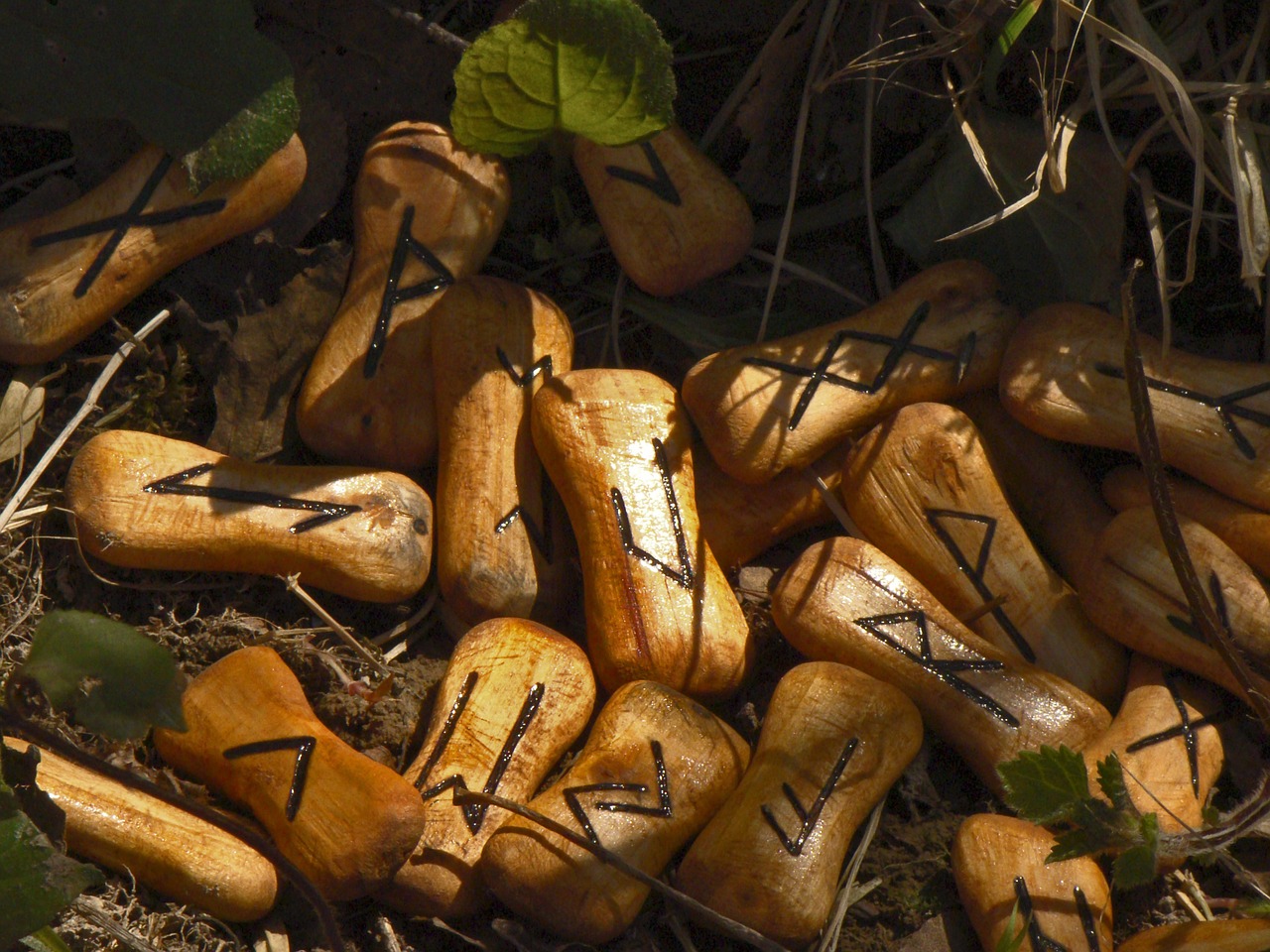
 woman on another table called me over to her. She’d decided I needed to have a rune reading from her, and I, several pints into the evening, decided to go along with it.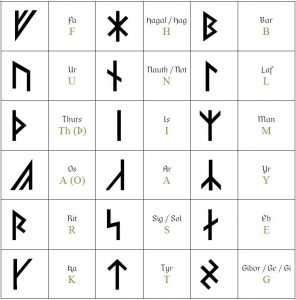
 around forty-five years now, in a religious movement that’s not really been around for a whole lot longer. In many ways, the origins story of modern rune magic parallels that of Heathenry itself in that many of the early founders of modern Heathenry were also folkish/völkisch. (Btw I really recommend you pick up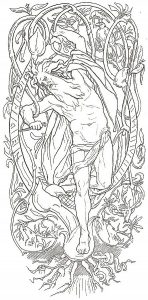
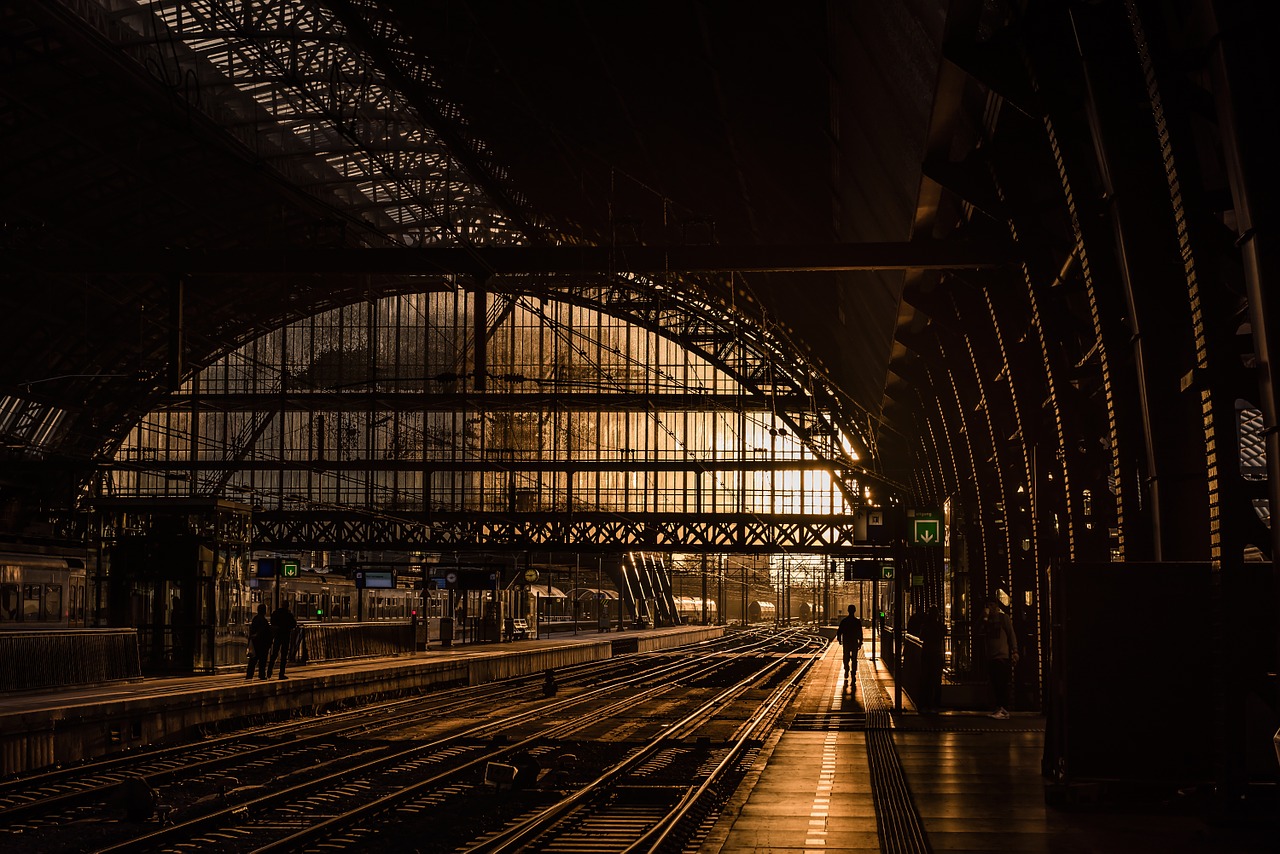
 dream journal that lives in an app on my phone with a secondary residence in the cloud. Other people have dedicated paper and pen journals that they keep in a handy-to-reach place for when they wake up.
 This is a space I find myself in quite often. I’m never alone there but in classes full of what I suspect may be other sleeping witches. The environment is extremely strict – it would make a Victorian school room look lax. And there’s an underlying sense of danger should you mess up. But as with all schools, there are lessons here too (and not only in etiquette). I’ve received some of my most interesting magical lessons from this school, and yes, they often assign homework too.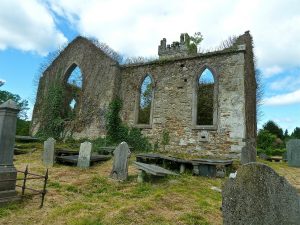
 Ever since I went to Iceland in 2018, I feel like a part of myself sort of dug in there like some kind of anchor for when I die. There was a sense of home to Iceland, and so it’s probably not surprising that I end up there quite often in my dreams. Out of all the recurring places, Iceland, and especially northern Iceland, probably features the most. And these dreams almost always come with a message or involve elves in some way.
 When we think about the Otherworld, I think there’s a tendency to imagine it as some old-fashioned, almost Renn-Faire-looking kind of deal. And don’t get me wrong – in my experience, those places do exist. But I’ve also found that there are a lot of modern-looking places associated with the Otherworld as well.
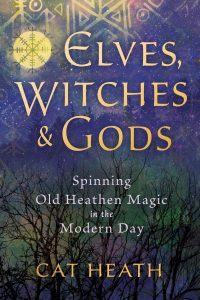 Witches and Gods: Spinning Old Heathen Magic in Modern Day. If a somewhat atypical look at Heathen worldview and magic with an emphasis on experimentation and practice interests you, then it may be right up your alley.
  something being unleashed into the world, and I knew then and there that what I had spoken into the world would come to pass; that my victim would fall from his ladder at work.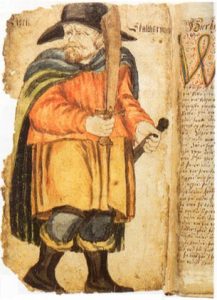
 is sufficiently complete for now.
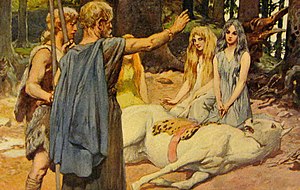 “Father of Galdr” (as he was named in Baldrs Draumar) is both explicit and well-established, and not just in the ON sources either (Simek 242). Woden is the only Heathen god to be mentioned in the OE magico-medical manuscripts; it is he who rests at the center of the so-called “Nine Herbs Charm” found in the Lacnunga. And it is Woden who is depicted chanting a spell over an injured horse’s leg in the Second Merseburg Charm (Waggoner, xv).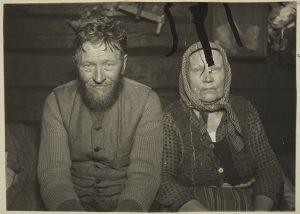
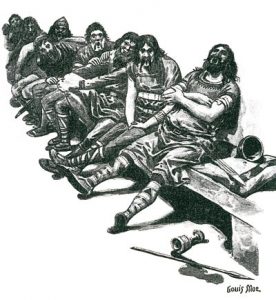 “These men asked Halfdan to attack Hardbeen and his champions man by man; and he not only promised to fight, but assured himself the victory with most confident words. When Hardbeen heard this, a demoniacal frenzy suddenly took him; he furiously bit and devoured the edges of his shield; he kept gulping down fiery coals; he snatched live embers in his mouth and let them pass down into his entrails; he rushed through the perils of crackling fires; and at last, when he had raved through every sort of madness, he turned his sword with raging hand against the hearts of six of his champions. It is doubtful whether this madness came from thirst for battle or natural ferocity.”
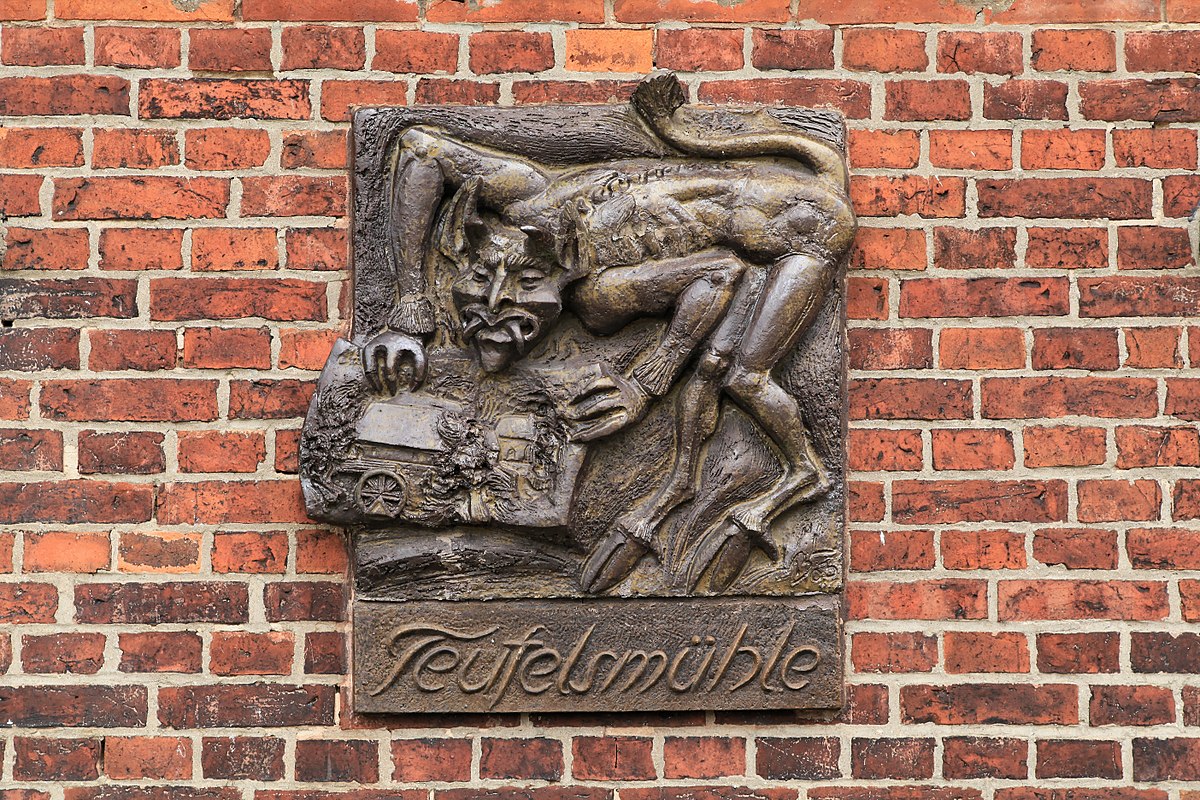
 were though, and soon co-workers began to notice.
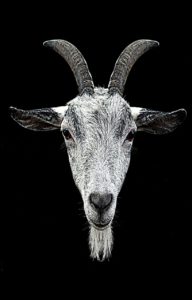 trying to look as harmless as possible).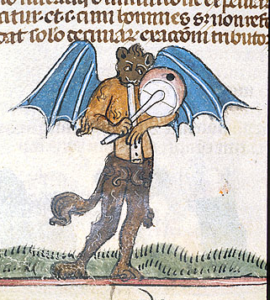
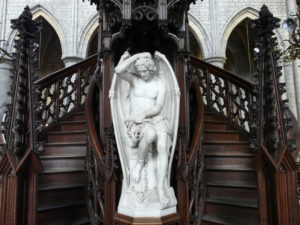
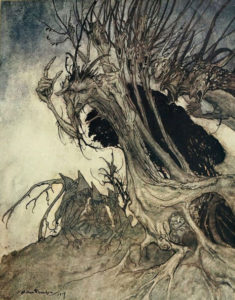 inspiring and capable of producing that curious combination of “dread, veneration, and wonder”. (If your mind found that incongruous in any way, then you have some unpacking to do.)
 Other beings have produced awe to a lesser degree in me. Instead of outright terror, there’s an edge of caution. Over the years, I’ve noticed that these tend to be the beings who seem less capable of harming me, or at least can only harm me to a lesser degree. And so I’ve learned to listen to those feelings. When not obscured by bullshit ideas garnered from Victorian nonsense and scientific materialism, those feelings can be a useful guide to who you are dealing with and how careful you should be.
 Hulle set not far from Wintersbach. And this is the tale that led me down the rabbithole so to speak. First came the spinning, and then more research and a pilgrimage of sorts to the Hollenteich up on the Hoher Meißner. There, on a frozen pond before a modern statue, I had a deeply holy (and unexpected) experience.
 But one day, while spinning at the side of a well, she accidentally drops her spindle into the well after pricking her finger.
 made sure to cut herself and throw a spindle into the well before she herself took the plunge is perhaps telling.
 First the dead pass over a thorny moor (‘Whinny muir’) that will prick them. Then they must pass over the ‘Brig o’Dread’. And then finally, because this is a Christian song, they must roast in Purgatory for a while. But at every turn, these tortures can be mitigated by one’s behavior in life. Those who gave the charity of socks and shoes (‘hosen or shoon’) will find socks and shoes to protect them on the thorny moor. Those who gave the charity of food and drink, will not be shrunk and burned by Purgatory’s fires. (The Brig o’Dread is its own challenge, and I’ll be taking a look at it in the next section.)
 century Icelandic poet Þórbjörn Brúnason made a curious mention of the ‘apples of Hel’. And apples also featured as grave goods in both Scandinavian and early English graves. But apples are not only associated with the dead in Norse lore. The apple seems to be both a food for the dead and a substance of renewal for the gods.(Davidson, Gods and Myths of Northern Europe, 165-166).
 ”Readers familiar with Neil Gaiman’s Sandman series might find some parallels here: the mundus imaginalis is like “The Dreaming,” a realm populated by the dreaming of every being, living or dead, god or human or plant, where each “place” has a geography only inasmuch as it’s necessary for those who visit to travel within it and find the same place again (or visit a place another once visited). In fact, Gaiman likely stole the entire idea for his cosmology from Corbin’s essay.”
 of map to this road to the afterlife. First the person dies/passes through water, and then they encounter two different trials. Yet the trials in both sources are far from insurmountable, presenting little problem for the compassionate person.