Gadzooks! It’s a Review!
I really didn’t know what to expect from an online Polytheist conference, and especially not from one which describes itself as a “balanced mix of hands-on, devotional, and experimental practice with academic and lore-based studies”. So it was with a good degree of curiosity that I entered the Zoom room.
The conference, which was entitled ‘A Year With Our Gods: Brighid’, was the first of a series of conferences being hosted by Land, Sea, Sky Travel, a Pagan pilgrimage company that focuses on ethical pilgrimages to sites of spiritual and historical importance around the world.
The Kick-Off
The conference kicked off with a short devotional to Brighid, which included an absolutely gorgeous song sung by
Andrea Maxwell who led the devotional. Andrea’s voice was sublime, and it was a truly beautiful experience to hear her sing. From there, we had a short group chat focused on setting the intention for the day. Participants discussed expectations and what they hoped to gain from the conference. For my own part, I was there to try and understand a little more about whatever strange connection I seem to have to Brighid – or rather Brigantia, the tutelary goddess of the land where I grew up. I say “strange”, because by that point, the goddess I’d felt hints of on the hills of my home seemed to bear little resemblance to the goddess as most modern Pagans see her. But more on that later.
A Journey to Éire
The first presenter was Lora O’Brien, an Irish woman and Draoí who has spent years working as a guide to a lot of Ireland’s sacred sites. Lora’s presentation was very informative. She gave an overview of who Brighid is, and described her own history of encountering the  goddess in the land. Always an advocate of authentic Irish culture, Lora also described the continuing importance of Brighid in Ireland, and the traditions that persist to this day.
The highlight of Lora’s presentation for me though, was the trance journey to meet Brighid. As someone who works predominantly in a completely different tradition, her method was different from what I’m used to, but extremely effective. I was honestly surprised by just how deep I got into trance during that session and the quality of experience that I had.
To cut a long story short, trance-Brighid touched my arm and I felt a physical burn there that persisted for the rest of the day. The day after that, the area was still quite tender too, and since then, it’s like (pardon the pun), someone lit a  fire up my ass. I’ve been hardcore getting things done! For anyone who is interested in Lora’s work and a chance to experience trance as she does it, she does actually offer journeying courses, the first part of which is free. I’d also recommend signing up for her newsletter because she always includes a lot of really good resources on Irish culture both historical and modern.
A Path of Service
The next presenter was Gemma McGowan, who talked about what it means to serve as a priestess of Brighid. Gemma has been a recognized priestess of Brighid in her community for years, and her dedication to her calling is frankly inspiring. There is nothing that I didn’t love about this talk. Gemma was funny, open, earnest, and remarkably humble. From her priestess origins story, to the more experiential exercises she led us through, her personality just shone through. I wish she had a blog I could follow!
Moo Money, Moo Problems and Mooogan’s Presentation
The keynote speaker was Morgan Daimler, and although I talk about Morgan a lot, I’d never seen her in any form before the conference. Getting to see Morgan on camera was brilliant, and I’m not just saying this because it will
probably embarrass the hell out of her, but she. Is. adorable! The best kind of nerd with a penchant for translating Old Irish! Now Morgan is a veritable walking encyclopedia – her presentation was just jam-packed with information about all things Brighid, AND she still had plenty of stuff she didn’t have time to get to even *with* the two hour time allotment! Morgan has a real talent for presenting information, and as a more Heathen type, I really appreciated the background details that she gave to the information she was presenting that helped me to better understand the cultural context. For example, her explanation of the cultural background on the importance of cows in ancient Ireland gave me a far better appreciation of who Brig Ambue (or Brighid of the cowless) is. I have mad love for Brig Ambue, so that was great! If you ever get chance to hear or see Morgan speak, do it. At the least pick up her book on Brighid, you know, if this interests you.
On a personal note, hearing about the fire temple that was apparently kept in honor of Brigantia was very satisfying. If anything, the Brighid I have been experiencing for years (but not really getting it) is closer to Brig Ambue – only with a fire temple and a spring coming out of a massive oak tree. Hooray, insight!
Personal Practice and Necessary Discussions
Next up was a panel discussion, and presenters discussed things like what they like to offer to Brighid, books, and the importance of doing the work. However, the highlight of this discussion for me was the part when the presenters explored the matter of worshipping deities from Europe in the New World, followed by the perspectives of the Irish presenters. I think that was a really important discussion to have. Some of the US and Canadian presenters cited Neil Gaiman’s American Gods as a parallel to how they see the existence of Irish (or other European gods) in the US. People bring gods and spirits with them as they move, however, as someone who has been a long-term fan of American Gods, I couldn’t help but think about the different versions of the various gods that you find in the book and if that also plays into this parallel. For example, at the end of the book, the Odin experienced in Iceland is most definitely not the same Odin that was experienced in America. Further exploration of that would have made for an interesting follow-on discussion.
The responses of the Irish presenters – especially that of Lora – were extremely valuable here too. Lora underlined the necessity of engaging with Irish culture in an authentic way. In other words, to just take the gods and the “cool shit” is the bad kind of appropriation. Ireland was oppressed by my people for centuries. Between Cromwell and Trevelyan, and goodness knows how many other arseholes that rocked up on Ireland’s shores, Ireland has a history of blood and pain that cannot be ignored. Now that’s an uncomfortable conversation for people like myself, and it’s only further complicated by my familial ties to Ireland. But it’s necessary, and there’s no time for that kind of fragility if we are to do better.
The Flame Rekindled
Unfortunately, I had to catch the next two presentations in the after conference notes, as life got in the way again and I had to go back to being mom.
After the panel discussion, the next presentation was by Mael Bridge of the Daughters of the Flame. While this was far less my cup of tea than the other presentations, I definitely appreciated the historical background (both ancient and modern) on flamekeeping, and hearing about the role that flamekeeping plays in the lives of those who practice it. I find it absolutely incredible that the Daughters of the Flame and nuns of Kildare both elected to rekindle Brighid’s flame during Imbolc 1993, all without knowledge of each other. It would seem that an Dagda’s daughter had a hand in it.
Healing Fires, Healing Waters
The final presentation was by Julia Waters and focused on the healer aspect of Brighid. Given my background as the daughter of a Spiritualist healer, Julia’s presentation was like coming across common ground once more. She related 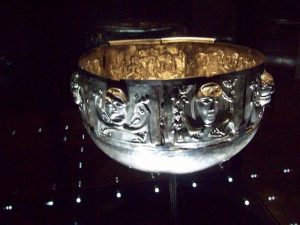 her experiences with receiving healing as a cancer patient, and about how she was even able to perceive who was sending her healing by tracing back the golden strands of healing energy she saw entering her body. She then talked about how to go about healing and some of her traditions surrounding her healing practices – a lot of it was stuff that I could see my family engaging in, but it also stuff they never really explained to me in a coherent way. I really appreciated Julia making the point that people shouldn’t promise to pray or heal others if they’re not actually going to do it. I think we all see a lot of promises to pray for people or light candles for them online, but I often wonder how many people actually do it. Julia also touched on healing cauldrons, but sadly didn’t get to spend as much time on that as I hoped.
Final Words
This was a very well run and satisfying conference that I came away from with actual tangible changes to both my practice and my life. Which sounds weird (and horribly clichéd) that I went to this conference and had what was a deep experience. But the fire that was lit under my ass has persisted for almost a whole month now with no signs of
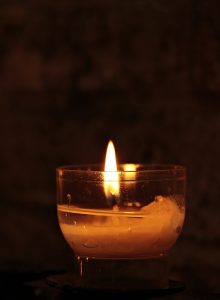
abating. Projects that had stalled and courses that were stuck in the doldrums are now underway again, and I’ve been knocking out work like a crazy person. Moreover, Brighid worship in my home has continued beyond the weird yearly Brighid-instinct that normally strikes around mid-January and settles down right after Imbolc. A candle now sits on my stove that I light in her honor, and I’ve started practicing my healing skills again. I haven’t done that for years, despite working on it with my dad as a kid.
So yeah, would I recommend these Land, Sea, Sky conferences? Absolutely, and in the interest of full disclosure, I should mention that I will be facilitating a Land, Sea, Sky tour in Iceland later this year. But despite that, I wouldn’t have written as much as I did if I wasn’t really excited by it. As anyone who writes for a living will tell you, it’s *hard* to fake enthusiasm for something – especially over 1700 words of enthusiasm. I mean, that’s as much as a daily Nanowrimo goal!
If you’re interested in checking out any of the LSS A Year With Our Gods conferences, you can find out more information here. The next one is Blodeuwedd, hopefully I’ll see some of you there!
 I’m currently working through the first round of editing this insomnia-fueled, oath-bound mess before handing it over to my beta readers, but it’s coming in at around 78k words so far. So it was no small undertaking. In case any of you are curious, it is a book about Pagan/Heathen/Witchy things. But more specifically, it’s a book of Helrunan and Seidr. My working title is “The Path of Ivy”, and it focuses on more chthonic practice. I’m also reproducing the liturgy for the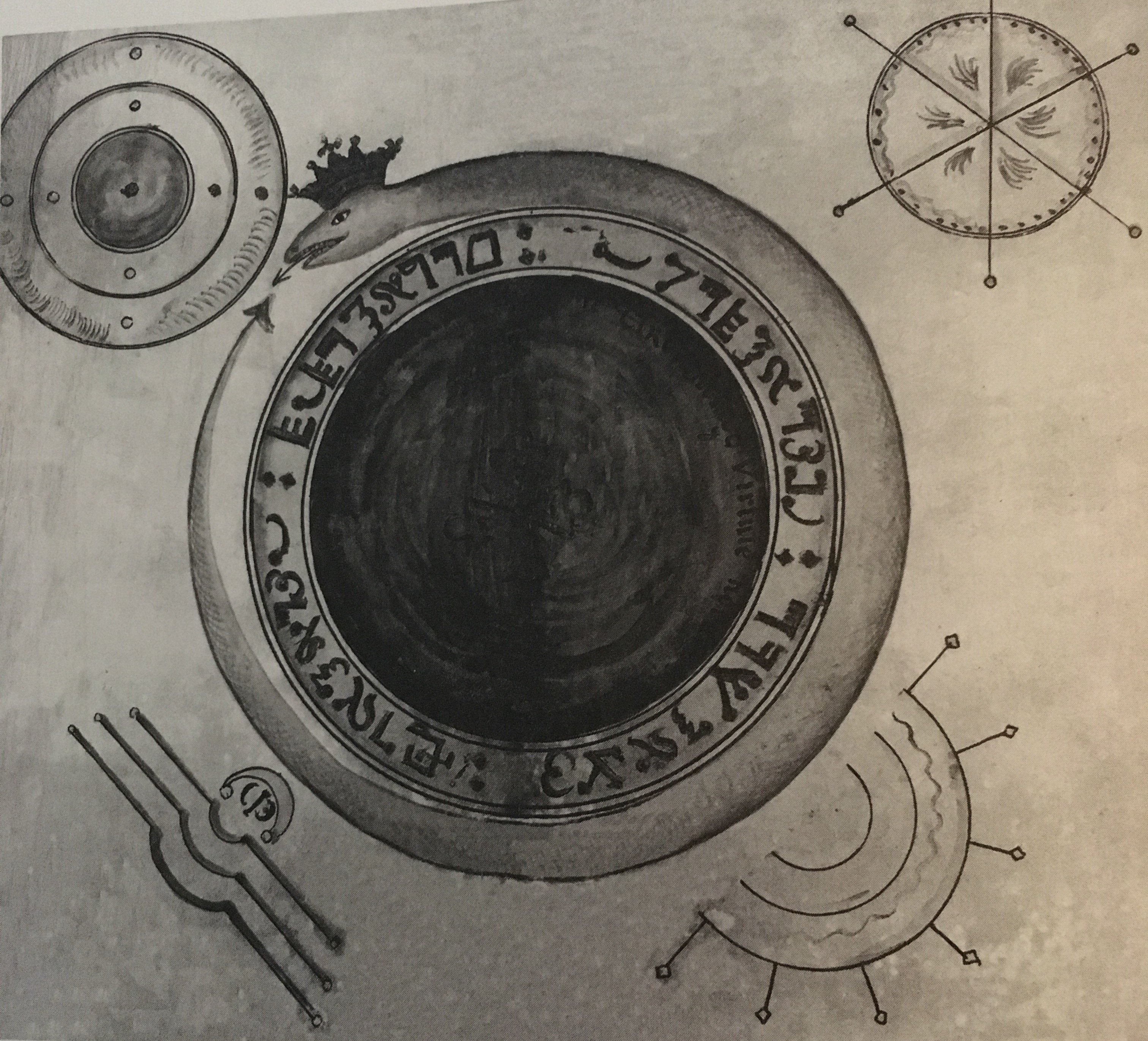
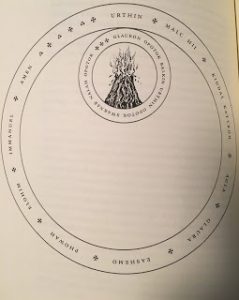
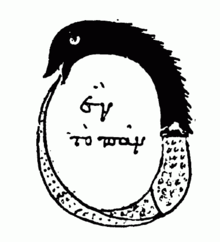 granted and covered by phrases such as “do the usual”. It is no coincidence that the ouroboros features in later grimoires such as the 18th century Clavis Inferni. Indeed, it’s likely that the use of a protective circle in the form of an ouroboros and directions marked out (and associated with elemental entities) were inherited magical tech from those old-school Graeco-Egyptian magicians (Skinner 87).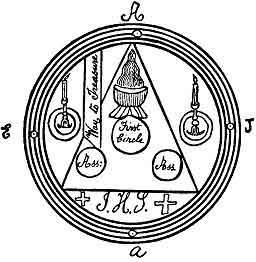
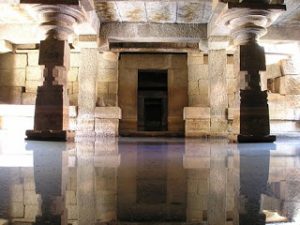 This idea of going to “play” with a different cosmos can be hard to get your head round. After all, everyone thinks their worldview and idea of how things are in the cosmos is right, right? Relativism can be hard, especially when it comes to deeply held beliefs that are often also tied up in personal experience.
 sub-level. Even worse, there are some rumors that some of those grimoires even made it down to the basement a few centuries before the current crop of magic users started their sneaking expeditions down there. So you know, that’s a whole lot to take into consideration.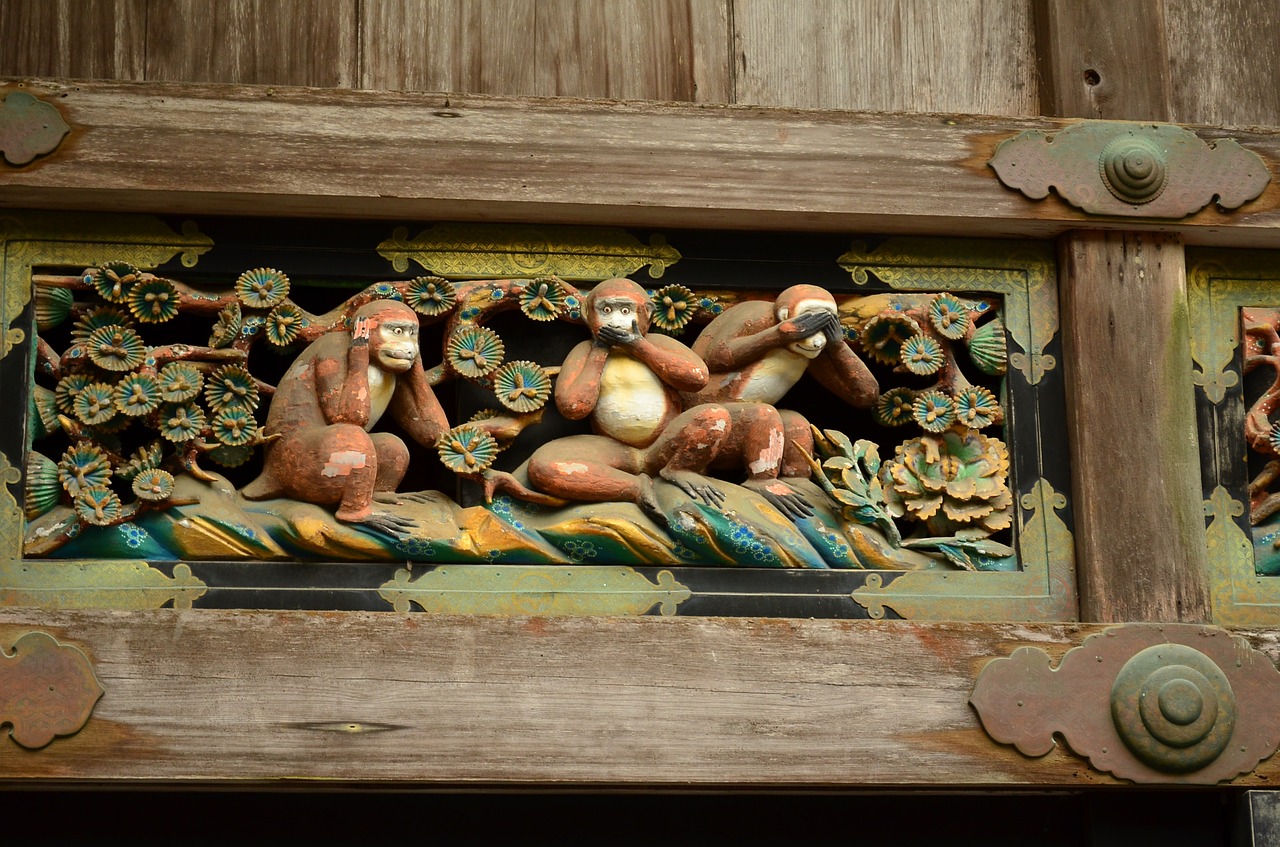
 botched practice run, attended to the fire alarm, and started again. There’s a lot to be said for perseverance and not giving up too quickly.
 “Why do you do this when you know what is real?”
 control)? And yet, it might be argued that we live in a time in which the psychic censor not only exists but is further supported by human-made material distractions and barriers.
 Removing phones from one’s bedside is a good move here too – the psychic censor is a material thing, and those first interactions with that symbol of modern materiality is one of the best methods of banishing memories of dream.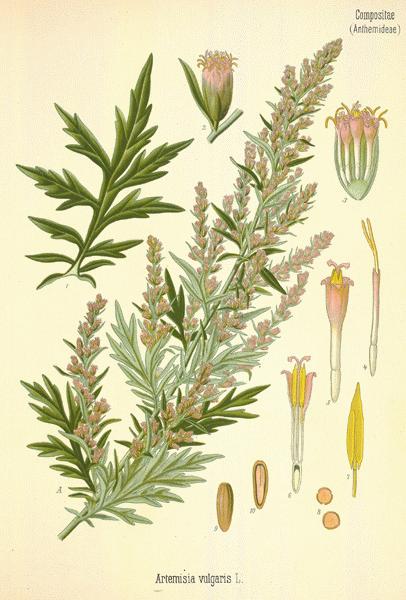
 the person with it generously on the temples, and above the eyes and on the top of the head and the breast and under the arms. This salve is good against each tribulation of the enemy and ælfs?den and Lent-illness.
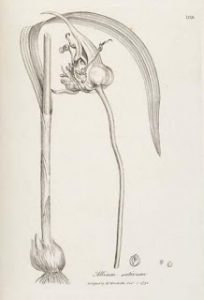 Make a salve against ælfcynne and a night-walker and for/against those people whom the devil has sex with: take hops(?), wormwood, bishopwort, lupin, vervain, henbane, h?rewyrt, viper’s bugloss, stalk of whortleberry, (?)crow garlic, garlic, seed of goosegrass, cockle and fennel. Put these plants in a vessel, place under an altar, sing 9 masses over them; boil in butter and in sheep’s fat; put in plenty of holy salt; strain through a cloth. Throw the plants into running water. If any evil tribulation or an ælf or a night-walker happens to a person, smear his face with this salve and put it on his eyes and where his body is sore/in pain, and burn incense about him and sign [with the cross] often; his problem will soon be better.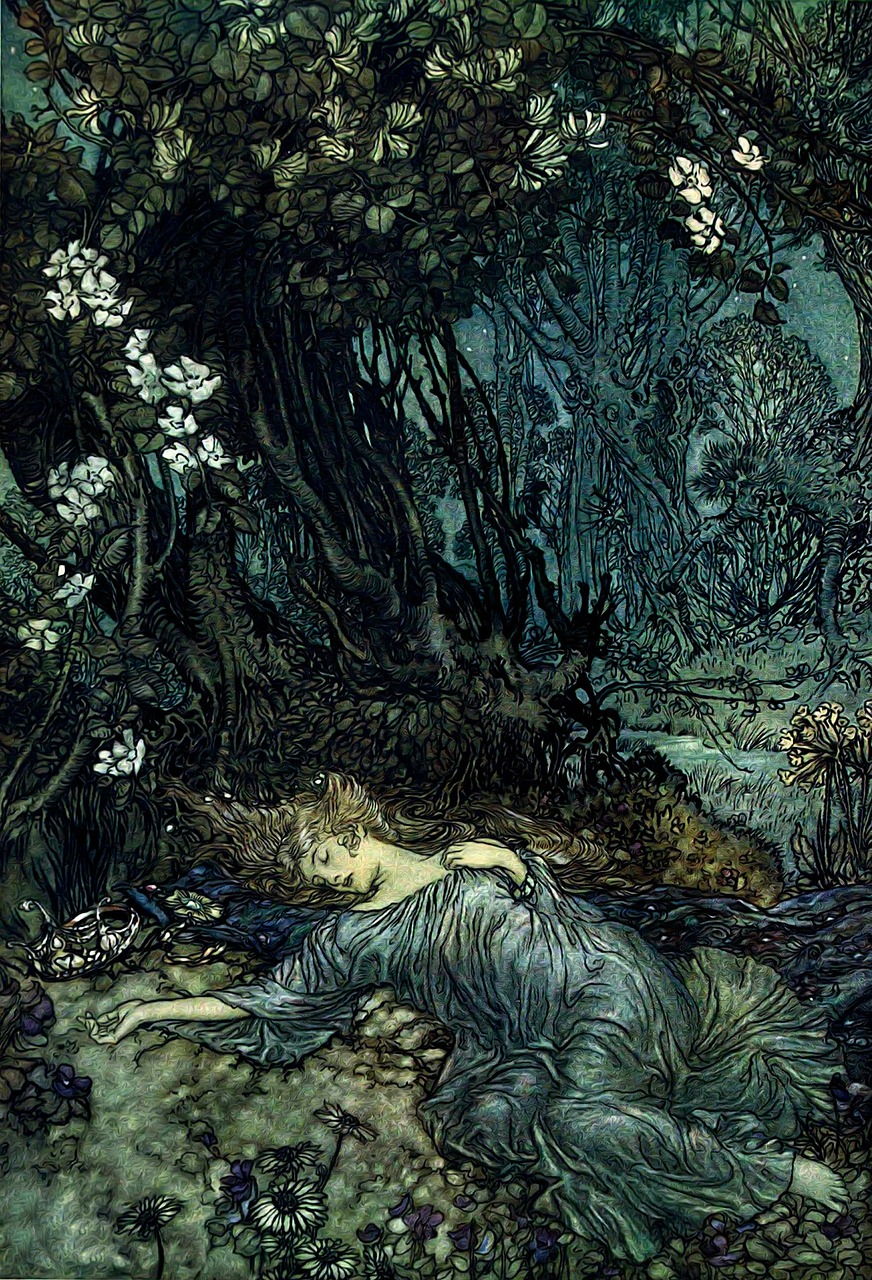
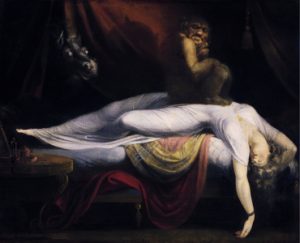 elves or night-goers need apply!), modern descriptions of this experience would have been familiar to our ancestors. In some accounts, such as that of the Swedish king Vanlandi of the Ynglinga saga, the victim was even “trod on” or “pressed down on” until dead. It is worth mentioning here that the attacking force was the witch/mara Drifa (Hall 125, 135). Interestingly, while the Ynglinga saga was composed post-conversion, a segment of the 9th century Ynglingatal referencing the death of king Vanlandi as a result of the witch (referred to in the Ynglingatal segment as mara) attests to the potential Heathen origins of this concept.
 the availability of books and tools we have now), would have been unimaginable.
 We get attached to possessions, and to make matters worse (?), we live in a society in which we’re constantly told that we need to have the right product in order to fix whatever it is that is wrong/fill that hole/make life perfect.
 mindfulness and discipline, form a chunk of the core of our training.
 discerning the will of the gods (and perhaps receiving a heads up from them about the future), for finding that which was lost, and for discovering past and present events that were not yet known to the enquirer. To know what was past and what was yet unseen was to be able to have a greater chance of predicting the future.

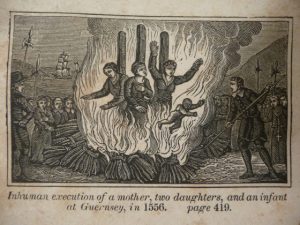 carry within the very fiber of our beings. The heritage of modern witches is not the same as the heritage of those who might have been called witches in the Heathen period, we hold different traumas in our collective psyche. The biggest trauma for those of us working within predominantly European-derived cultures, is that of the lamentably much-ridiculed period of history that was the European witch craze.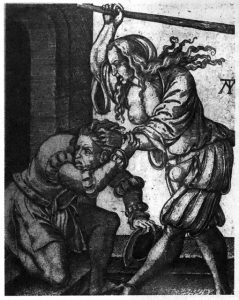

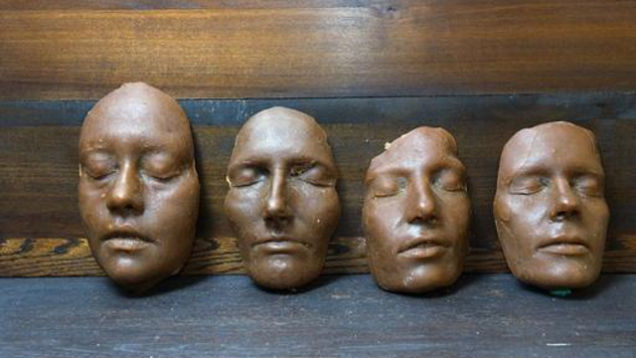
 Greenville, South Carolina. Over the course of the next week, a further five sightings were reported to the local police department. Those of us who didn’t live in Greenville, especially those of us raised on Stephen King’s IT, were relieved to not be there. Over the course of the coming weeks,
  started to become so prominent. Some people pointed out the
 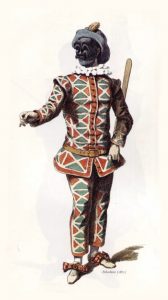 the commedia, as their antics and intrigues decided the fate of frustrated lovers, disagreeable vecchi, and each other. Perhaps best known of these is Arlecchino, or Harlequin (1974.356.525), a character whose origin is contested. It is likely that he derived either from Alichino, a demon from Dante’s Inferno (XXI-XXIII), or from Hellequin, a character from French Passion plays, also a demon charged with driving damned souls into Hell. Arlecchino is characterized as a poor man, often from Bergamo, whose diamond-patterned costume suggests that he is wearing patchwork, a sign of his poverty. His mask is either speckled with warts or shaped like the face of a monkey, cat, or pig, and he often carries a batacchio, or slapstick.”(4) (Emphasis is my own.)
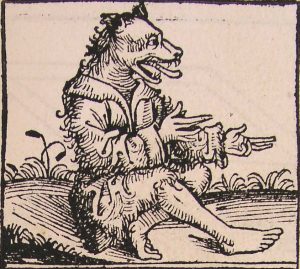 becoming somewhat clearer now. But I do not believe that this principle applies solely to the dead, and that we can see a form of this kind of embodiment of the ‘more-than-natural’ in some of the sources on shapeshifting too. For example, Sigmund and Sinfjötli of the Volsunga Saga become wolves through the donning of skins, and this theme survived into the 17th century when Thiess the self-described werewolf of Livonia testified that he and his fellow werewolves [on their journey to hell to retrieve seeds stolen by a sorcerer called Skeistan] had to strip off and don skins. (10)