This past fortnight seems to have been a time for confronting and dealing with what may seem to each of us to be “alien views”. But I don’t want to get into the politics of that here, because that conversation is dominating the discourse pretty much everywhere else.
No, I want to go in a different direction with this post. Instead, I want to talk once more about agency, patterns, and if it is truly possible to understand that ‘alien’, non-human logic of the Unseen.
In “Fair” Facebook Do We Lay Our Scene
It all started with a conversation on Facebook (where else?) this morning, with a young man who thought there was nothing wrong with putting on a Native American war bonnet while in the ‘wilderness’ and invoking the energies of a Native American chief. (This is a young man who is from and still lives in the UK, I might add.)
I have to admit, the idea of that – all of it – is just so wrong to me for so many reasons. I can’t even understand the thought process behind it or what this man would hope to even gain from doing so, let alone the amount of false entitlement involved in the use of a war bonnet and expectation that the spirit of a Native American chief would just show up for a person in a completely foreign geographical area.
The conversation went on for a while, but along the way, we got back to the question of agency and spirits of land again. (Ah, that old chestnut!) So here I am, writing another post on the Unseen and agency, only with a little twist.
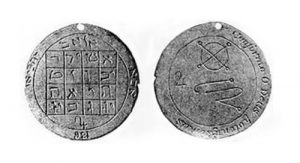
I’ve talked about the land being like an onion before: this idea that land from a more ‘spiritual’ perspective is made up of many layers comprised of the traditions, beliefs, actions, and magical practices of each people that has ever 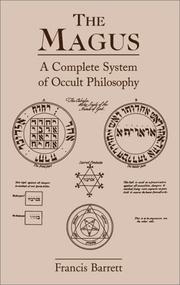 dwelled upon it. Of course, this onion also affects the kinds of Unseen that might be there: the types of Unseen, their attitudes towards humans, how they expect interactions to look, the pacts that were made between humans and Unseen in years past, and the kinds of offerings they like. Sometimes these layers are things that you might expect. After all, who doesn’t expect Native American layers, and other layers made up of mostly Christianity in America? But even in America, there are also often layers that are far less expected – like the layer of occultism derived from Francis Barrett’s ‘The Magus’ that permeated the life of Joseph Smith, the founder of Mormonism (Horowitz, 23), or the Freemason connections that a good number of the founders held. And regarding that first American religion, I can’t help but feel it significant in some way that its founder and first American prophet not only participated in the occult for years and scryed a holy book from a shew stone, but met his death by mob while allegedly wearing an incorrectly engraved Jupiter talisman. (Quinn 1998). Let that sink in for a moment. America may have layers of Native American religions and crosses, but she also has layers of sigils and magic – even among the saints. (As an aside, there’s a book I really want to pick up at some point called Awash in a Sea of Faith: Christianizing the American People that apparently attempts to track the plurality of religious expression, magic, and sacralization of the land in pre-revolutionary America.)
But that’s not the end of it. Now imagine that onion has a pattern running through it. Something scored on each
layer that has built up into a larger and more coherent pattern over time.
For those of you that bought my book (thankyouthankyouthankyou), you may recall the essay called Sources of Power, Layers of Action and the explanation of how what we do now affects what we have to work with in the future. For those of you that didn’t, a Cliff Notes version of that would be to say that every action a person undertakes sets down a ‘layer’ for that person that goes into a kind of universal store of events and that the accumulation of those ‘layers’ over time, affects what you have to work with in life. In other words, it all builds a pattern, but more about that later.
Space As A Container For Action
In ‘The Well and the Tree’, Paul Bauschatz wrote that “For the Germanic peoples, space, as it is encountered and perceived in the created worlds of men and other beings, exists, to any significant degree only as a location or container for the occurrence of action.” (Bauschatz 86). This is a pretty significant concept in of itself. After all, I think most of us have been to places that have had a certain vibe or lived in homes we’ve felt were ‘luckier’ than others. However, we are also told that , “Every action calls to itself other actions to which it is significantly linked.” (Bauschatz 64), and that “They would bring factors from beyond the immediate to work and predicate events, returning them, as it were, to the great universal store of events from which all power came and in which all meaningful action returned.” (Bauschatz 113).
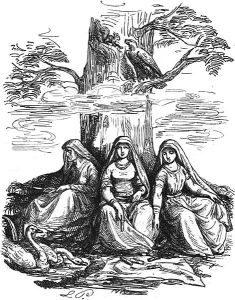 In other words, if space is a container for action, actions set down layers (which call other similar actions to themselves), and there is a force that ensures that those contexts are revisited, then it would stand to reason that spaces have ‘patterns’ or contexts that get revisited again and again. Not only that, but these patterns don’t just affect humans; as the first Bauschatz quote says, these spaces-as-containers-for-action also seem to apply other beings too. Or at least that’s the best guess of what Germanic Heathens thought about the matter during the Heathen period.
As a caveat, Bauschatz does limit these space-containers to spaces that are enclosed, but I think they can apply to outside spaces too. After all, if we believe in the existence and agency of Unseen beings, then why wouldn’t we believe them to be capable of creating and delineating their own spaces and enclosures that we just cannot see?
When you really think about these ideas, ideas about layers and patterns, even just as a thought experiment, it’s really no surprise that you have oddities like the freak accident that kills every seven years at a river that was once

connected with a Romano-British goddess. Or that you have geographical areas that seem to have more murderers born within their boundaries than in other places. Or, as one of my favorite podcasts has been exploring of late, that there are places in which more people just seem to go missing (in the creepy ‘just disappear’ sense of the word) than others. Or why some houses seem to be a curse for those who live in them. Or…or…
Bauschatz’s work may be theoretical, but I do find a lot of practical application in his ideas, especially in light of my own experiences and UPG.
To Forget the Past is to Repeat the Future….
Does any of this give us the keys to these “alien views” of non-human persons though? No, but there’s a lot to be said for drawing closer to an understanding of some of the (even theoretical) “rules of play” so to speak. As always, the best way to understand as much of that non-human logic as much as possible, is to go back to the fairy and folk tales. These rules of play further reinforce the importance of knowing the old tales, and the warnings and rules of etiquette they contain. To know the past and the things yet unknown to you in the present, is to have the best guess of how to proceed in the present. The future will be made when we get there.
I’ve written about understanding the previous religious, magical, and folk traditions held in the layers of the land onion before now. However, I think these layers are also patterns, groupings of actions that call out to actions that are similar to themselves and which are more likely to reoccur. For many people, the great religious story of the US is that of Christianity, and yet for people like you and I, the far greater story is in the Joseph Smiths, the Fox sisters, the many homes in which a copy of Barrett’s ‘The Magus’ sat, and the myriad of other long-standing religious traditions that cluster in this land somewhat off the beaten path of the Nazarene.
Because it’s a story in which the Unseen were somewhat more seen, and that’s not something they’re likely to forget.
Sources
Mitch Horowitz – Occult America
Paul Bauschatz – The Well and the Tree: World and Time in Early Germanic Culture
D. Michael Quinn – Early Mormonism and the Magical Worldview


 In the first book of the Encyclopedia,
 tradition. The PGM date from between 200 B.C.E and 500 C.E, and are the product of intense cross-cultural interaction and blending in the Mediterranean. Kadmus sums this up best when he writes in his review that the PGM are “just as much Egyptian Magical Papyri as Greek ones”.
 without the benefit of reading the Encylopedia, I think that if there’s one thing the grimoires teach us, it’s that the world was never so simple. Cultures interacted, people traveled, aspects of the ‘not us’ found their way in to the ‘us’, and the world marched ever on. Traditions grew, metamorphosed, and sometimes even died. The Armadel method was transmitted, spirit lists persisted (


 I remember running wild under those steely grey skies, I remember countless adventures up on the moors and in the hidden places where adults didn’t seem to go: like the ‘ravine’ that was really a small stream down the side of an old Victorian factory that led into a more modern industrial park; or the ruins of Victorian farms built in the shadow of a brooding moor.
 yourself nodding, and mentally giving the author a “Right on, man! You tell em!”? Well, I’m reading a book like that right now. Had this been a church sermon, the entire section that inspired this post would have had me shouting “Hallelujah” and “Praise the Lard!”, because it is just so nice to come across someone who writes things that you so completely agree with. That doesn’t happen a lot for me.
 of recent posts. Generally, I aim to get a post up per week, but lately things just haven’t been working out that way.
 with; to terrifyingly huge chunks of political discourse and so much more. After a couple of decades at this malarkey, I’m finding the differences to be substantial enough that it’s starting to feel like code-switching when talking to people who aren’t Heathen/Pagan/Witches/Druids, and I didn’t even grow up in a particularly religious home. Seriously, I grew up only vaguely Church of England (cake or death) with a mother who graffitied her bible with the names of the Monkees and a Spiritualist father. I also know I still have a long, long way to go and probably won’t manage to completely throw off that Judeo-Christian worldview in my lifetime. Realistically speaking, this is really a generational game, and NONE of us should feel bad or ‘less’ if we struggle to internalize a concept.

 were on. We moved off the path to stand in the trees and watched as the wind went by as tangible as a train. A few moments after it passed, the drumming began again, this time a different beat, and we continued to walk to the top. The top of the mountain was beautiful, we had a small conversation with an older man who had been worshipping up there at the shrine with our limited Korean, and were treated to a lovely view of the city below. When we came to descend, we made our way back down the same path, but this time when the drumming stopped, we knew what to expect. Moving to the trees at the side of the path we waited for the wall of wind to come by on its way back up the mountain again.
 that means ‘excited’, ‘elevated’, ‘ecstatically knowledgeable’, but because of how over-applied the word is to anything that even has a whiff of indigenous practice or what we imagine indigenous practice to be. For the Evenki, the word ‘Shaman’ comes with certain associations that are all rooted in the Evenk worldview (all of which was mostly not understood when Westerners started to take and apply the word ‘Shaman’ to everything else that’s ‘indigenous’). I can’t help but think that when we take a word like ‘Shaman’ and apply it to any indigenous magico-religious practice we come across, we’re not only disrespecting the original culture, but we’re erasing or minimizing the diversity of all the other cultures that still have ritual specialists working within their respective indigenous cultures. Moreover, the word ‘Shaman’ has its own ‘myth’, I mean, we all think we know what a Shaman is/does/looks like, right? But you see, if you approach a culture looking for a ‘Shaman’ and you have in mind all of these associations with the world – this myth of the ‘Shaman’, then how much are you actually looking at that culture vs just looking for the bits that fit your (really quite broad) schema? The minimizing and erasure of diversity that this allows then makes it easy for someone to come along and decide that they all have certain similarities (whether they do or not) that must ergo be indicative of a common human heritage of ‘Shamanism’.
 respective worlds, our little treasures who never tire us or make us angry; friends of mine refer to this as ‘the cult of the child’. However, regardless of how much we love our children, we all *need* time to replenish ourselves, to do things that recharge the batteries we draw so deeply upon when dealing with the fifteenth tantrum of the day, or the horror of heavy-handed black crayon on carpet. Like the analogy of the parent putting their oxygen mask on before that of the child, if we don’t take care of ourselves, we can’t take care of them to the fullest of our abilities.
